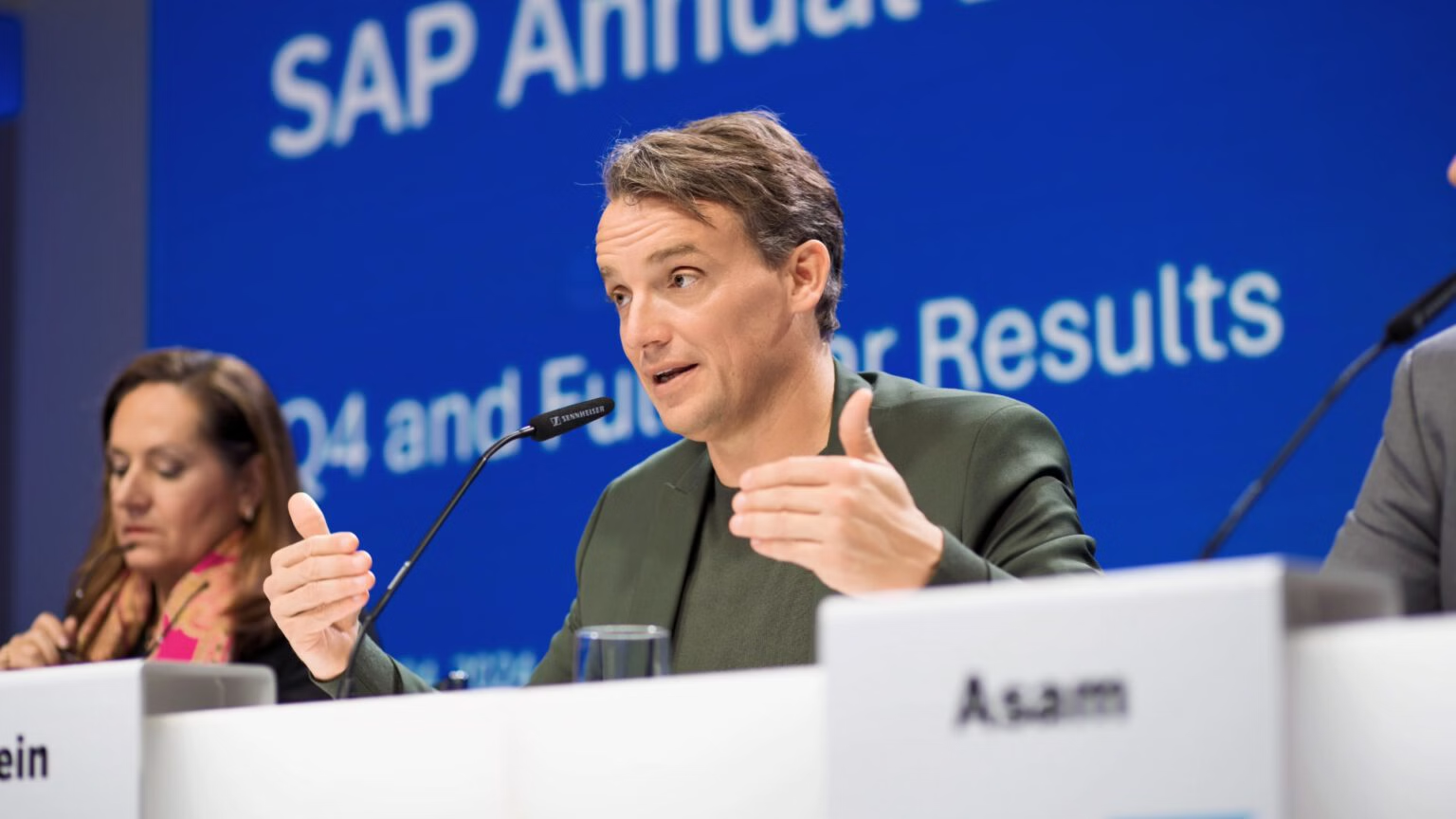
Christian Klein openly admits that SAP is under pressure. In an interview with the *Süddeutsche Zeitung*, the head of the German company warned that competitors from the US and China will not stand idly by. The company must quickly develop an artificial intelligence layer that understands finance, procurement, production and human resources better than a general-purpose agent based on an external model. This is the crux of the new competition: AI is no longer just there to offer suggestions, but to independently carry out processes that previously required multiple applications and users.
SAP is entering this shift with a strong cloud base. In the second quarter of 2026, at constant exchange rates, the portfolio of contracted cloud services grew by 26 per cent to €22.9 billion, whilst cloud revenue increased by 24 per cent. At the same time, the share price remains around a third below its level of a year ago. The market recognises the growth but is awaiting proof that AI will translate into sustainable revenue and safeguard the subscription model.
The company is developing the Joule assistant and agents based, amongst other things, on Claude. In May, SAP and Anthropic announced that Claude would become the primary reasoning engine within the Business AI platform.
The implications could be significant. The transformation is likely to necessitate further investment, acquisitions and product re-engineering, which may put pressure on margins in the short term. Customers may benefit from faster automation, but the importance of data quality, oversight of AI decisions and reliance on a single ecosystem will increase. Gartner estimates that by 2030, agent-based AI could threaten a revenue model comprising $234 billion in application spending. For SAP, therefore, this is not just another feature, but a test of its ability to remain at the heart of business operations.