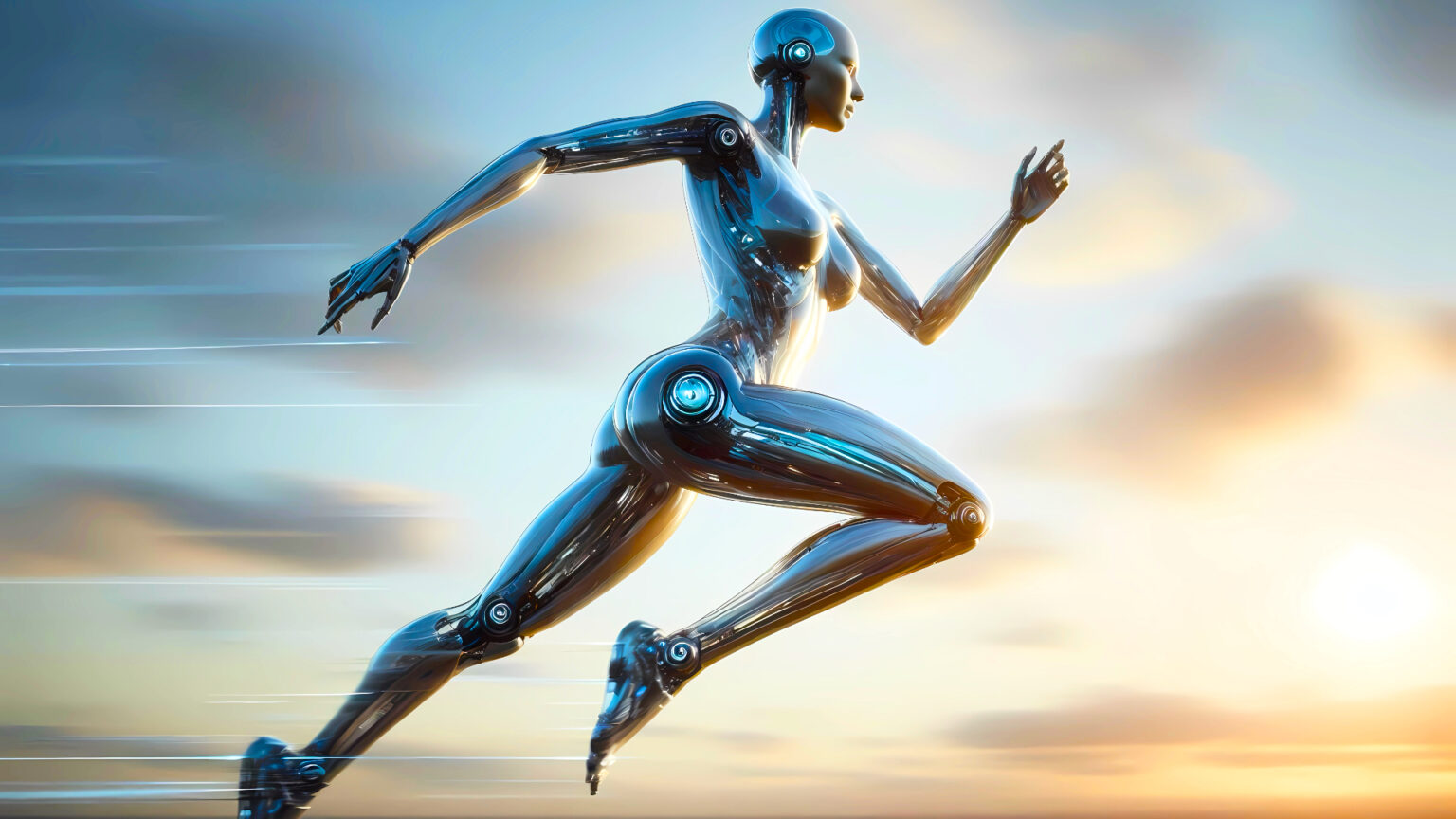
Chinese humanoid robots are starting to beat humans on the running track, but for the market, what will matter more than speed records is whether they can perform just as well in factories.
At the World Humanoid Robot Games in Beijing, the Tiangong Ultra robot covered 100 metres in 9.39 seconds, which is faster than Usain Bolt’s record of 9.58 seconds. The machine, developed by the Beijing Humanoid Robot Innovation Centre, won its heat, beating Honor’s Lightning robot, which clocked 9.47 seconds. Honor had previously reported a time of 9.32 seconds during testing.
The scale of the competition illustrates the pace of the industry’s development. Over 2,000 robots are taking part in the second edition of the event, competing in 51 disciplines. Alongside sprints and football, there are tasks related to manufacturing, rescue operations and everyday work.
Behind this sporting spectacle lies a much larger economic project. China has placed robotics and so-called embodied AI at the heart of its industrial development plan for 2026–2030. The country was already responsible for 54 per cent of new industrial robot installations worldwide in 2024, and over 2 million such machines were in operation in Chinese factories.
Capital is also following this trend. Unitree’s shares rose by 629 per cent at the opening of its stock market debut in Shanghai, and the company raised around $904 million.
However, these records do not mean that humanoids are ready for mass deployment. The biggest challenges remain reliability in variable environments, autonomy and labour costs. The IFR anticipates that wider commercialisation of humanoids is more likely to occur towards the end of China’s current five-year plan. Today’s competition is therefore more a demonstration of the pace of technological development than proof of a completed industrial revolution.