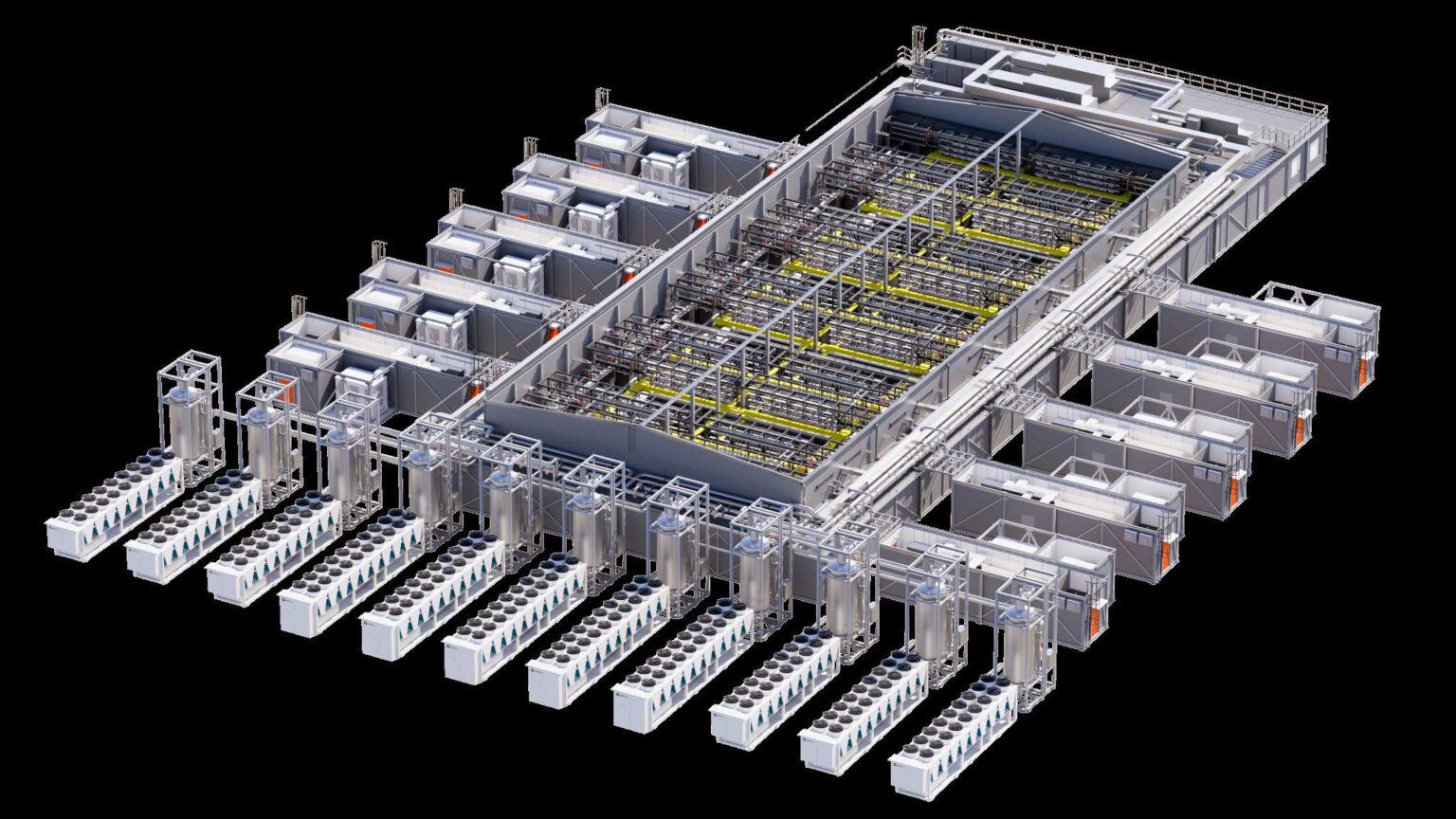
The traditional model of data centre construction – sequential, dependent on the vagaries of weather and local availability of specialists – is no longer keeping pace with the pace of investment by hyperscalers. Vertiv, the digital infrastructure giant, is challenging this status quo with the introduction of the Vertiv OneCore platform. This signals that the industry is abandoning the ‘real estate project’ paradigm in favour of an ‘integrated industrial system’.
The key to this transformation lies in the transition from static BIM modelling to high-fidelity dynamic digital twins (Digital Twin). Using SimReady resources and the OpenUSD format, Vertiv creates an ecosystem where the digital design and the physical structure are an inseparable whole. This allows the collision of mechanical and electrical systems to be simulated in the virtual world before even a single excavator arrives on site.
Vertiv’s collaboration with Hut 8 Corp. shows what this new correlation between power and infrastructure looks like in practice. Instead of building unique facilities, companies are implementing repetitive, modular functional blocks. This strategy is delivering tangible operational benefits:
- Speed of monetisation: Prefabrication and factory testing reduce the time to commission a facility by up to half.
- Space efficiency: Integrated cooling and power systems allow up to 30% of space to be recovered, which directly translates into higher revenue per square metre.
- Cost optimisation: Moving work from the construction site to a controlled production environment reduces the total cost of ownership (TCO) by nearly a quarter.
For operators or colocation providers, OneCore solves the problem of ‘industry silos’. Instead of fighting for space between installers of different systems, they get an interoperable product, ready for power densities of up to 600 kW per cabinet.
As Giordano Albertazzi, CEO of Vertiv, points out, this is not a departure from engineering rigour, but its evolution towards convergence. Deployment predictability becomes the most valuable currency as sovereign infrastructure and AI factories become the backbone of the economy.