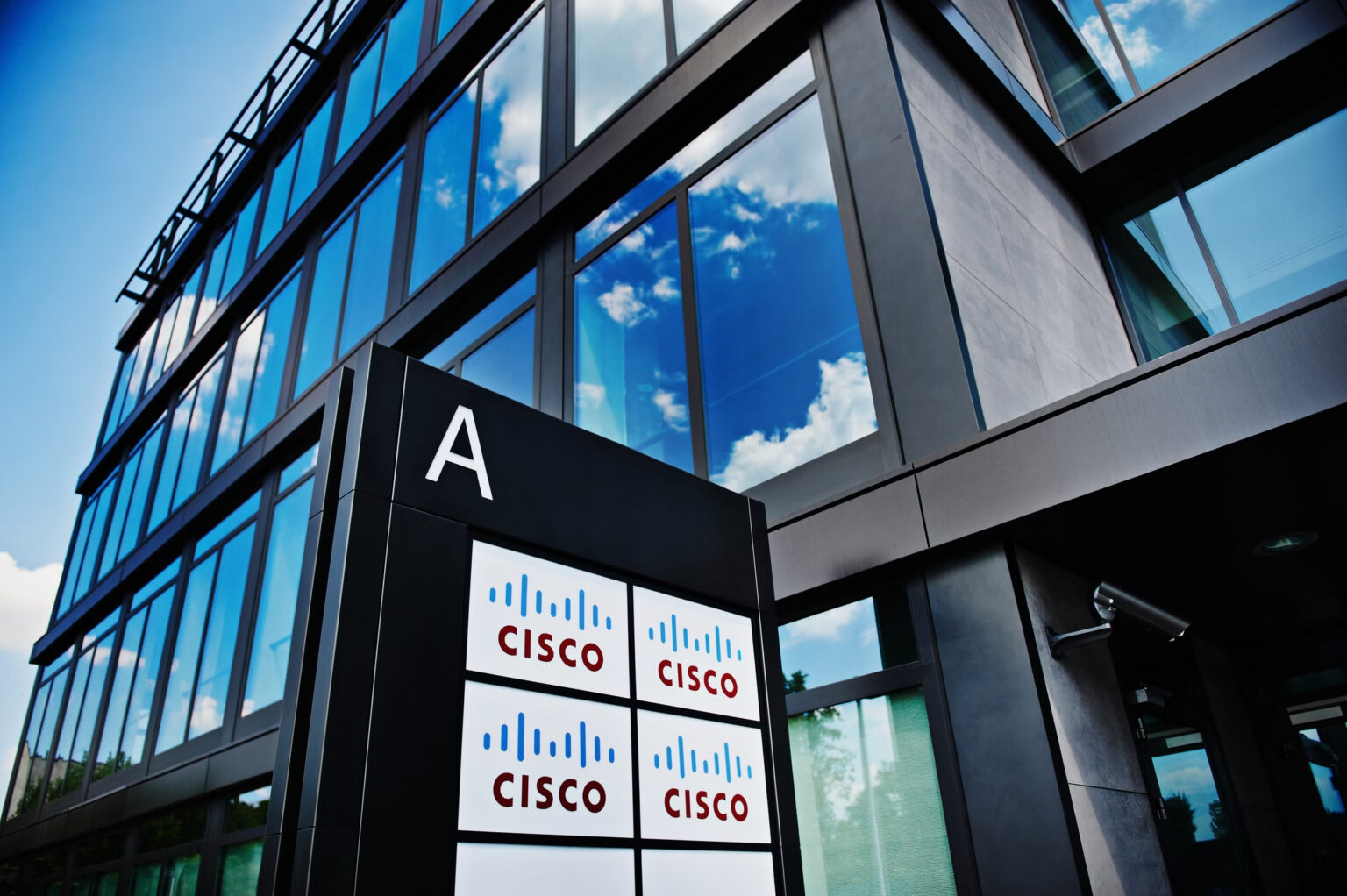
Cisco Systems, the networking giant, has hit a point that perfectly illustrates the harsh reality of the artificial intelligence era. Although the company exceeded revenue expectations, its shares fell 7% in after-hours trading. The reason is simple but acute for investors: building AI infrastructure is becoming more expensive, which has directly hit the company’s margins.
Cisco’s adjusted gross margin in the last quarter was 67.5%, which fell short of market forecasts of 68.14%. The reason for this is not a lack of demand, but a global scramble for components. Hyperscalers like Microsoft and Alphabet are absorbing almost every available batch of advanced memory chips needed to process AI models. As a result, semiconductor manufacturers are prioritising the most profitable modules for data centres, drastically increasing the price of the other components that Cisco relies on for its switches and routers.
The situation puts CEO Chuck Robbins in a difficult position. On the one hand, the company has raised its revenue forecasts for 2026 to between $61.2-61.7bn, driven by a backlog of orders for AI systems worth more than $5bn. On the other hand, the company now needs to prove it can manage costs in an inflationary environment. Robbins has already announced product price adjustments and the renegotiation of contracts with partners, a classic run to protect profitability.
Investors who hiked Cisco’s share price by 30% in 2025, hoping for an ‘AI dividend’, have been sent a clear message: simply being the ‘picks and shovels’ supplier to the technology revolution does not guarantee linear earnings growth. The key challenge for Cisco in the second half of the year will not be order acquisition per se, but the speed at which it manages to turn a record backlog into real, high-margin revenue.
Cisco is no longer seen only through the prism of stability. The company is becoming a litmus test for the entire hardware industry. If a giant of this scale is struggling to maintain margins amid record demand, it suggests that AI infrastructure costs may soon force a broader adjustment in pricing strategies across the technology sector.