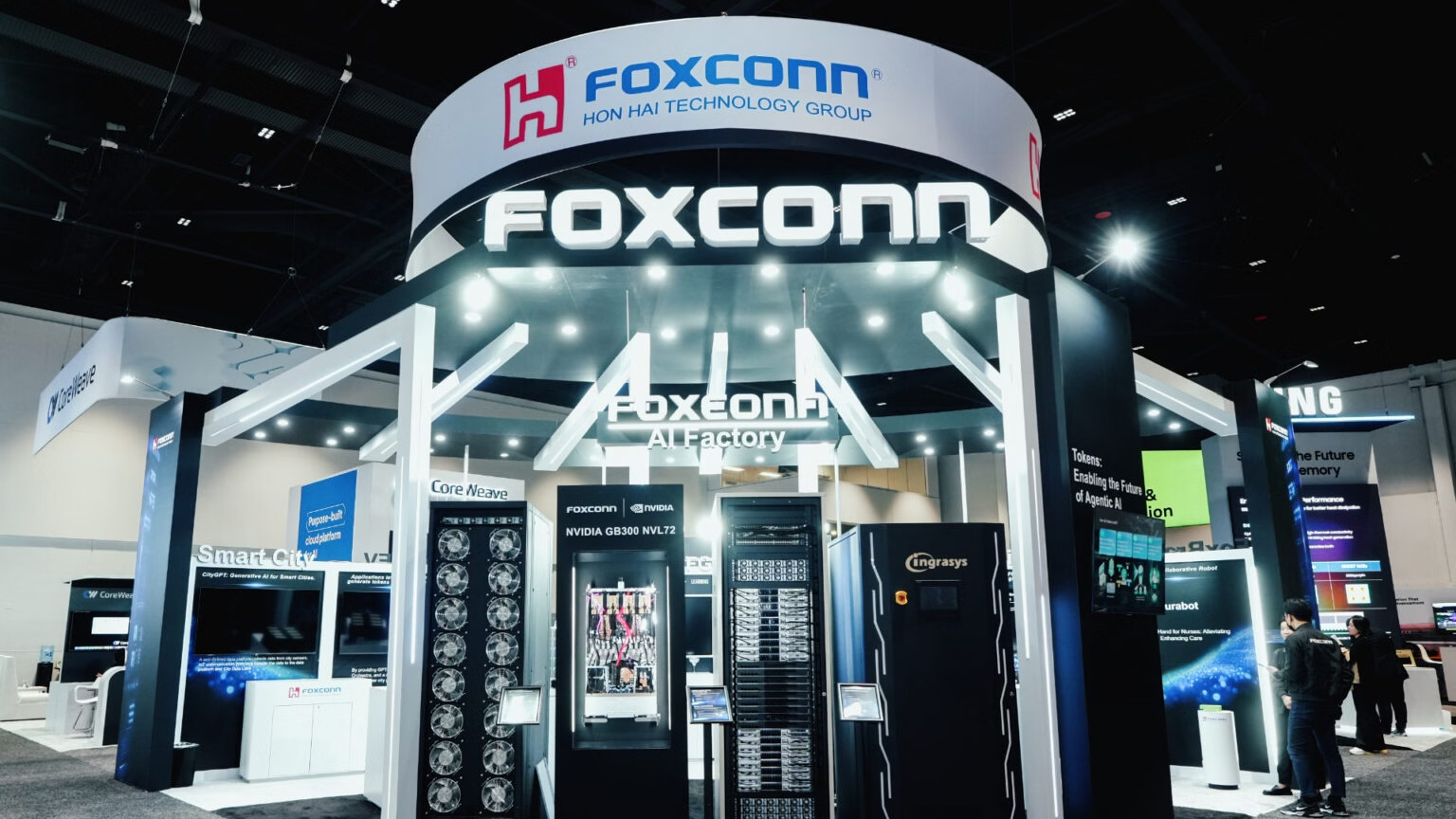
Young Liu, CEO of Foxconn sent a clear message on Friday: the ongoing conflict in the Middle East has ceased to be just a matter of headlines in news outlets and has become a real risk factor for the margins of the AI sector.
For Liu, who runs the world’s largest electronics manufacturer, the key question is not whether demand for AI servers will continue at record levels, but how long the global economy can withstand the pressure on commodity prices. If the US-Israeli confrontation with Iran drags on, the markets must prepare for oil to return to the $100 per barrel level. For the technology industry, which has invested billions in computing infrastructure, this means a dramatic increase in the cost of logistics and the energy required to power data centres.
The situation is paradoxical in that the Gulf region has recently become the new promised land for giants like Nvidia and Microsoft. The UAE is being intensively positioned as a regional AI hub to drive future iterations of models such as ChatGPT. However, the escalation of hostilities and Iran’s recent missile attacks cast a shadow over these ambitions, calling into question the security of the physical infrastructure in a region that was supposed to guarantee stability and capital.
Despite this turbulence, Foxconn is trying to remain calm. While the current market volatility is being felt, Liu is looking further ahead, pointing to 2026 as the point at which the company is expected to reach its full operational capacity. For now, the impact of the conflict on the company’s financial performance remains limited, with record revenues driven by artificial intelligence fever providing a solid cushion of safety.
The real test for investor sentiment will come on 16 March, when Foxconn will present its fourth quarter report and update its forecasts. That’s when we’ll find out whether CEO Liu’s optimism is based on solid fundamentals or whether the industry is starting to overestimate its resilience to macroeconomic shocks.