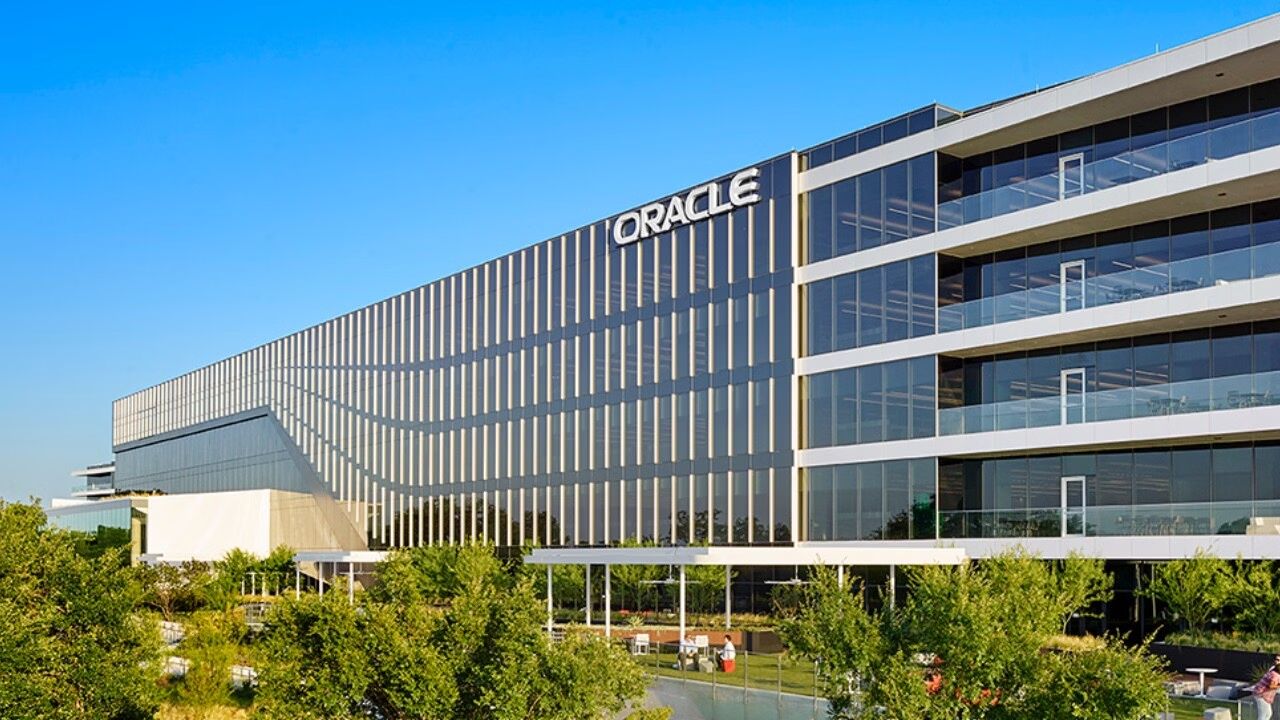
For a decade, Safra Catz has combined operational and financial responsibilities, creating a unique centralised power structure at Oracle. But the aggressive expansion of artificial intelligence requires a new discipline. The appointment of Hilary Maxson as CFO is not just filling a vacancy, but a clear signal to Wall Street: Oracle is moving into an industrial-scale mode of investment, where power and infrastructure management become as important as source code.
Maxson brings rare Silicon Valley experience from the heavy sector to Oracle. Her recent years at Schneider Electric have chronicled the transformation of a traditional electricity giant into a modern digital solutions provider. In a world where the development of AI is constrained not only by the availability of chips, but more importantly by the performance of power grids and data centres, her expertise is a strategic asset. Oracle no longer needs just an accountant; it needs a capital architect who understands the physical foundations of the cloud.
The timing of this appointment is critical. Investors are watching the company’s balance sheet with growing concern. With projected capital spending of $50 billion in the current fiscal year – more than double that of previous years – Oracle is treading a thin line. A free cash flow deficit in 2025 and the planned raising of another $50 billion in debt and equity has caused the company’s shares to lose around 25% this year. The market is clamouring for evidence that the huge investment in AI infrastructure will translate into sustainable profitability.
The move also normalises Oracle’s corporate structure, bringing it closer to the standards of giants such as Microsoft and Google. Separating roles and entrusting finances to an outsider suggests the company is preparing for tighter cost oversight at a time when it is simultaneously downsizing to reallocate resources to generative artificial intelligence projects.