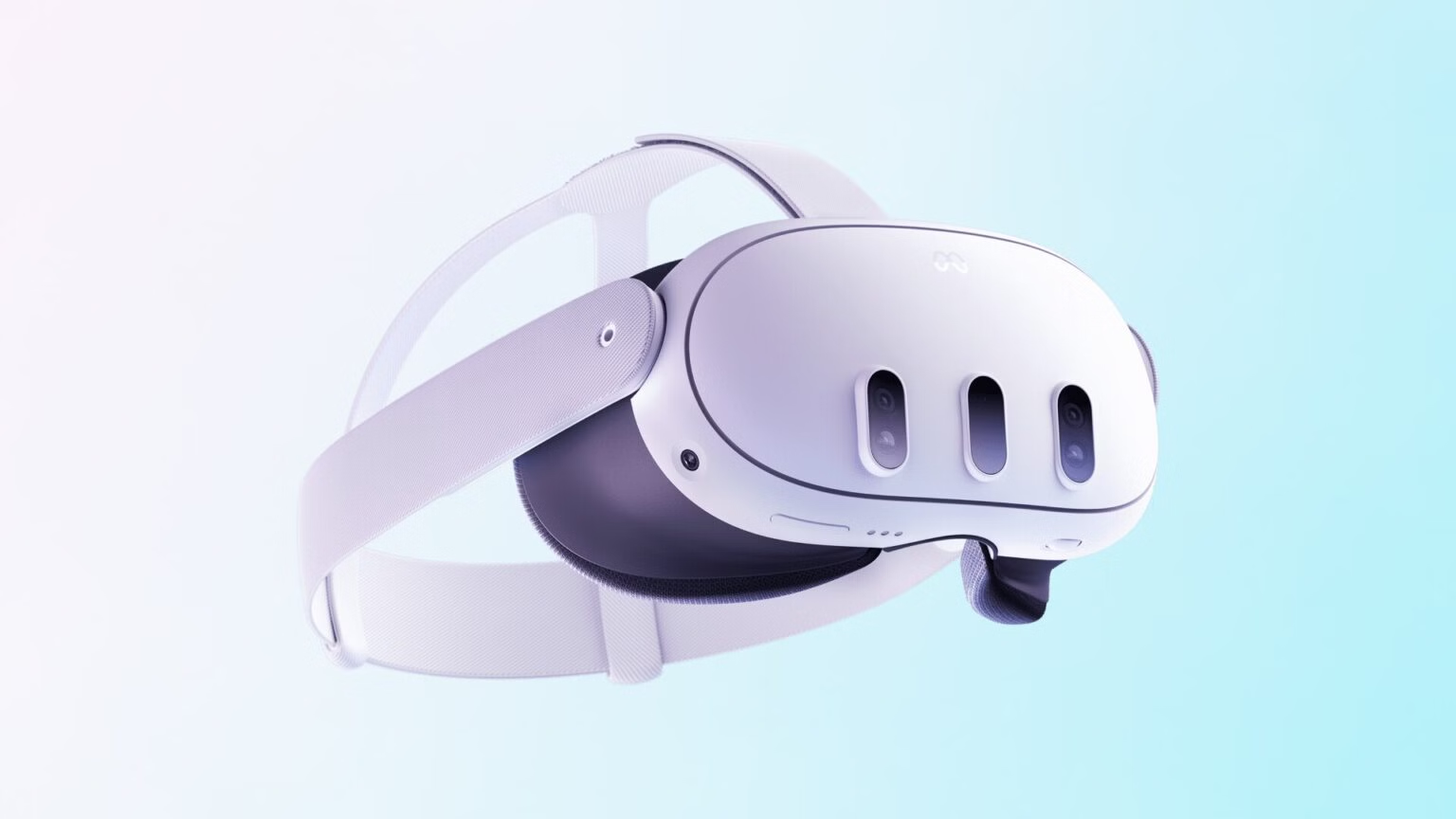
Mark Zuckerberg has proven over the years that he can burn billions of dollars just to put virtual reality goggles in every American home. That era of aggressively subsidising hardware is now coming to an end. As of 19 April, Meta Platforms is raising the prices of its flagship headsets in the US, a clear sign that market realities and expensive competition for dominance in the artificial intelligence sector are beginning to dictate new terms of play.
The increases are being felt. The entry-level Quest 3S model with 128GB of memory will become $50 more expensive at $349.99. The premium segment will be hit even harder – the price of the Quest 3 goggles with 512 GB of memory will increase by $100, hitting $599.99. The official reason is the rising cost of components, specifically memory chips. This is the paradox of the current technology boom: the successes of OpenAI, Google or Microsoft in building powerful AI models have led semiconductor manufacturers to prefer to supply components to high-margin data centres rather than consumer electronics.
Meta is not alone in this battle for resources. Dell and HP have already taken similar steps, and Sony recently announced its second PlayStation 5 console price hike in less than a year. But for the Menlo Park-based giant, the price change has a deeper strategic dimension. Reality Labs, the division responsible for its ambitious plans to build a metaverse, has generated more than $70 billion in operating losses since 2021. With current investor pressure on profitability and the need to fund infrastructure under generative AI, Zuckerberg can no longer afford to subsidise user entry into virtual worlds so generously.
Recent months at the Met have been a time of belt-tightening in the VR area. The dismissal of 10 per cent of staff in the Reality Labs group and the scaling back of the development of the Horizon Worlds platform show that the company’s priorities have permanently changed. While the Meta name remains a reminder of the fascination with metaverse, the company’s strategy today is almost entirely AI-oriented.