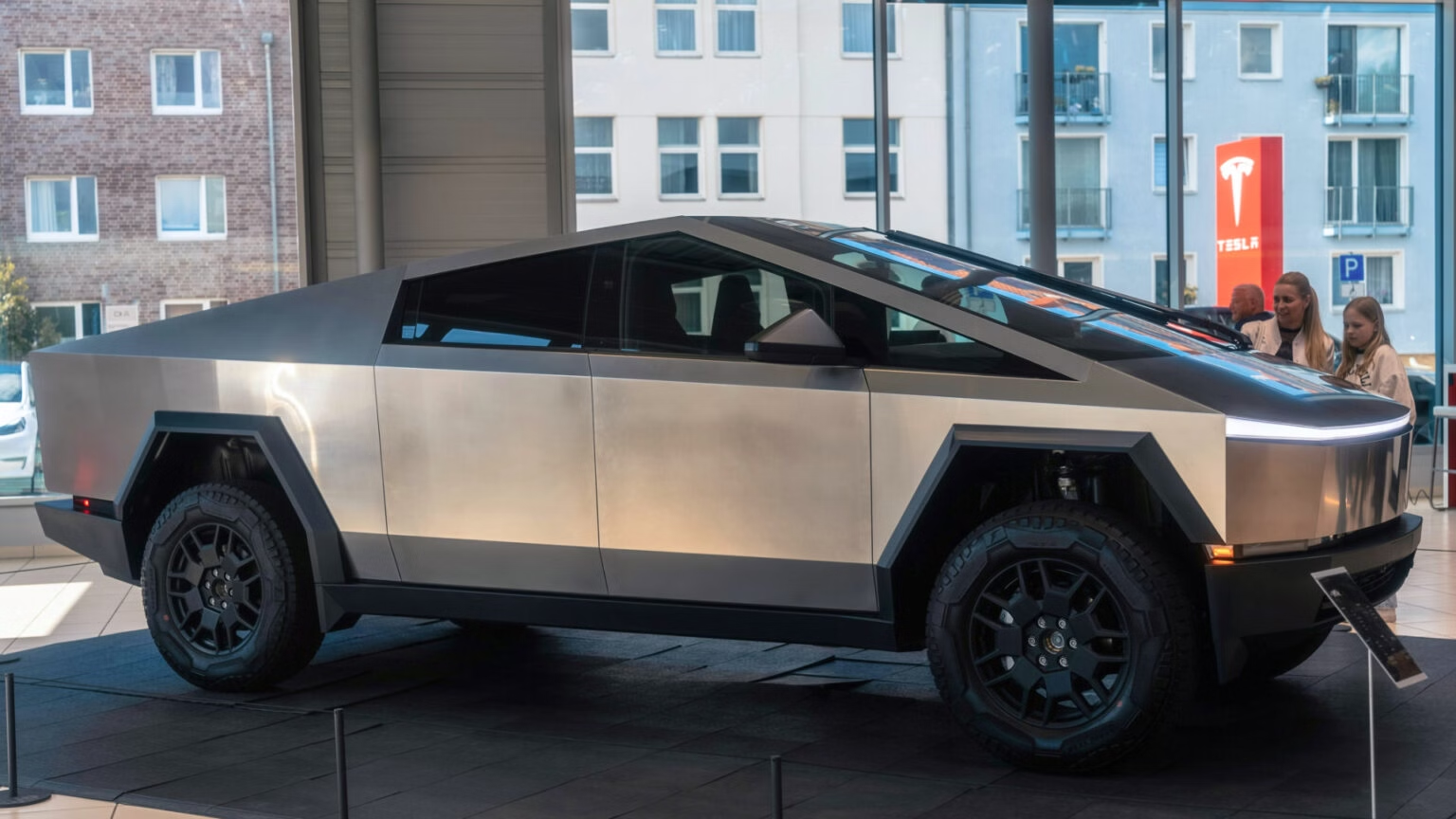
Tesla continues its aggressive pricing offensive, this time taking on its most polarising product. The introduction of the two-motor, all-wheel-drive Cybertruck model, priced at US$59,990, and the radical US$15,000 price reduction of the flagship Cyberbeast, are clear signs that the manufacturer is shifting its centre of gravity from exclusivity to sales volume.
The decision comes at a difficult time for the industry. Since September 2025, following the Trump administration’s removal of the $7,500 federal tax credit, the EV market has noticeably slowed down. For Elon Musk, optimising the price list is not only an attempt to attract more pragmatic buyers, but also an operational necessity in the face of increasing global competition.
An interesting move is the quiet withdrawal of the ‘Luxury Package’, which indicates that Tesla is looking for savings where it previously built value. It’s a risky gamble on margins, which analysts warn will remain under severe pressure unless the company reduces production costs or sharply monetises its digital services.
At the same time, Tesla is undergoing a profound structural transformation. The declaration of an end to production of the Model S and Model X in favour of the development of humanoid robotics in California shows that the company no longer sees itself solely as a car manufacturer. In this context, the cheaper Cybertruck is designed to maintain liquidity and road dominance, while the company’s future profits are to be generated by algorithms and automation, not just steel bodies.