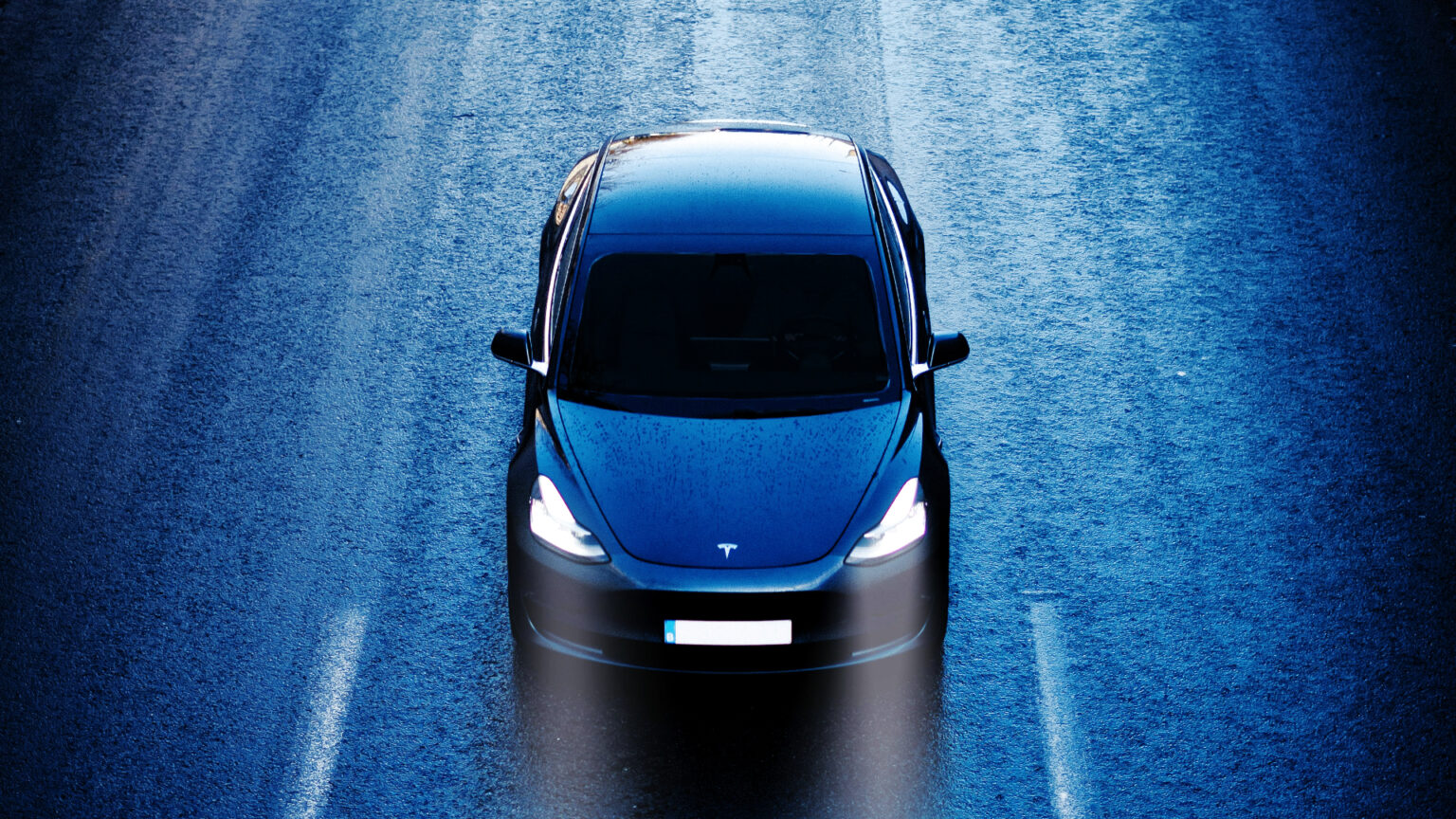
Elon Musk, during his debut at the World Economic Forum in Davos, outlined an ambitious timetable for Full Self-Driving (FSD) software. According to the CEO, Tesla could gain approval for a supervised version of its autonomous driving system in Europe and China as early as next month. This declaration comes at a critical time as the manufacturer grapples with slowing vehicle sales and increasing pressure to increase profitability through high-margin digital services.
A strategic shift towards software
For Silicon Valley investors and Wall Street analysts, FSD is not just a car add-on, but a key component of Tesla’s valuation, which continues to significantly outperform traditional automakers. With market share declining – including by more than 11% in the company’s key market of California – and the loss of EV sales leadership to China’s BYD, monetising artificial intelligence is becoming an existential issue for the company.
In Europe, the process is gaining momentum thanks to the action of the Dutch WFD authority. The decision, expected in February, could become a ‘digital passport’ for Tesla; obtaining an exemption in the Netherlands theoretically opens the door to implementing the system in other EU countries even before formal EU-wide approval. In China, on the other hand, Tesla needs to regain the trust of customers who, having invested heavily in FSD, have faced operational restrictions imposed by local regulators.
From Robotaxi to Optimus
In parallel with territorial expansion, Tesla is stepping up testing of robotaxi services. The launch of ridesharing in Austin without the physical supervision of a safety driver has generated enthusiasm in the stock market, although the scale of the operation remains modest compared to earlier announcements. Musk has been consistently building a narrative in which car-powered vision technology is the foundation for the humanoid robot Optimus.
Despite Musk’s optimism about commercial sales of robots by the end of next year, experts remain sceptical. Technical challenges, such as the lack of structured data to train models of physical interaction, are much harder to leap over than navigating the roads. As shareholders note, rather than promises, the market now needs hard evidence of production scalability and the economic viability of the project. The coming months will show whether the regulatory offensive in Europe and China will be enough for Tesla to maintain its status as a leader in AI innovation in the eyes of a sceptical market.