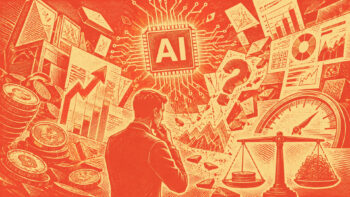
A narrative is beginning to dominate Silicon Valley and global financial centres that no one would have expected a year ago: financial results are no longer enough. Despite giants such as Alphabet and Amazon reporting solid growth in the cloud computing segment, markets are reacting nervously. Investors, instead of celebrating profits, are looking anxiously at the bills being footed by the AI revolution .
The scale of spending is unprecedented. The four largest hyperscalers have signalled investment plans in excess of $600 billion this year alone. Neil Wilson, investment strategist at Saxo UK, directly suggests that the spectre of a bubble is looming over the market. This is no longer a phase of experimentation – it is a brutal war of capital destruction in which it costs hundreds of billions of dollars to enter the game, while return on investment (ROI) remains a vague promise of the future.
The architecture of fear
However, the concern is not just limited to spending. The real earthquake has been triggered by new tools from Anthropic, which have hit the foundations of traditional software and data analytics providers. Drops of 2-5% in one day by players such as RELX, Sage and Experian show that the market fears the ‘cannibalisation’ of legacy business models by Claude’s agile new plug-ins.
India, where the IT outsourcing sector lost $22.5 billion in market value in a week, is particularly hard hit. If algorithms can write code and analyse data faster and cheaper than armies of programmers, the traditional technology services model needs immediate redefinition.
Capital risk vs. operational risk
This phenomenon creates a specific imas in the technology business. On the one hand, companies need to invest in order not to fall behind. On the other – any announcement to increase CAPEX (capital expenditure) results in immediate punishment from shareholders. Amazon, despite its great operational health, lost 8% in pre-market trading precisely because of the ‘spending frenzy’.
There is a clear message here for business leaders: the era of unconditional optimism about AI is over. What matters now is not how much a company spends on GPUs, but how quickly these investments translate into real competitive advantage to defend against the new wave of automation. Market valuations are beginning to reward not visionaries but pragmatists who can manage the cost of innovation.