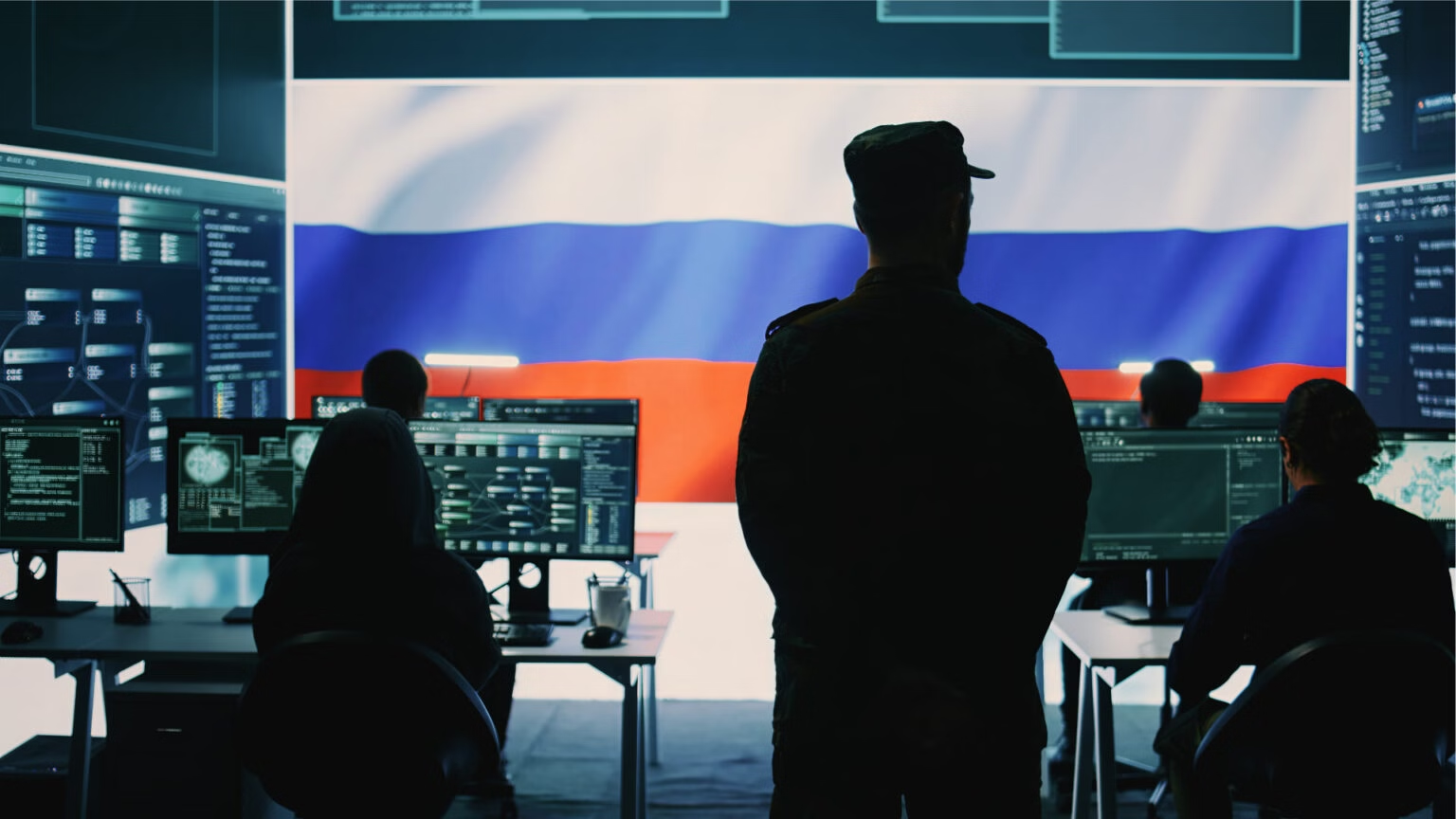
Office workers cut off from the network, lost taxi drivers without navigation and young people playing a constant technological game with VPN blockers. This is not an infrastructure failure, but a new planned reality in Russia. The Kremlin is drastically tightening its control over the country’s internet, hitting Western platforms and popular messengers, fundamentally changing the conditions for business and society there.
In major metropolitan areas, mobile internet is sometimes systematically switched off. At the same time, the authorities are throttling bandwidth on WhatsApp and Telegram and blocking virtual private networks en masse. The Kremlin spokesperson justifies these steps on the grounds of state security. He points to the threat from drones, which can use mobile networks for precision navigation, and the reluctance of foreign companies to comply with local laws. From a business perspective, however, this sends a clear message about the ultimate subordination of telecommunications infrastructure to the interests of the security apparatus.
The motive driving these measures is deep political prevention and internal risk management. The new legislation gives the Federal Security Service unprecedented powers, allowing it to immediately cut off the services of any operator at the service’s request. Foreign diplomats and analysts suggest that Moscow, taking its cue from Chinese and Iranian surveillance models, is creating an architecture ready for any macroeconomic and geopolitical scenario. The memory of the systemic chaos following the war in Afghanistan at the end of the USSR prompts the current elites to build an airtight ecosystem. It is designed to prevent the loss of control of the information market, regardless of how the current armed conflict turns out.
This clash at the intersection of politics and technology exaggerates the local digital market. Pavel Durov, founder of Telegram, openly criticises these restrictions, calling them evidence of the state’s fear of the free exchange of information. In place of blocked global services from Western giants such as Meta, the state administration is actively pushing its own supervised digital solutions, such as the MAX app. While officials explain this by the need to protect against Western influence, for the Russian economy this means drastic isolation and the need to navigate a highly unstable, manually controlled environment.