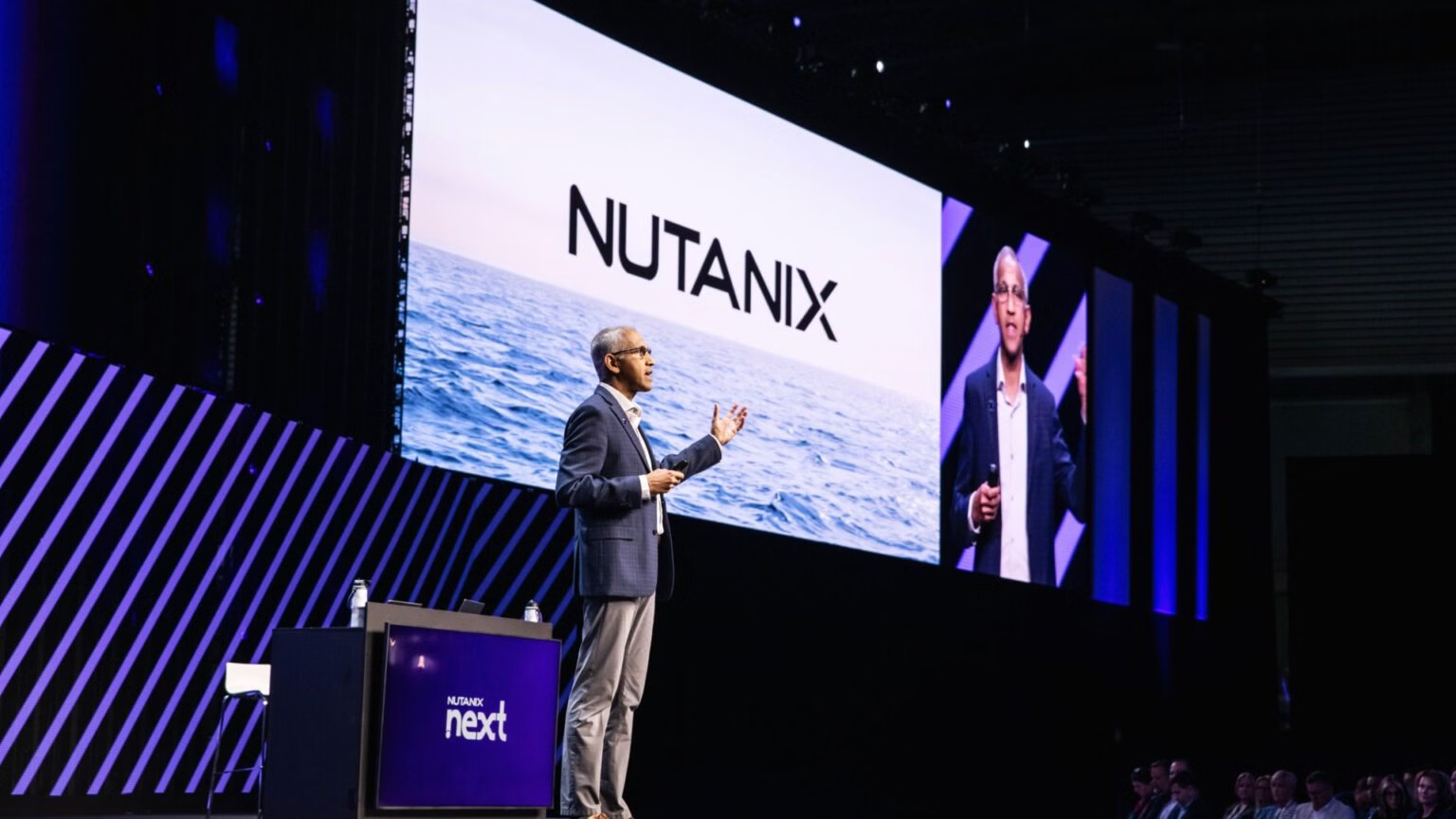
It is rare to see a CEO attack a competitor’s business model so directly. At the Nutanix Next 2026 conference, Rajiv Ramaswami dropped the corporate niceties, drawing a picture of an industry at a turning point. The main target of this offensive is Broadcom, which has implemented a ‘full-stack or nothing’ strategy following its acquisition of VMware, causing a wave of anxiety among existing customers.
Ramaswami diagnoses the situation bluntly: the market giant has stopped focusing on innovation, opting instead for aggressive profit maximisation. Forcing the purchase of a full software stack, often regardless of real business needs, creates a vacuum that Nutanix intends to fill.
The numbers work for the imagination – the company estimates that as many as 165,000 of VMware’s 300,000 existing customers are within its footprint. At the current rate of acquiring up to a thousand new contractors per quarter, Nutanix is no longer just an alternative, but a viable direction for structural migration.
According to the Nutanix boss, the process of moving away from Broadcom solutions resembles a wave movement. The first wave included those who escaped contract renewals on new terms. The second is made up of organisations that have signed short-term contracts but are already looking for an exit.
The upcoming release of VCF 9 is expected to be another catalyst for change, forcing IT directors to calculate not only licensing costs, but more importantly operational risks and loss of trust in the supplier.
But Nutanix’s strategy goes beyond being a ‘safe haven’ for VMware refugees. The company has evolved from being a hyperconverged infrastructure (HCI) provider to becoming a comprehensive hybrid cloud platform, integrated with AWS, Azure and Google Cloud. Today’s Nutanix relies on flexibility and modern workloads, including AI and integrations with systems such as NetApp.
Nutanix’s success will depend on whether it manages to turn Broadcom’s temporary customer dissatisfaction into long-term loyalty to its own platform. Although Ramaswami avoids declaring a full transition towards application services, the pace of innovation suggests that Nutanix wants to be more than just a hardware layer – it wants to be the operating system for modern business, taking advantage of the wind that is blowing into its sails straight from Broadcom’s offices.