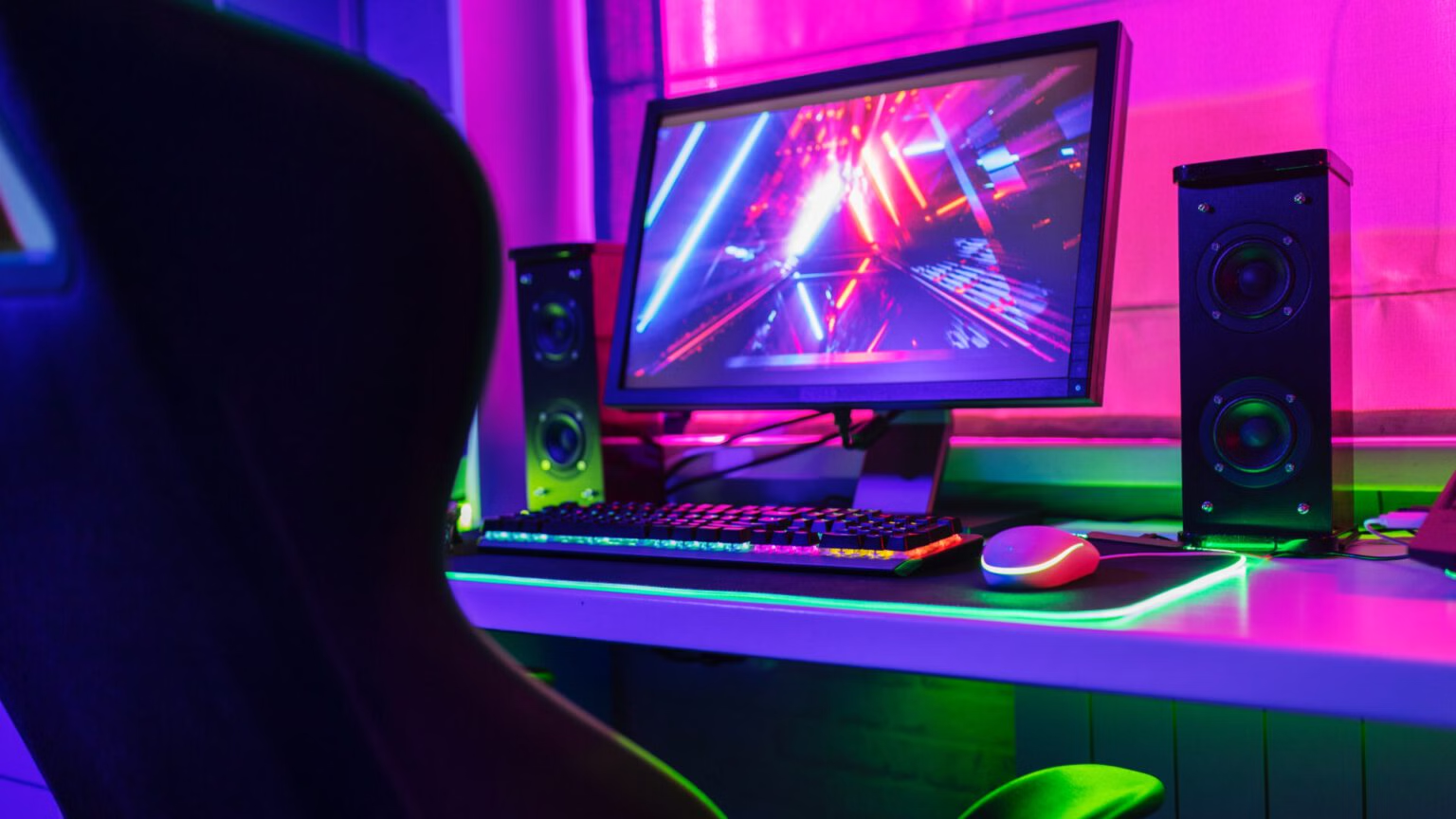
The desktop display market, once seen as mature and lacklustre, is currently undergoing its most radical transformation in years. Although overall shipments grew by a modest 4.3 per cent last year to 133.4 million units, beneath the surface of these figures lies a real revolution driven by gamers. According to a recent report by analyst firm Omdia, the gaming monitor sector has seen spectacular growth of more than 50 per cent, becoming a key growth engine for the industry as a whole.
The key to understanding this phenomenon is the change in the way we use computers. In a world dominated by laptops, the external monitor has ceased to be merely an optional extra and has become an essential all-round command centre. Users are increasingly looking for hardware that is used for office work during the day and delivers top performance in demanding e-sports productions in the evening. This blurring of the boundaries between professionalism and entertainment has meant that gaming already accounts for almost a third of the value of the entire desktop display market.
The data shows a rapid democratisation of technologies that until recently were reserved for professionals. Devices with refresh rates above 120 Hz are becoming the standard, and record sales in the fourth quarter of last year confirm that consumers are prepared to invest in image smoothness and responsiveness. OLED technology is consolidating at the top of the product hierarchy, although its mass adoption is still hampered by high production costs. Premium models, offering a response time of 0.03 ms, remain an object of desire, but it is the improved specifications of cheaper units that are building real sales scale.
The outlook for 2026 is equally promising. Analysts predict a further increase in shipments to 43 million units, which is expected to correlate with advances in GPUs. Also of increasing importance will be dual-mode devices, which, thanks to intelligent switching of operating parameters, are equally capable of handling dynamic gameplay and cinematic image quality when watching films. For manufacturers, the conclusion is clear: the future of the desktop market lies not in the office, but in the room of the gamer, who nowadays expects full multitasking from his or her hardware.