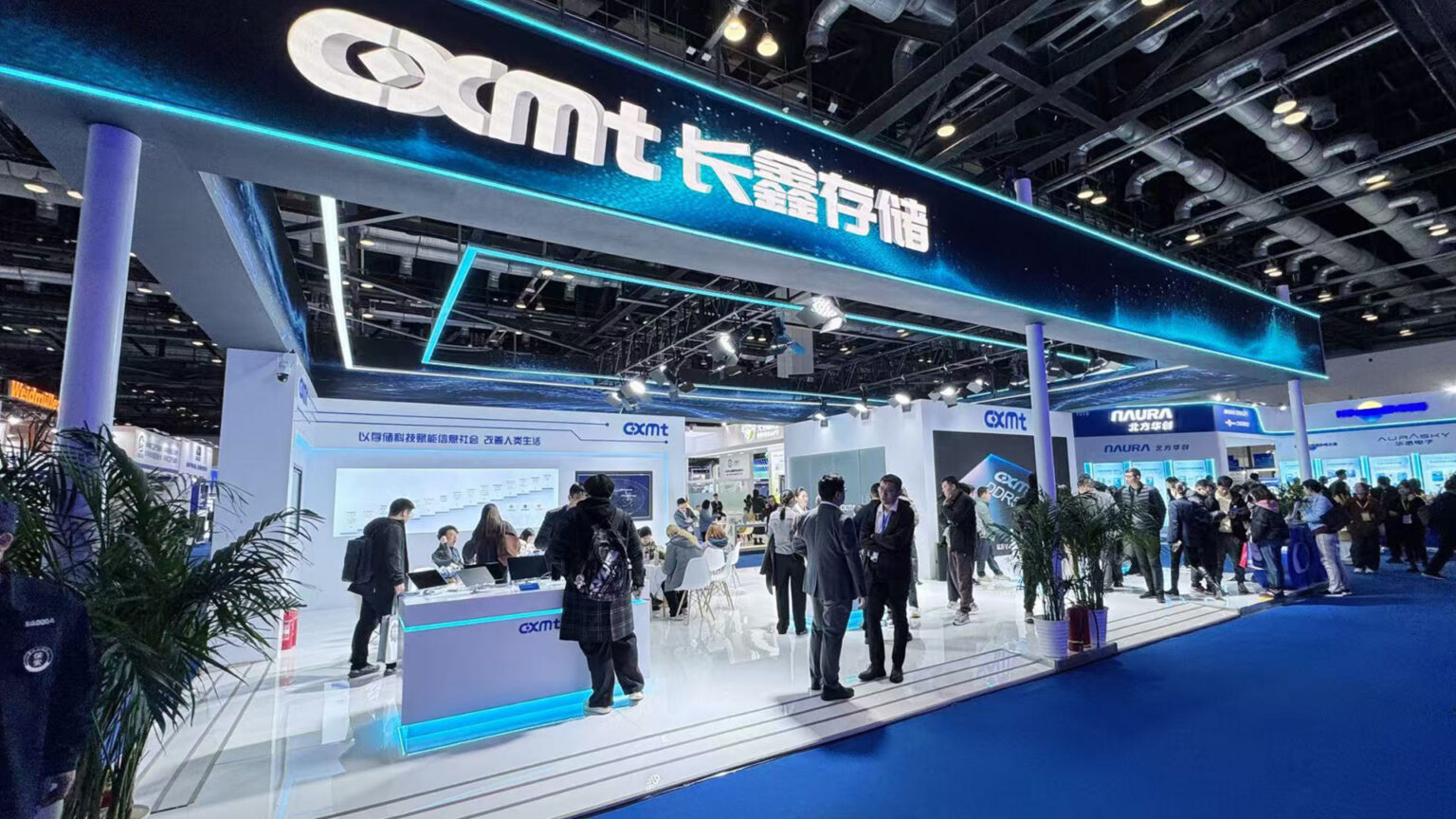
Chinese memory manufacturer ChangXin Memory Technologies is seeking a court ruling to remove one of the barriers hindering its expansion beyond China, at a time when the AI boom is driving up the importance and prices of DRAM chips.
On 28 August,CXMT filed a lawsuit against the US Department of Defence, demanding to be removed from the list of so-called Chinese military companies. The company claims that it has no links to the military and manufactures DRAM for civilian and commercial use. According to the lawsuit, the Pentagon’s decision was arbitrary and insufficiently supported by evidence.
Being placed on the list does not in itself mean a complete ban on the sale of CXMT’s products in the US, but it may lead to restrictions on public contracts and increase reputational risk for business partners. In practice, therefore, it may make it more difficult for the company to attract Western customers, even as its technologies become increasingly competitive.
The significance of the dispute is growing in line with CXMT’s market position. According to TrendForce, in the first quarter of 2026 the company already accounted for 7.6 per cent of global DRAM revenue, ranking fourth behind Samsung, SK hynix and Micron. The manufacturer is also expanding its presence in server memory, whilst the development of AI infrastructure is limiting market supply and driving up prices.
The proceedings will not resolve the broader technological conflict between the US and China, but their outcome may have implications for other Chinese firms challenging similar decisions by the Pentagon. For CXMT, what is at stake above all is its credibility with foreign customers. The greater the company’s share of the global memory market, the more difficult it will be to separate this dispute from the global semiconductor supply chain.