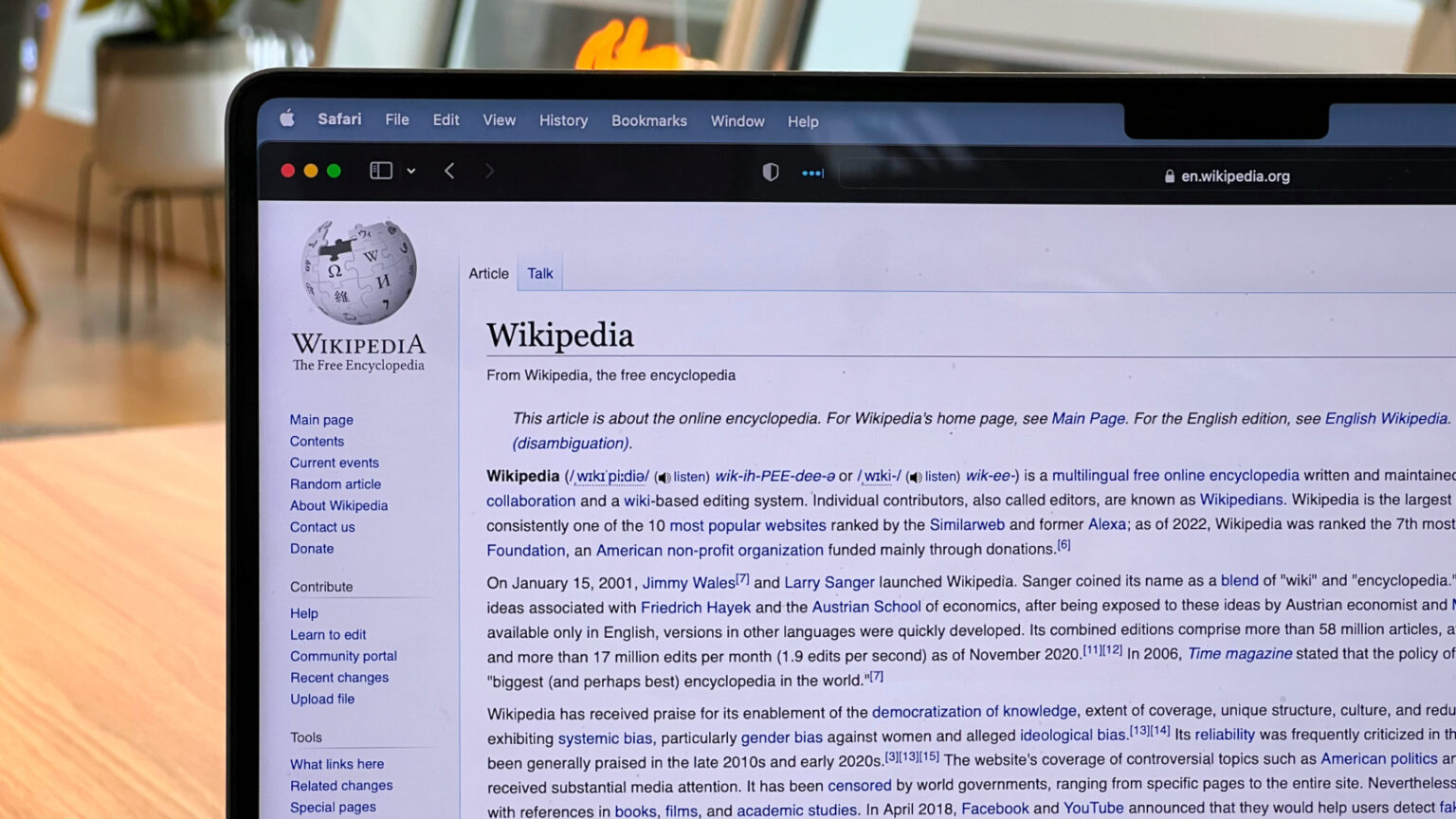
Artificial intelligence is increasingly answering questions rather than referring users to sources, and Wikipedia is beginning to feel the effects of this change, just as online publishers are.
The Wikimedia Foundation reports that human-generated traffic on Wikipedia is falling. After adjusting the data for bots, the foundation estimated a year-on-year decline in page views of around 8 per cent in 2025. In its ‘Global Trends 2026’ report, it already points to a wider problem: online publishers are recording traffic declines of between 20 and 60 per cent, with smaller websites suffering the most.
The mechanism is simple. AI Overviews, chatbots and other systems provide direct answers to questions, so users are less and less likely to need to open the page from which the information originates. This is also confirmed by data from Chartbeat: over two years, traffic from search engines fell by 60 per cent for small publishers, 47 per cent for medium-sized ones and 22 per cent for large ones.
The problem also extends to the attribution of sources. An analysis of around 14,000 conversations with language models showed that Gemini failed to provide a clickable source in 92 per cent of its responses. Researchers highlight the growing gap between the content used by the models and its visibility to the user.
This creates a paradox for Wikipedia: its content remains one of the cornerstones of the AI ecosystem, yet users are increasingly less likely to visit the encyclopaedia itself. The site still has over 65 million articles and is visited from over 1.5 billion devices each month.
In the long term, therefore, it is not just traffic that is at stake. A smaller number of direct users may undermine the open-knowledge model based on the activity of volunteers, whilst AI platforms are taking over an ever-greater share of information distribution.