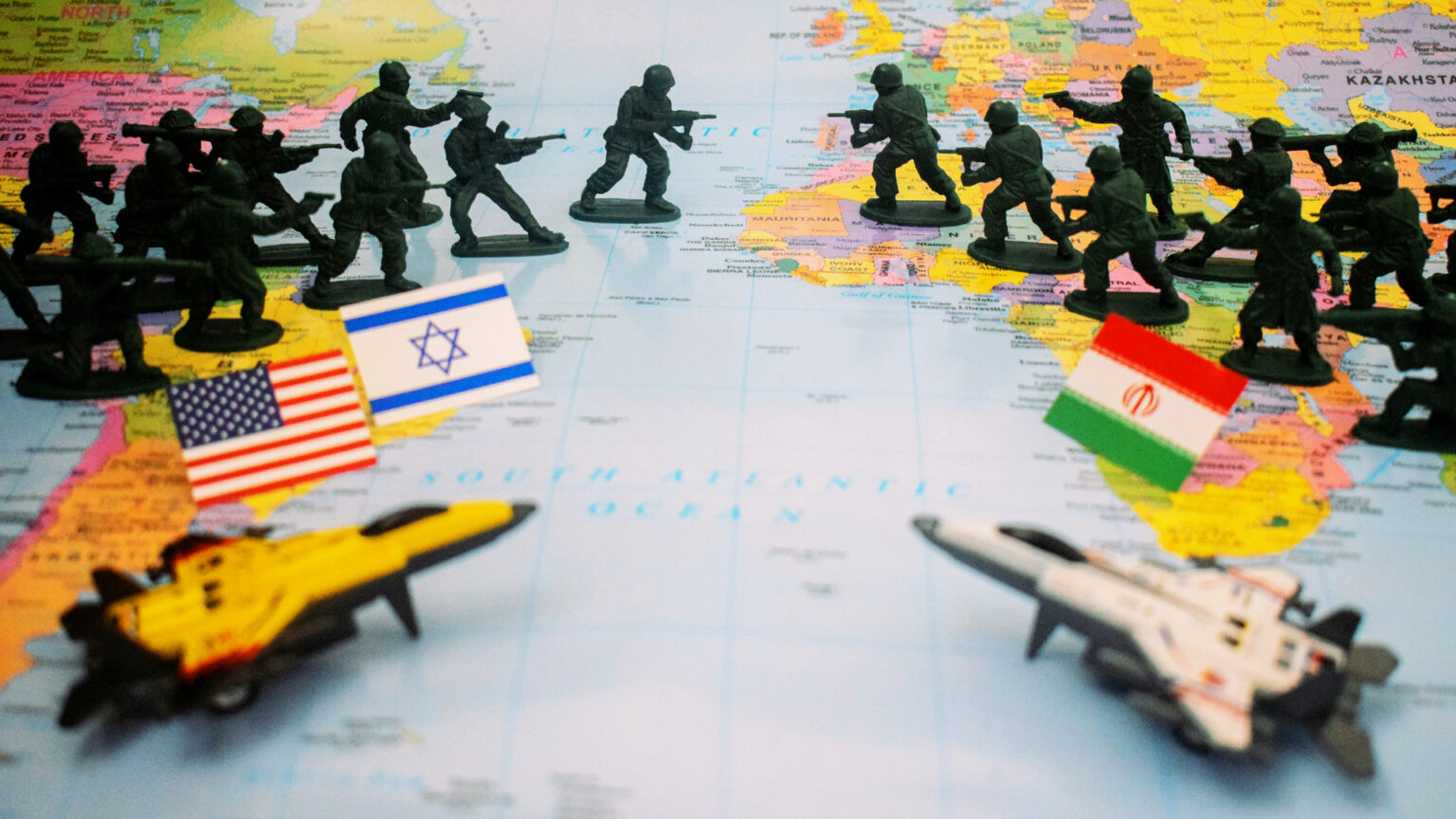
Modern geopolitics resembles an extremely complex operating system in which every line of code is responsible for the stability of the global flow of capital, goods and data. When reports of escalating tensions between the US, Israel and Iran circulated around the world on Saturday, most observers focused on the purely informational sphere – headlines that inherently feed on emotion and ad hocity. However, at the same time, almost imperceptibly to the layman, mechanisms much deeper and more precise were set in motion. The financial markets, opening on Monday morning, did not wait for official diplomatic announcements. They had already carried out a compilation of data, making a merciless revision of asset values. What to the casual media viewer is a chaos of reports, to the savvy business leader is a raw, binary signal about the future state of the economy.
This phenomenon can be described as market ‘debugging’ of reality. While politicians operate with narratives, investors operate with probabilities. There is a fundamental paradox of information: the mainstream media often generates noise that makes it difficult to make rational decisions, while charts of bond yields or the forward curve of oil prices provide hard evidence of how deeply conflict can penetrate the fabric of global business. The ability to read this thermometer is becoming an extremely important management competency to protect operational continuity in a world where peace is a temporary state and volatility is the only constant.
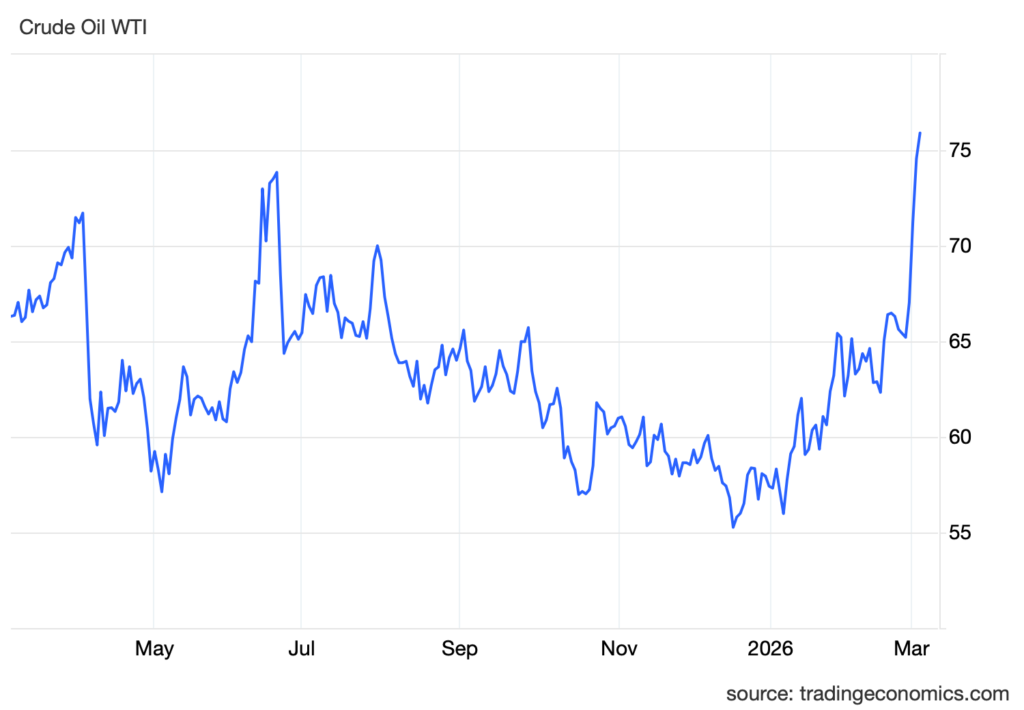
Oil has traditionally acted as the first sensor of failure. In the architecture of global supply, the Middle East region is a critical node and the Strait of Hormuz is a textbook example of a ‘single point of failure’. When oil prices surge, it is not just the result of speculation, but a form of collective risk insurance. The market is not pricing what has already happened, but the likelihood of a transport paralysis that could occur in a week or a month. For the technology and modern digital services sector, oil has ceased to be just a fuel cost in truck tanks. It has become the foundation of energy costs in data centres and an underlying inflationary parameter that will hit operating margins sooner or later. If crude prices remain at elevated levels for an extended period of time, the markets send out a warning of impending cost pressures that will force the renegotiation of SLAs and the revision of pricing strategies.
An equally important indicator is the behaviour of the bond market and currencies considered to be safe havens. When capital flees en masse towards the US dollar or the Swiss franc, we have a so-called flight to safety. This sends a clear message that the big players no longer believe in the short-term stability of international trade. Such a move could be a warning signal regarding the cost of money. In periods of high uncertainty, capital becomes more choosy and more expensive. High-risk R&D projects, technology start-ups requiring continuous recapitalisation or ambitious overseas expansion plans may face a barrier in the form of a sudden drain of liquidity from emerging markets. Watching bond yields provides insight into whether the global anxiety is just a temporary mood correction or perhaps the beginning of a deeper structural change in access to finance.
The most tangible effect of geopolitical upheaval, which directly affects the operational sphere, is the destabilisation of supply chains. The shift from a just-in-time model to a just-in-case strategy is becoming a requirement for survival. Financial markets are typically trembling several weeks in advance of real delays at ports. If today we see freight rates rising and war allowances imposed by logistics companies, we can predict the occurrence of the so-called Bullwhip Effect with high probability. A small disruption at the source, such as instability at a key transit point, is compounded as it moves up the supply chain, ending in acute component shortages or drastically increased lead times. In this context, the concept of building supplier relationships in politically stable and culturally close regions becomes an imperative.
Strategic management in an age of uncertainty requires leaders to develop a specific cognitive resilience. The biggest mistake is succumbing to geopolitical FOMO – reacting feverishly to every headline and making chaotic decisions under the influence of emotion. Professional analysis requires distinguishing between momentary volatility, which is a natural part of the market game, and signals indicating a permanent crack in economic fundamentals. Proper assessment of the situation allows you to maintain operational calm and avoid costly mistakes, such as panic selling of assets or prematurely halting key investments. Instead of following social media, it is worth analysing the hard data coming from the futures markets, which indicate with great precision where professional investors are placing their fears and hopes.
Financial markets do not have a moral compass or empathy, but they do have a unique ability to aggregate dispersed knowledge. They do not judge the ethics of a conflict, but its economic efficiency and impact on future profits. The organisations that win are those that can read these early warning signals and adapt their cost and logistical structures before the market ultimately values their lack of preparedness. It is not the headlines, but capital flows that shape the reality of how we come to do business. Understanding that the current silence or the rapid movement of the stock market is just another language to describe the same reality allows us to build companies that are more resilient, flexible and, above all, aware of the mechanisms that govern the modern world.
It is therefore worth looking at the current situation not as a single crisis, but as the next stress test of the global ecosystem. The ability to distinguish noise from signal, emotion from analysis and ad hoc from strategic are the qualities that define modern leadership. Markets may be wrong in the short term, but from a strategic perspective, they rarely leave any illusions about the direction of the global economy. The role of the leader therefore boils down to being a translator of this complex data into the language of concrete business decisions that will allow the organisation to not only weather the storm, but emerge from it with a strengthened structure and a clear vision of the future.