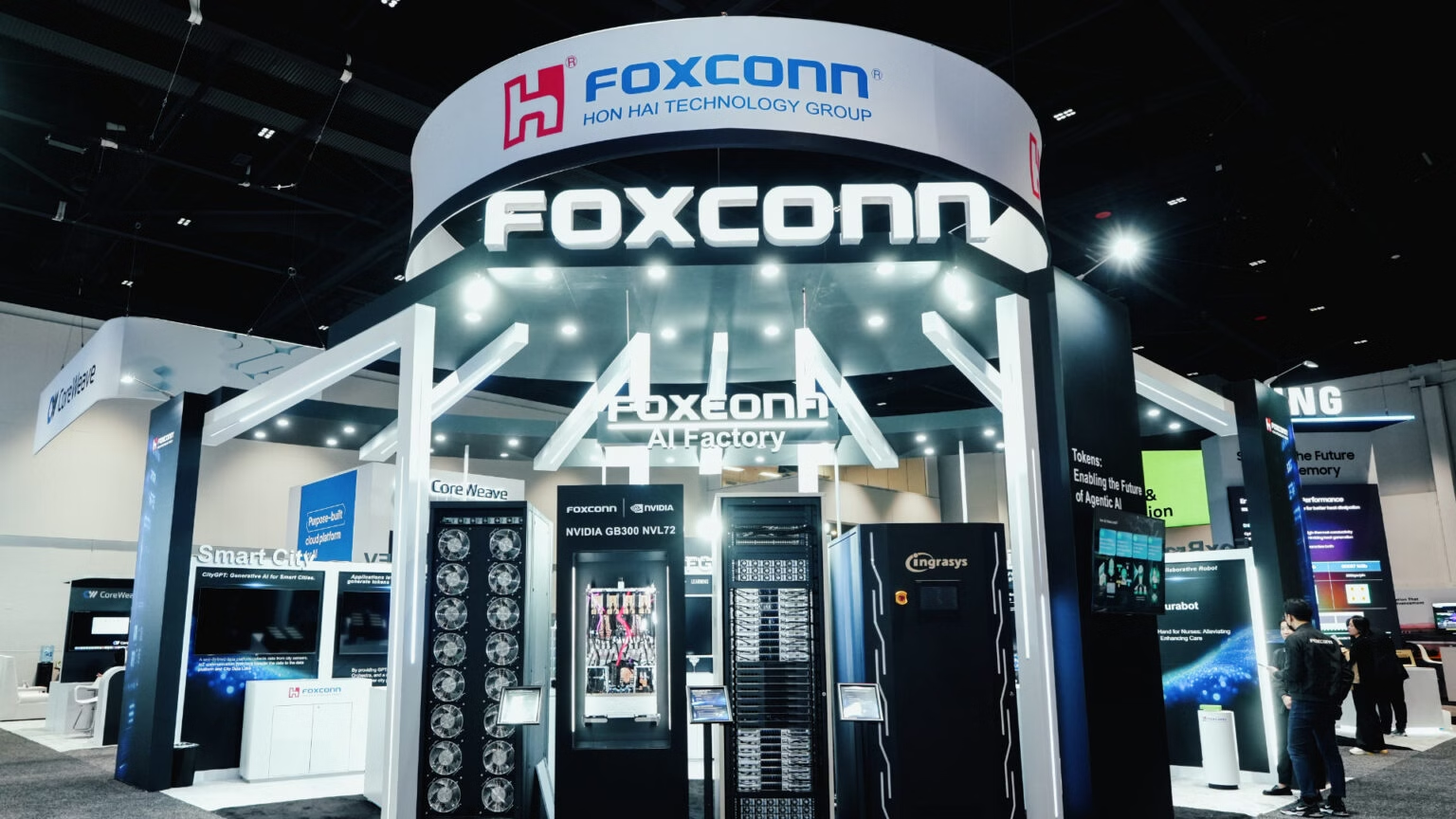
ElectroMobility Poland (EMP) is making a decisive move that could define the future of the Polish automotive industry. The state-owned company has announced a strategic partnership with Taiwanese technology giant Foxconn. The partnership aims to transform southern Poland into a key manufacturing and research hub for electric vehicles, in an ambitious attempt to build a regional champion in a segment hitherto dominated by players from Asia and the US.
The collaboration with Foxconn and its subsidiary, Foxtron Vehicle Technologies, goes beyond a simple commercial partnership. Negotiations are focusing on the establishment of a joint venture (JV) and binding agreements are expected to be finalised in the second half of 2026. For EMP, choosing a partner of this scale is a strategic necessity. As the company’s CEO Cyprian Gronkiewicz notes, the project from the outset required an ally that would combine industrial massiveness with a deep technological background.
A key element of the agreement is technology transfer and the building of local design competence. Poland does not want to be just an assembly plant; the ambition is to create a full ecosystem, including a research and development centre focused on software and data analysis. The plant in Jaworzno, scheduled to start up in 2029, is expected to initially produce 100,000 cars per year, with the potential to scale up to 400,000 units. This is an ambitious target, given that the project involves the development of its own brand and three different car models.
Jaworzno is to become not only a production site, but also a major distribution hub for the whole of Europe, taking advantage of the gap left by rising traditional fuel prices. Financing for the project was based on funds from the National Reconstruction Plan and the Reprivatisation Fund. In the market context, the timing seems favourable – ACEA data shows a dynamic growth in sales of electric cars in the EU, which further motivates the acceleration of work on the Polish ‘EV champion’.