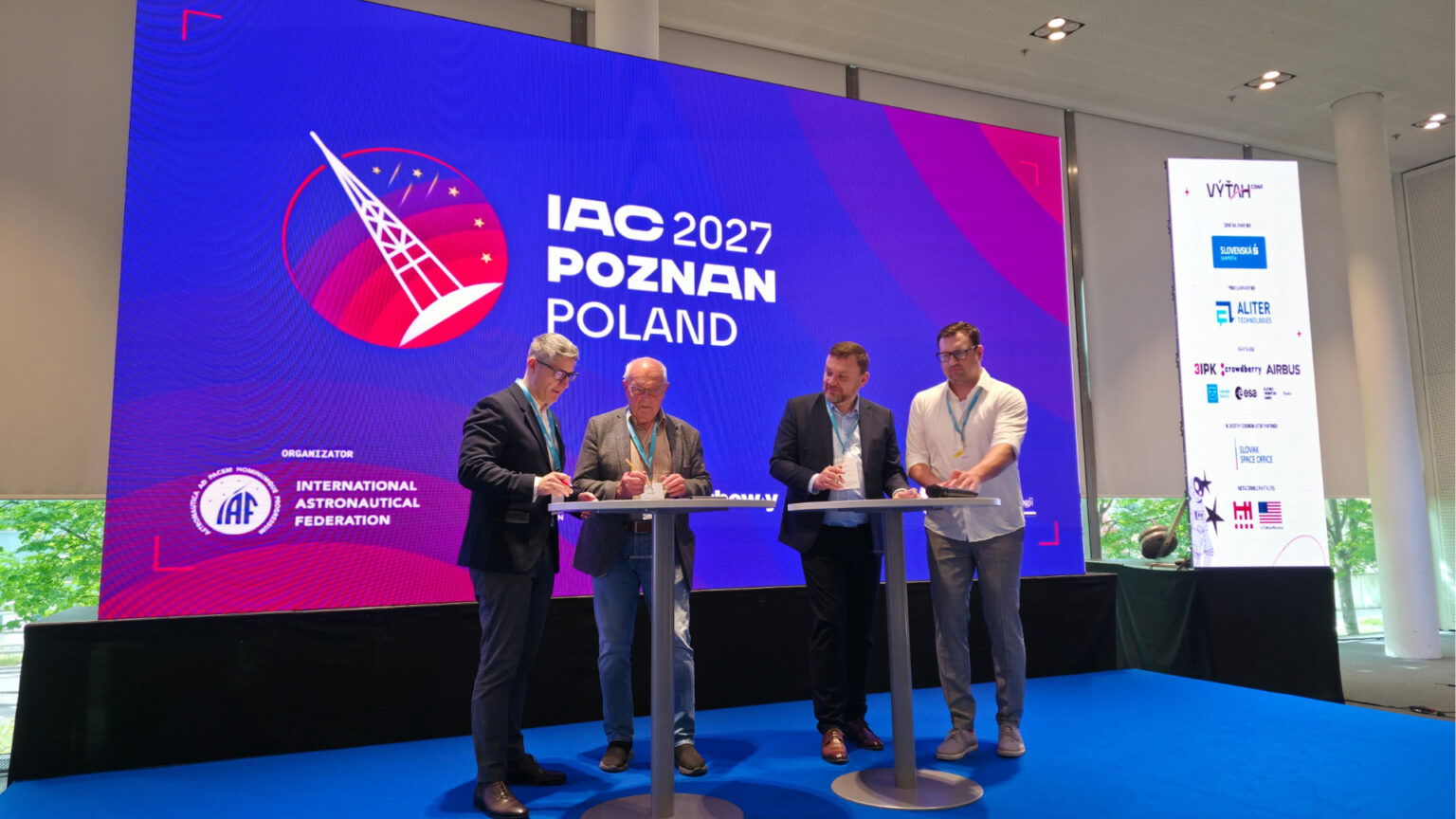
When the global attention of the space sector is often focused on the Silicon Valley giants or the state-owned powerhouses of Western Europe, the CEE (Central and Eastern Europe) region has just started to implement a strategy to change the previous balance of power. Signed on 23 April in Bratislava, the CEE Space agreement is an attempt to consolidate the fragmented market and create a united front in the fight for capital and technology contracts.
The initiative, which included organisations from Poland, Slovakia, Croatia and Hungary, aims to address the region’s biggest problem: fragmentation. Although the local ecosystems have skilled engineers and innovative startups, they have so far lacked the scale necessary to compete for major European Space Agency (ESA) projects or funding from transatlantic programmes. Łukasz Wilczyński, president of the European Space Foundation, points out that the new structure is intended to serve as a common accelerator for innovation and talent that will finally make the region visible on the global investment map.
From a business perspective, the most important element of CEE Space is the construction of a coherent channel for reaching venture capital. The partners have pledged to mobilise funds to develop the ecosystem, which in practice means easier access to investors for New Space companies operating in the four countries. Instead of building relationships with four separate markets, foreign players and decision-makers gain a single, integrated point of contact.
The schedule of activities suggests that the signatories are betting on building brand recognition through major industry events. The first test will be a regular conference, which will debut in Budapest in spring 2027. However, this is merely a prelude to the wider game. The key point on the horizon remains the International Astronautical Congress (IAC) 2027 in Poznań. Poland, in its role as regional leader here, plans to use the event to finally confirm CEE’s position as a mature partner in the global technology race.
If the announced integration of innovation pipelines goes smoothly, the region may cease to be a mere component supplier and become a hub that independently creates and finances advanced orbital projects. Central and Eastern Europe stops playing defensively and starts building its own business architecture in space.