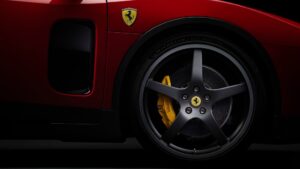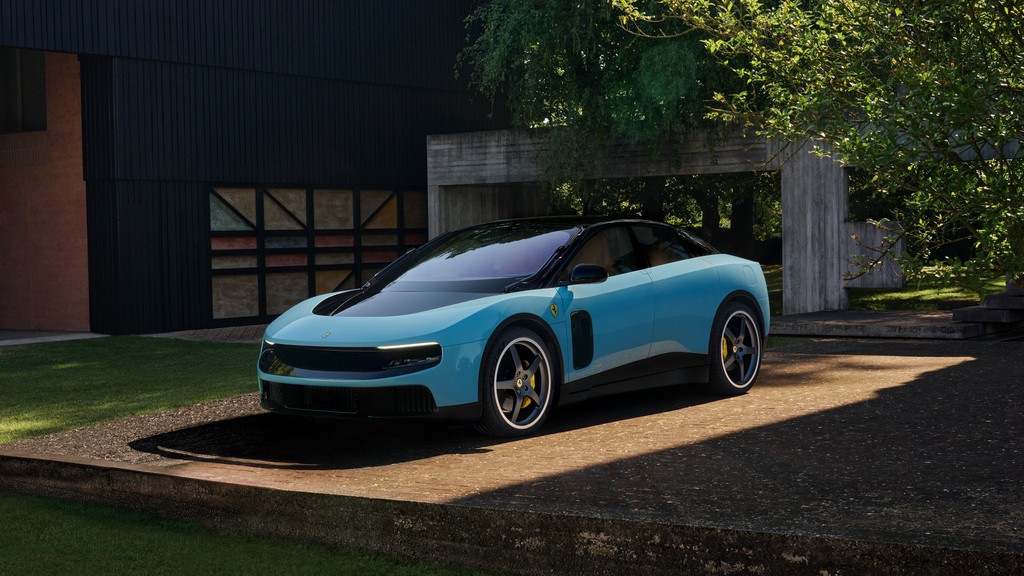
For decades,Ferrari has been a symbol of internal combustion engines, mechanical perfection and automotive conservatism at its best. That is why the presentation of the Ferrari Luce model could prove to be one of the most emblematic moments for the entire electromobility market. It is not only the first all-electric model from the Maranello brand. It is also a signal that even the most iconic brands of the automotive world are today redefining their DNA around software, electronics and digital user experience.
The Ferrari Luce features four electric motors with a total output of 1,050 hp. The car accelerates to 100 km/h in 2.5 seconds, reaches a top speed of more than 310 km/h and offers a range of more than 530 kilometres. However, when it comes to this project, the numbers are only part of the story.
Much more interesting seems to be how Ferrari decided to build the next generation of the luxury sports car. The brand is no longer just talking about performance, but also about systems integration, user experience and a digital driver interface. In practice, this means that the supercar increasingly resembles a high-tech platform.
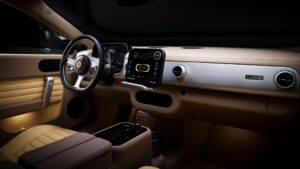
This is particularly evident in the interior. Ferrari has combined classic mechanical switches with digital screens developed in conjunction with Samsung Display. The interface has been designed so that the most important information and functions are directly in front of the driver, without the electronics dominating the driving experience. This approach is increasingly common in the world of premium technology – the user is expected to use advanced systems in an intuitive and almost invisible way.
Even more interesting, however, is the design language of the car itself. The LoveFrom studio, led by Jony Ive and Marc Newson, is responsible for the design of the Ferrari Luce. It is Ive who has defined the aesthetics of Apple products over the years, from the iPhone to MacBooks. Ferrari’s collaboration with a designer associated more with consumer electronics than automotive shows how the premium car market is changing today.
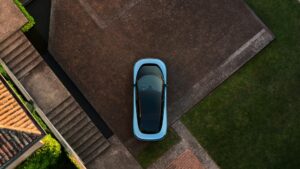
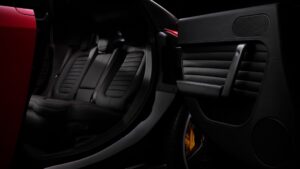
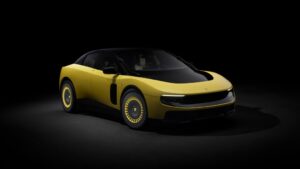
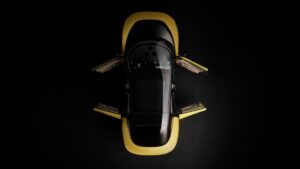
The Luce does not look like a classic Ferrari. The monolithic, glazed body, minimalist surfaces and heavily simplified body lines are more reminiscent of a futuristic technological product than a traditional supercar. This is no accident. The electric architecture has allowed the designers to create a completely new vehicle form – with four doors, five seats and a more spacious interior.
Ferrari also emphasises the huge role of software. The new Vehicle Control Unit updates the vehicle’s parameters 200 times per second, managing drive, suspension, torque vectoring and energy recovery. Each wheel has a separate set of control systems responsible for drive, steering and suspension operation. The car thus becomes very much a computer managing movement in real time.
It is no coincidence that Ferrari is today talking about a ‘new kind of Ferrari’ rather than just an electric model. The brand is trying to show that electrification does not mean giving up emotions, but creating a completely new experience. Even the sound of the vehicle has been developed as a separate technological element – the system analyses mechanical vibrations and amplifies them in a way that resembles the action of a musical instrument.
The Ferrari Luce is emblematic of the moment when premium motoring is increasingly merging with the technology industry. As software begins to define the car as much as the engine, Silicon Valley designers are beginning to have as much influence on the cars of the future as engineers on the race track.