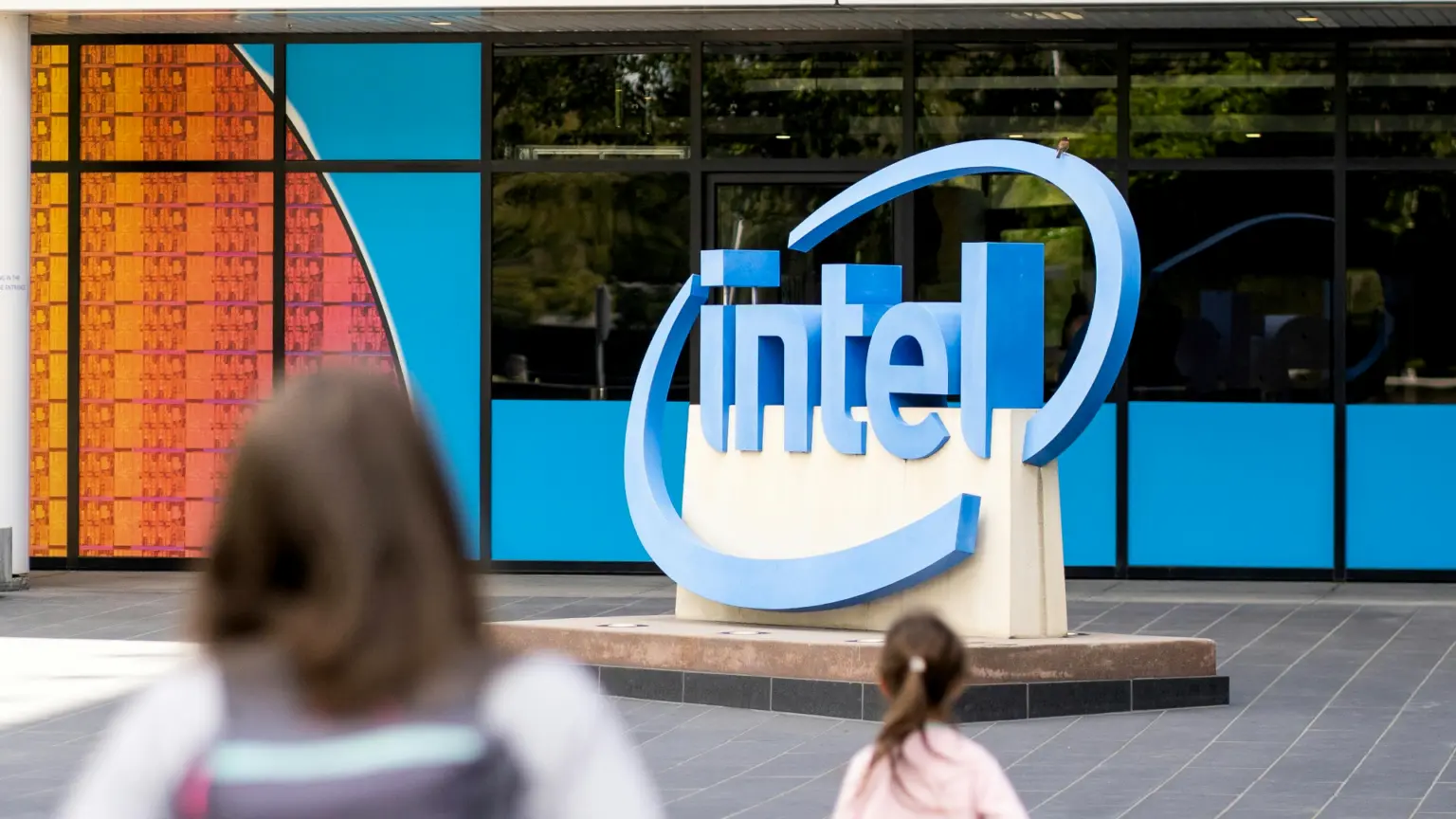
After years of strategic drift and management missteps, Intel under Lip-Bu Tan is beginning to prove that its turnaround plan is more than just aggressive cost-cutting. Its latest second-quarter revenue guidance, settling in at $14.3 billion, not only beat Wall Street’s expectations, but triggered a euphoric 19 per cent rise in share value. This signals that the former Silicon Valley icon has found its path in a world dominated by artificial intelligence.
A strategic shift towards CPUs and AI agents
Key to Intel’s optimism is a paradigm shift in the data centre sector. While the first phase of the AI boom undeniably belonged to Nvidia’s GPUs, used to train powerful models, the market is now entering the deployment (inference) phase. This is where Intel’s CPUs are regaining relevance. In an architecture based on autonomous AI agents, requiring advanced reasoning and handling complex workloads, traditional CPUs are proving to be an indispensable part of the infrastructure. Lip-Bu Tan makes it clear that this demand is not just wishful thinking, but a real trend coming from the major cloud providers.
Partnership with Musk as foundation of foundry
The biggest image and technology victory of recent days, however, is securing Tesla as a key customer for the upcoming 14A technology process. Elon Musk’s participation in the Terafab project is a massive credibility boost for Intel’s manufacturing business (Intel Foundry). The partnership aims to create next-generation processors for robotics and data centres, directly challenging TSMC’s dominance. While financial details remain confidential, the strategic alliance with players such as Musk, Nvidia and SoftBank gives Intel the fuel it needs to transform itself into a modern, contract chip foundry.
A risky road to 2030
Despite its financial success in the first quarter, where adjusted earnings per share were 29 cents, Intel is still treading on thin ice. The transformation from ‘old giant’ to ‘nimble foundry athlete’ requires not only breaking through manufacturing bottlenecks, but also maintaining the pace of innovation in the face of increasing competition from AMD and ARM. For investors, however, the current valuation may be an attractive entry point. If Intel successfully manages demand for silicon in the coming robotics era, today’s ‘high-stakes gamble’ could end with the company returning to the throne of technological empire.