The intensifying economic rivalry between Washington and Beijing and the redefinition of global supply chains are paradoxically strengthening Poland’s position in European logistics. Changes in US customs policy, including a key modification of the so-called T86 rule limiting duty-free imports of low-priced shipments, are forcing Asian giants to revise their strategies and seek stable footholds on the Old Continent. In this new hand, Poland is no longer merely a transit corridor, evolving into a strategic distribution centre for the entire European Union.
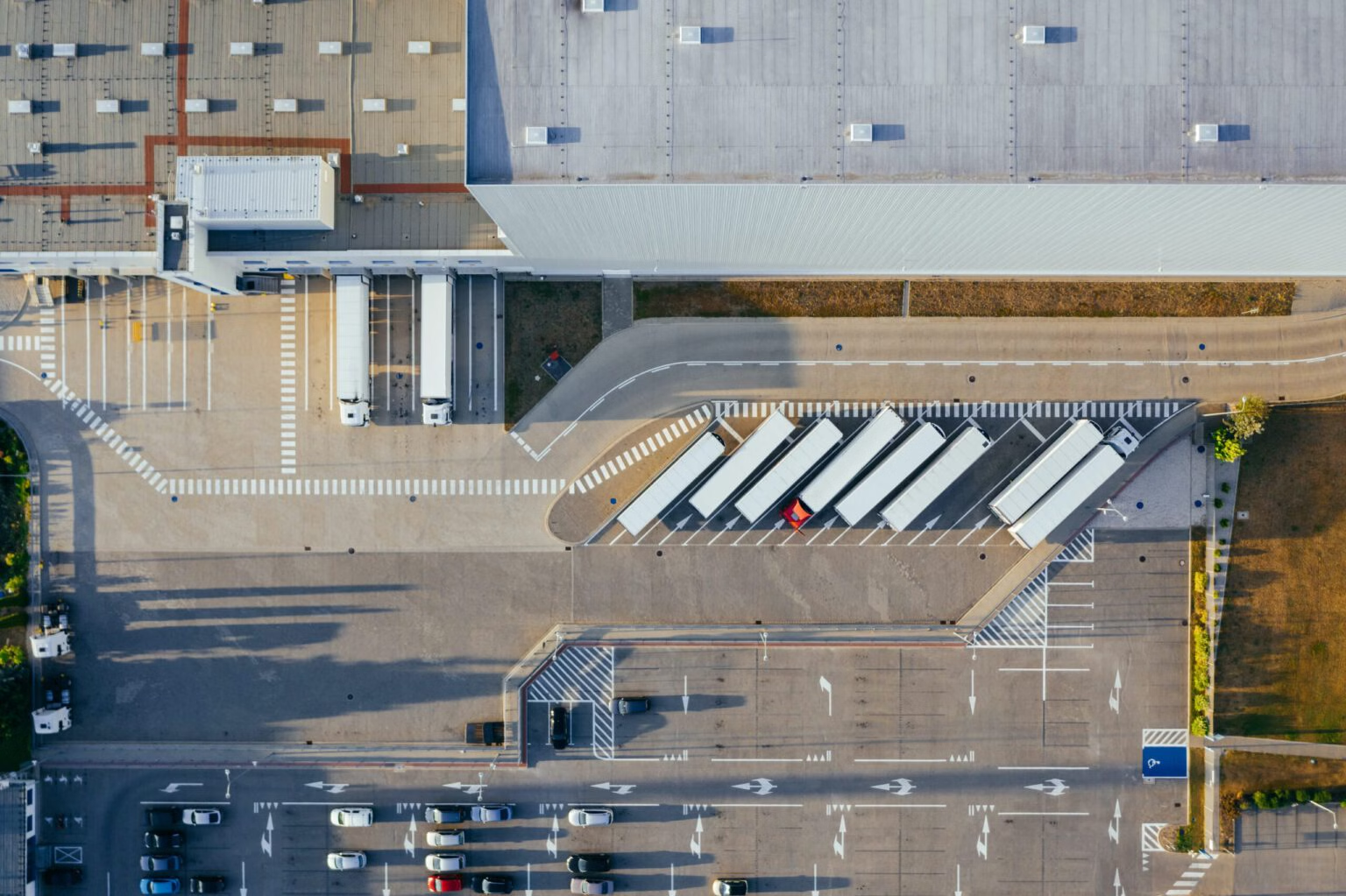
Hard data confirms this geopolitical turnaround. The Małaszewicze terminal, the heart of the railway’s New Silk Road, handled 280,000 TEUs from China in 2024, an impressive increase of 157 per cent year-on-year. It is through this hub that nearly 90 per cent of all rail traffic from the Middle Kingdom to the EU now passes. In parallel, the importance of maritime infrastructure is growing – the ports of Gdansk, Gdynia and the Szczecin-¦winoujscie complex handled almost 137 million tonnes of goods last year. Combined with the EU’s largest truck fleet, Poland has a unique ecosystem capable of handling diverted freight streams that bypass Russia or escape US tariffs.
However, the sector is entering a phase of mature stabilisation, which brings with it new challenges. Despite growing volumes, economic indicators in transport remain slightly negative and wage pressure is clear – salaries in distribution centres have risen by 10 per cent in 2025. Wyser Executive Search experts Agnieszka Mazurek-Szulim and Paweł Prociak point out that in this environment, infrastructure alone is no longer enough. Competitive advantage is now being built on managerial competence, the ability to integrate multimodal transport and advanced analytics.
This is a clear signal: Poland’s role as a ‘back door’ to Europe for Asian business will grow. However, this requires not only flexibility from local operators and managers, but above all the ability to navigate the maze of global regulations and cultural differences that are becoming the new currency in global trade.