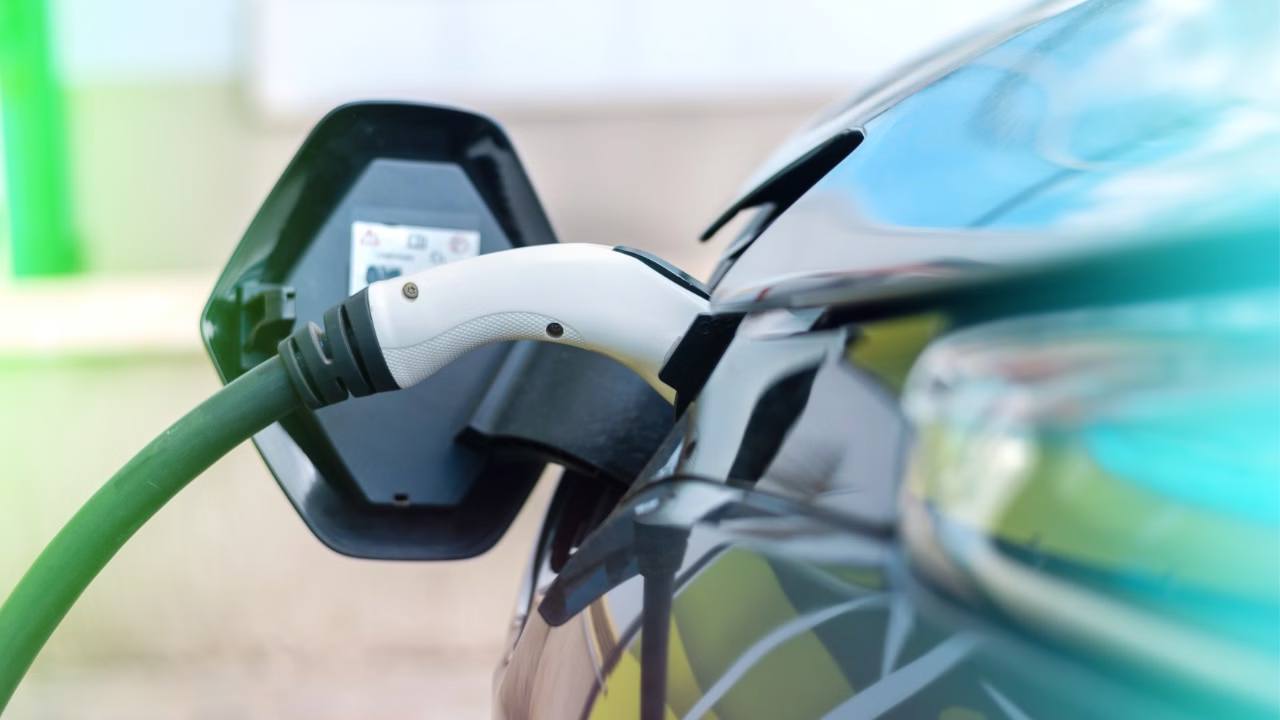
The year 2025 will go down in the history of Polish electromobility as a period of unprecedented growth. According to data from the Polish New Mobility Association, the number of all-electric cars (BEVs) increased by 95 per cent year-on-year, surpassing the barrier of 118,000 registered vehicles. At the same time, the charging infrastructure has densified to more than 11,300 points, of which up to 35 per cent are DC fast chargers. However, behind the facade of impressive statistics, there is market uncertainty related to the expiry of the OurEauto subsidy programme, which could slow down sales momentum in the coming quarters.
The withdrawal of fiscal stimulus calls into question the pace of EV adoption in 2026, but experts suggest a change in optics. Paweł Małkowiak, CEO of Krakow-based software house Solidstudio – awarded in the Deloitte Technology Fast 500 ranking – notes that the market is entering a phase of operational maturity. Fleets put on the road thanks to subsidies will remain in use for years, guaranteeing operators a stable volume of charging sessions. This means that the business focus is shifting from the simple provision of hardware to the efficiency of infrastructure management.
It is at the software layer where the key margin battle between operators (CPOs) and service providers (eMSPs) will now play out. With the implementation of the EU AFIR regulation, the market has been forced to abandon closed ecosystems in favour of full interoperability and payment transparency. New regulatory requirements mean that standards such as OCPP in its latest versions or the ISO 15118-20 protocol are no longer a technological novelty and are becoming a business requirement.
This signals that electromobility is becoming a complex ecosystem of digital processes. Those suppliers who offer not only a physical charger, but above all a reliable backend, will win. Systems for network load prediction, handling dynamic tariffs and implementing Plug & Charge technology, the global market for which is expected to grow at a rate of more than 22 per cent per year, are becoming crucial. In the new reality, it is the quality of the code and the stability of the management platform, and not just the location of the station, that will define the leaders of the e-mobility market in Poland.