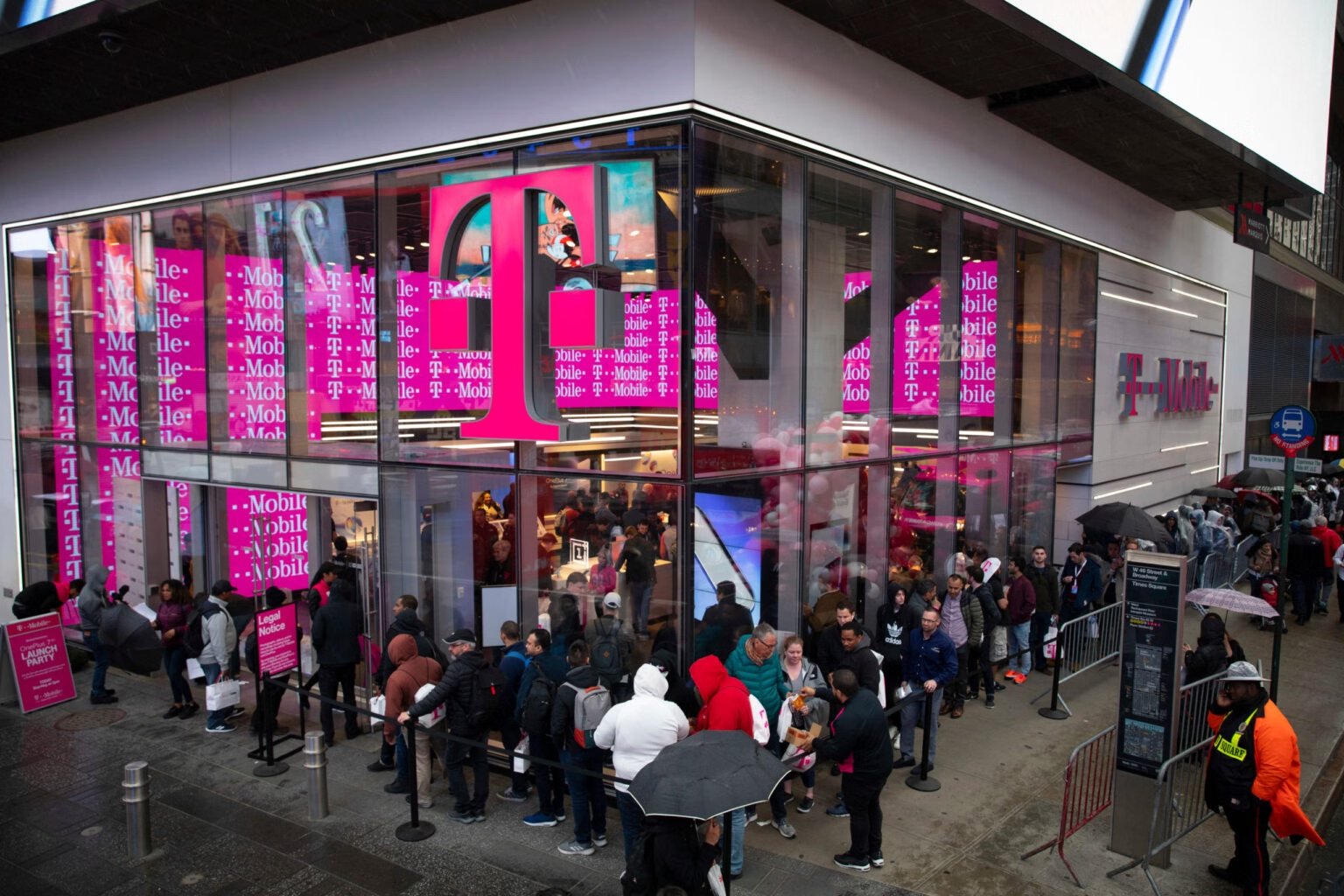
Deutsche Telekom has agreed to acquire Fiberhost and INEA from Macquarie Asset Management. The transaction values both assets at around €1 billion. Following its completion, which is scheduled for the end of 2026 and subject to regulatory approval, both companies are set to become part of T-Mobile Polska.
For the operator, this primarily represents a move towards a larger-scale investment in its own fixed-line infrastructure. Fiberhost has a network reaching around 1.4 million households, whilst INEA has over 300,000 customers. T-Mobile, which has so far developed its fixed-line broadband services mainly through wholesale access, will therefore gain greater control over costs, service quality and the pace of expansion of its offering.
The transaction is part of the transformation of the Polish telecoms market. According to UKE, by 2025 fibre-optic connections had already reached 80.1 per cent of households, whilst operators’ capital expenditure rose by 32.8 per cent to 12.7 billion zlotys. As infrastructure consolidation progresses – as exemplified by the planned acquisition of Nexera by Orange and APG – competition is shifting from simply expanding coverage towards the effective use of networks and the sale of bundled services.
For customers, this could result in fiercer competition in the market for converged offers – that is, those combining fixed-line and mobile internet, television and digital services. For T-Mobile, this represents an opportunity for higher profitability and greater customer loyalty.
However, maintaining the open nature of the Fiberhost model will remain crucial. Over 160 service providers use its network. If access remains non-discriminatory, the takeover could strengthen retail competition without significantly restricting wholesale competition.