Just one year after the controversial decision to extinguish the iconic XPS line in favour of the generic ‘Dell Premium’ naming, the US tech giant is making a strategic U-turn. At CES 2026, Jeff Clarke, the company’s COO, took a rare bit of candour in the corporate world, admitting that last year’s branding restructuring was a mistake.
The attempt to simplify the portfolio by introducing the Dell, Dell Pro and Dell Pro Max naming scheme – clearly inspired by the strategy of competitors from the smartphone world – crashed into market reality. Business customers and enthusiasts proved too attached to the XPS brand, which over the years has become synonymous with performance in the Windows segment.
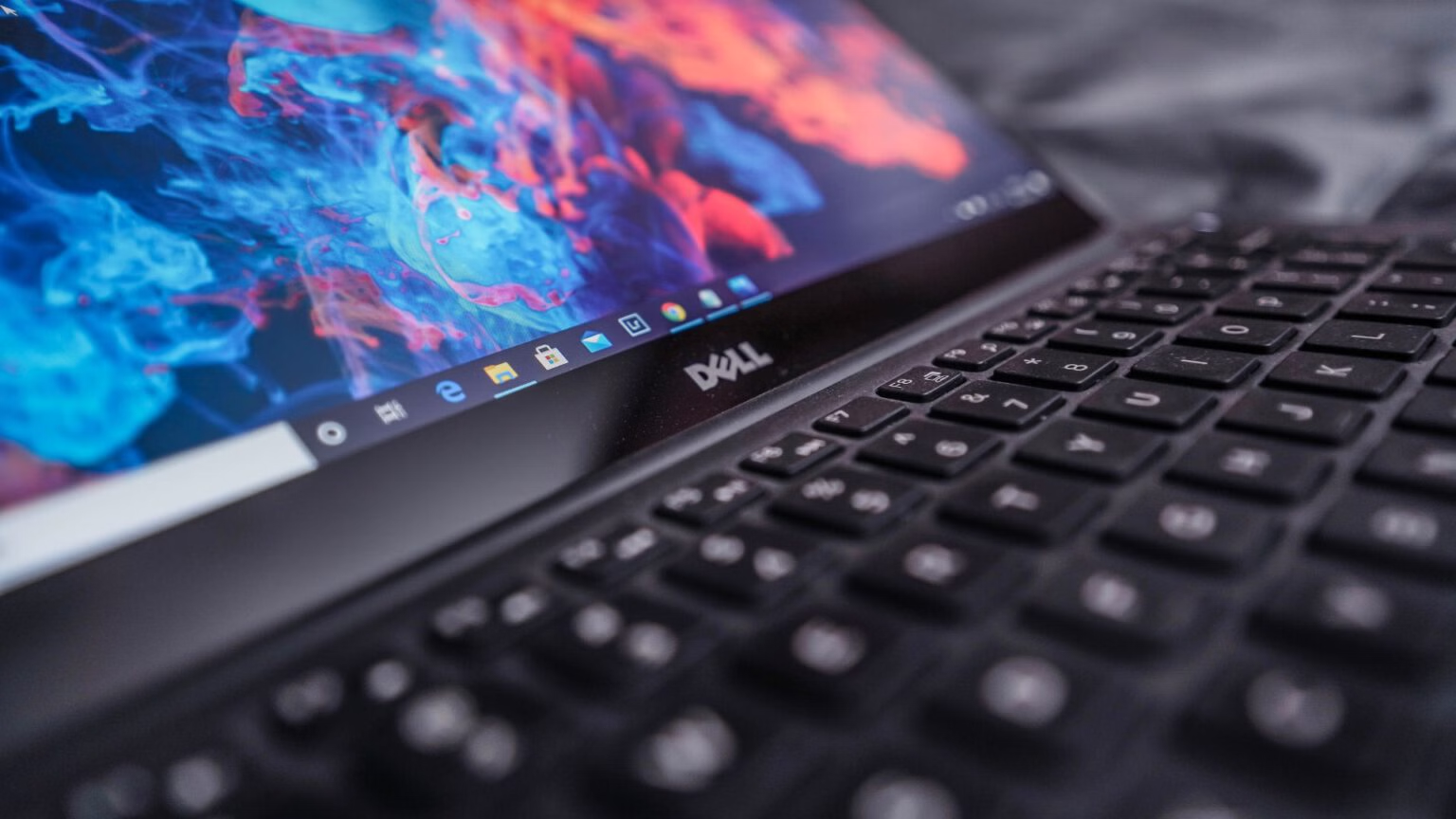
The response to this lesson in humility is the launch of two new models, the XPS 14 and XPS 16. The hardware represents not only a return to the old nomenclature, but also a correction in design philosophy. Dell is phasing out the user-criticised, touch-sensitive LED bar, bringing back a physical row of function keys. This is a clear signal that ergonomics at work is returning to the forefront before futuristic aesthetics.
Despite the robust construction, the engineers managed to keep the weight of the devices low, oscillating around 1.36 kg for the 14-inch model and 1.6 kg for the 16-inch model, respectively.
The interior of the new laptops reflects the growing importance of local artificial intelligence processing. Based on Intel Core Ultra Series 3 chips and integrated Intel Arc graphics, the units are said to offer as much as a 78 per cent increase in performance on AI tasks compared to previous generations.
This is a key selling point at a time when the market is expecting Copilot-ready devices and advanced language models directly on the device. This is rounded off by a 70 Wh battery and a generous set of ports, including Thunderbolt 4 and DisplayPort 2.1, which is not standard in this chassis thickness class.
Dell is also emphasising the service aspect, in line with the ‘Right to Repair’ trend. The modular design of USB-C ports, interchangeable keyboards and the use of recycled materials are expected to extend the product lifecycle in corporate fleets.
Prices in the US market start at $1,650 for the smaller model, suggesting that the legend’s return will involve increases in Europe too. Cheaper configurations will hit distribution in February, with a refreshed XPS 13 model expected later in the year.