Building or upgrading a company’s infrastructure has ceased to be a routine operational task and has become a test for IT budgets. According to a recent report by guenstiger.de, which analysed more than 28,000 products between November 2025 and January 2026, RAM prices and the PC component market have entered a phase of steep price increases that we have not seen in years.
Memory at the price of gold
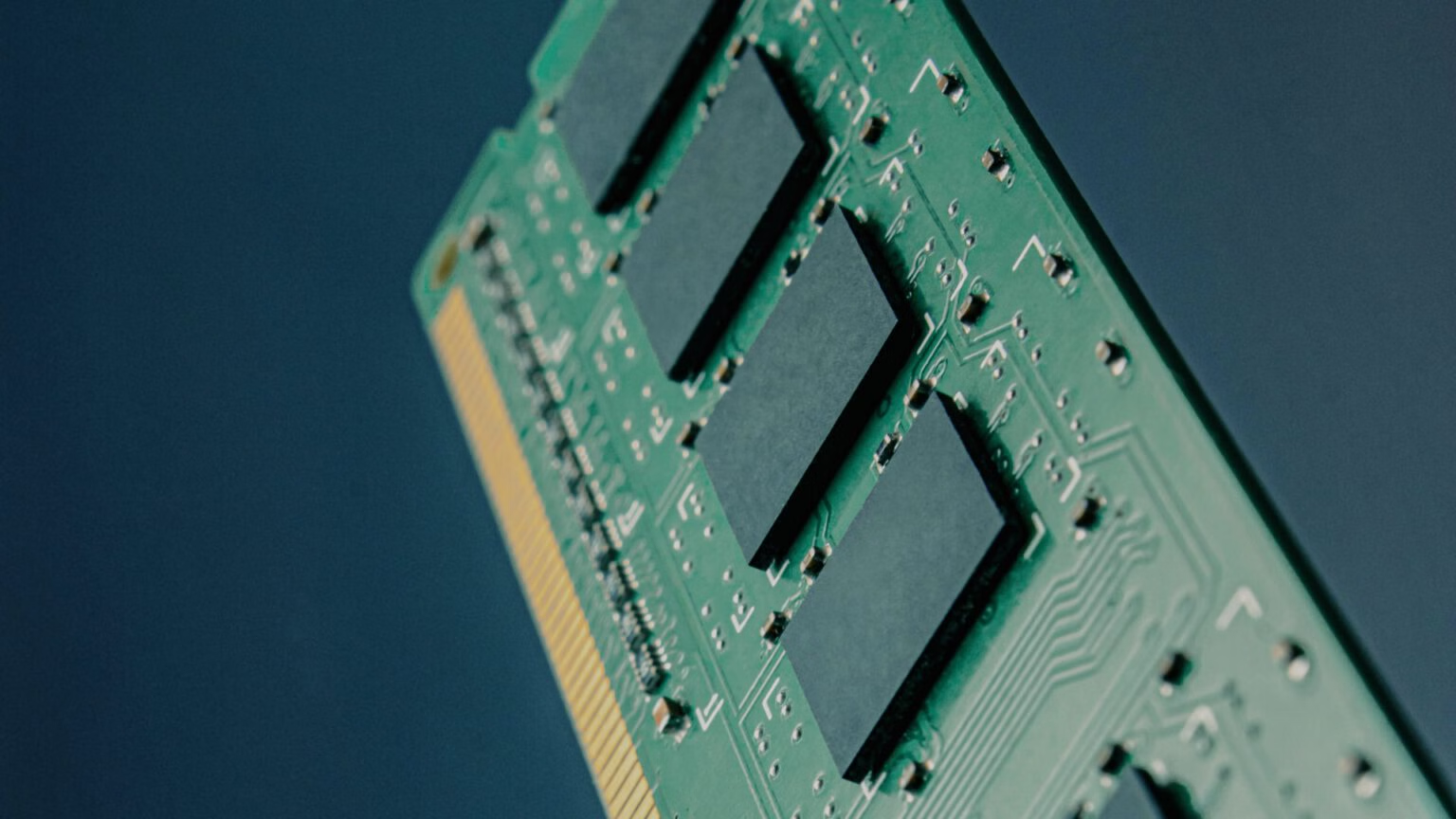
The biggest shock has affected the operating memory segment. The prices of modern DDR5 modules have doubled in just three months, calling into question the profitability of a massive hardware swap to the latest standards. However, the problem is not limited to technical innovations. The older but still widely used DDR4 architecture has become 46 per cent more expensive, and even the already niche DDR3 modules have seen an increase of almost a third.
Experts point out that the culprit is not increased demand from end users, but a structural shift in supply chains. Driven by the arms race in the area of artificial intelligence, technology giants are buying up huge stocks of high-performance memory for their data centres. Chip manufacturers, reacting to these lucrative orders, have shifted production lines, drastically reducing supply in the consumer and business markets.
More than just RAM
The knock-on effect is evident across the hardware ecosystem. SSDs have become 25 per cent more expensive on average, which directly translates into higher costs for server and workstation builds. Even components such as graphics cards and motherboards are seeing double-digit increases, generating differences running into thousands of euros with larger fleet orders.
It is interesting to note, however, that off-the-shelf device segments such as notebooks, smartphones and tablets have so far shown great resilience to this turbulence, maintaining stable price levels. This suggests that OEMs have long-term contracts in place to protect them from sudden market fluctuations, which may be prompting companies to purchase off-the-shelf solutions rather than configuring systems themselves.
A strategy for difficult times
Torben Mallwitz, chief technology officer at guenstiger.de, warns that a quick return to low prices is unlikely. AI data centres will continue to absorb the lion’s share of global production. In the current business climate, postponing investment in the hope of a correction could be counterproductive.