Artificial intelligence (AI) has dominated the technology discourse, making its way from a market curiosity to the most expensive ticket to the global business premier league. The year 2025 closed in the technology, media and telecommunications sector with an astronomical $903 billion spent on mergers and acquisitions. Behind the scenes of the fascination with new applications, however, another, much more brutal game is being played. It is a battle for physical infrastructure, computing power and chips. Those controlling the technological foundations will dictate the terms throughout the digital world in the coming decade.
The figures from GlobalData’s contribution leave no illusions. The 76 per cent jump in the value of global TMT deals compared to the previous year is a clear signal that the market has moved into a completely new phase. Generative artificial intelligence has ceased to be regarded as a purely speculative technology. It has become a firm foundation on which key investment decisions of major corporations are now based. Although the attention of the mainstream media is still focused on innovative software and new end-user functionalities, the real battle for influence is taking place at the infrastructure layer.
Anatomy of a hundred billion dollars
When analysing the structure of spending, there is a clear shift in emphasis. Deals directly related to artificial intelligence alone took in $117 billion last year, an impressive 125 per cent year-on-year increase. Application software continues to generate a massive volume of capital, reaching a ceiling of $169 billion in almost two hundred deals, but it is the strategic moves on the technology back-end that will define the future balance of power.
This landscape is being shaped by decisions of unprecedented scale. The record-breaking acquisition of Platform X by x.ai for $45 billion is a classic example of the consolidation of massive data sets needed to train sophisticated language models. Equally important are the powerful minority partnerships that allow the giants to build a back office without immediately causing antitrust authorities alarm. Microsoft and Nvidia’s $15 billion investment in Anthropic and Meta Platforms’ $14 billion acquisition of a 49 per cent stake in Scale AI are strategic moves on the chessboard to secure access to the most innovative algorithms and outstanding engineering talent.
Bottleneck syndrome and new oil
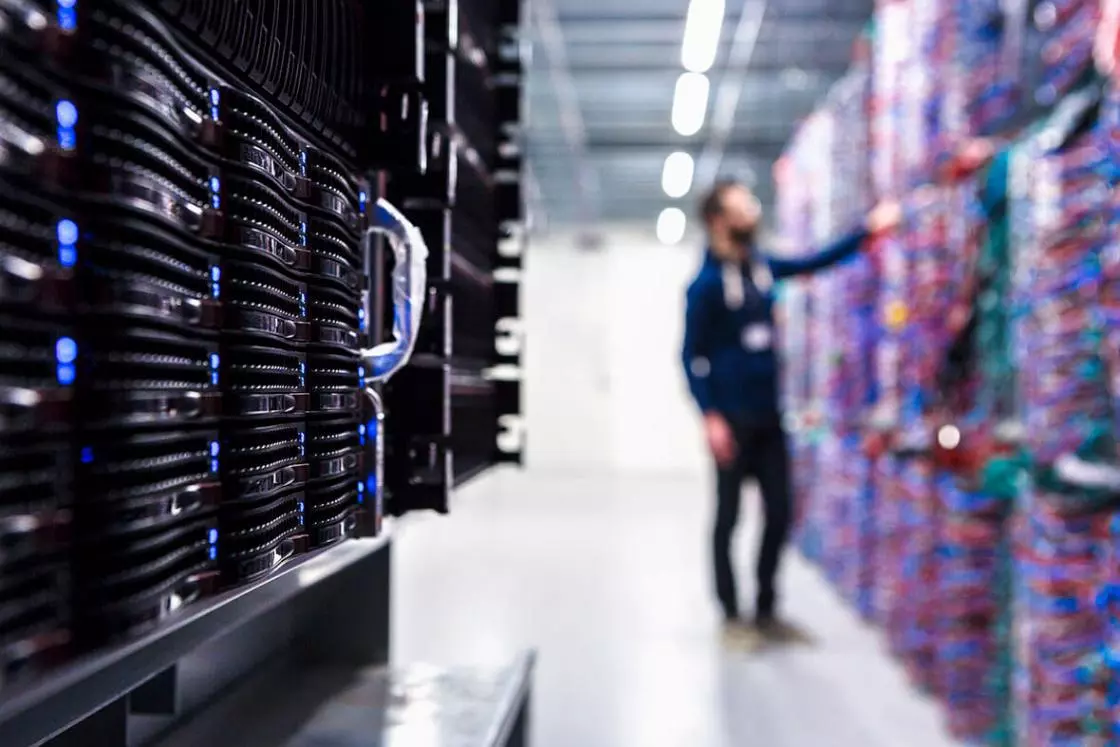
Understanding these phenomena requires looking at AI through the lens of physical constraints. Computing power has become the new oil, and leading AI chip companies and state-of-the-art data centres are now the most desirable investment targets. The demand for the resources required to support complex models is growing exponentially, exposing the industry-wide bottleneck syndrome.
Building infrastructure from scratch is an extremely slow and capital-intensive process. Faced with a limited supply of equipment and an acute shortage of skilled professionals, mergers and acquisitions remain the fastest way to secure resources. The consequence of this race is an increasing oligarchisation of the market. The scale of the required financial outlay means that only the organisations with the deepest pockets remain in the battleground. Smaller players are inevitably relegated to the role of customers forced to rely on external infrastructure, which in the long term exacerbates the risk of technological dependence on a single supplier for entire sectors of the economy.
A year of operationalising and seeking returns
Despite the record results, analysts are predicting sluggish transaction activity in the current year, 2026. This projected stagnation, however, does not mean a retreat from innovation. Rather, it is the natural reaction of corporate bodies to the need to integrate giant acquisitions. The pace of further deals is also bound to be affected by unstable macroeconomic conditions and increasing pressure from regulators, who are looking increasingly closely at consolidation in the technology sector.
The observed decline in merger dynamics is a clear signal of structural change. The market is moving from a phase of aggressive resource aggregation to a phase of operationalisation. The winners of the coming months will not be those making yet another spectacular acquisition, but those organisations that most effectively implement the acquired technologies into their own bloodstream and demonstrate a real return on these astronomical investments.
Strategic implications for decision-makers
Access to cutting-edge tools based on artificial intelligence will soon take the form of a fully commercialised service, almost entirely dominated by a narrow range of providers. Understanding this is fundamental to planning long-term operational strategies. The arms race currently taking place at the foundations of infrastructure will ultimately define market standards, pricing models and digital security paradigms for the entire coming decade. Awareness of these processes allows for better risk management and more prudent strategic relationships in a world where physical access to computing power is becoming the most important market advantage.