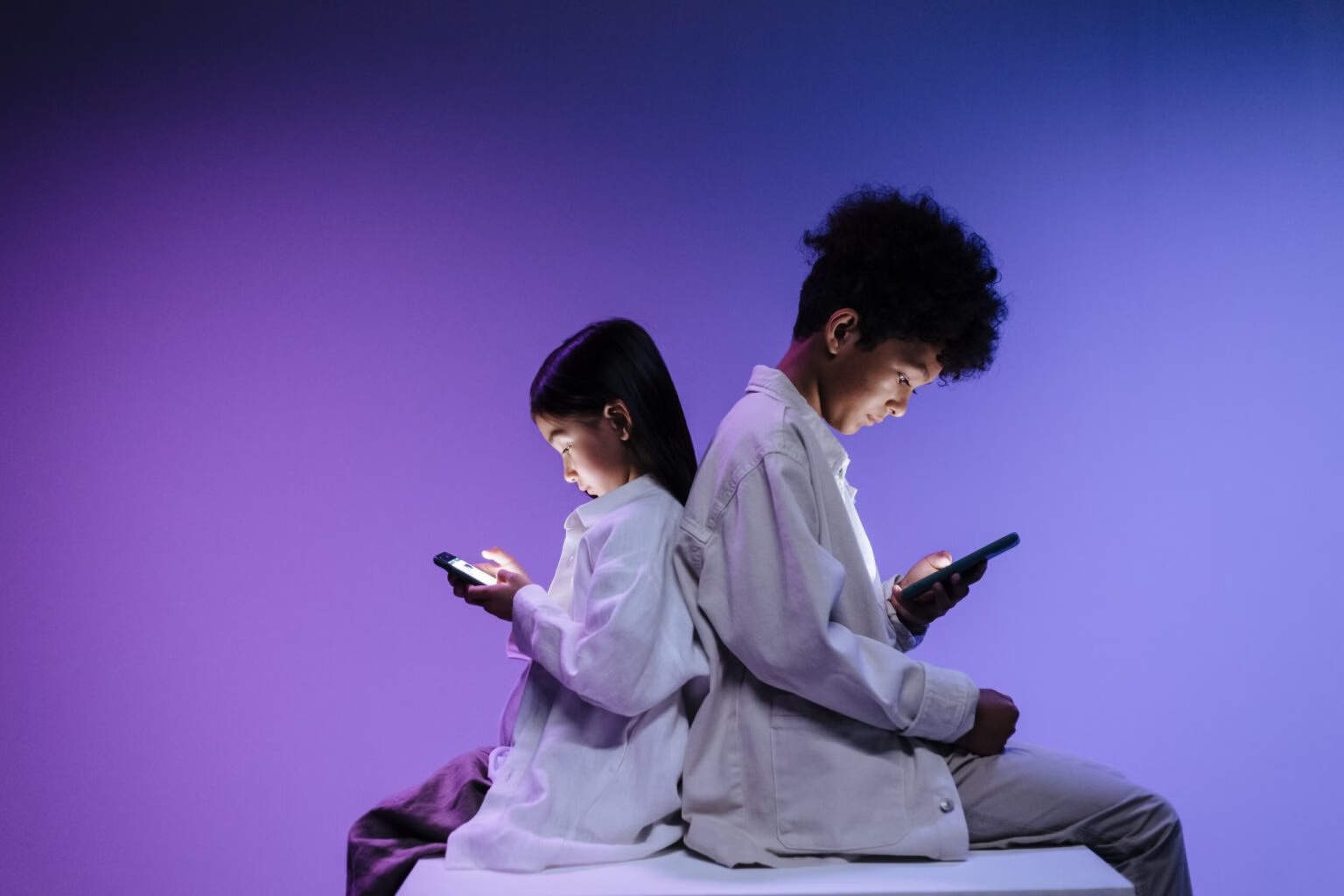
Poland joins the growing number of European countries that are choosing to systemically restrict the presence of smartphones in primary education. The Minister of National Education, Barbara Nowacka, has announced the acceleration of legislation that will introduce a top-down ban on mobile phones in primary schools from 1 September 2026. The decision, which was consulted directly with Prime Minister Donald Tusk, signals a move away from the existing autonomy of establishments towards a unified state strategy.
The move is not just a response to teachers’ requests, but part of a broader strategy based on hard data. The ministry refers to the findings of the ‘Youth Diagnosis 2026’, which clearly indicate a deepening crisis of digital hygiene and a growing dependence of the youngest on social media. From a business and social perspective, this step can be read as an attempt to save the cognitive capital of future generations of workers, whose ability to focus deeply (deep work) is systematically degraded by the notifications and algorithms of entertainment platforms.
The rules are to be clear, though not entirely inflexible. The main aim is to eliminate phones from breaks and lessons, where they have so far mainly served as entertainment. However, the ministry leaves a gateway for the ‘teaching process’ – the final decision on the use of devices as educational tools is to be left to the teacher. This approach suggests that the government is not fighting against the technology itself, but against its uncontrolled presence, which deconstructs the social structure of the school and makes it difficult to build peer relationships.