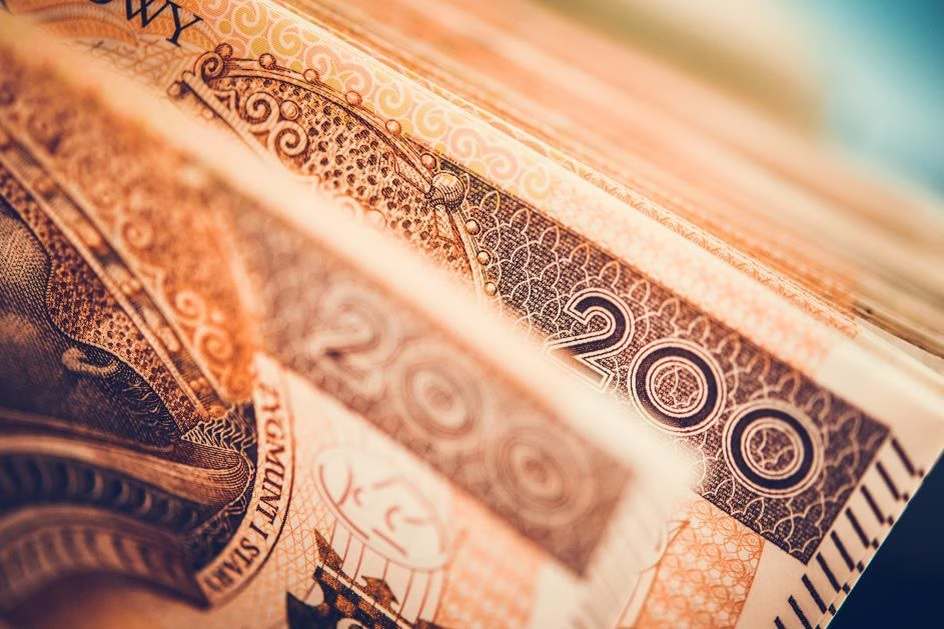
For the past few years, the Polish zloty has enjoyed the status of a relatively strong currency, carried by a favourable interest rate differential and capital inflows. However, today’s macroeconomic landscape resembles entering the eye of a cyclone. As Mateusz Czyżkowski, an analyst at XTB, notes, the Polish currency has found itself in the middle of a ‘geopolitical storm’, triggered by the escalation of the conflict in Iran. This event not only wobbles the exchange rate, but redefines the National Bank of Poland’s strategy for the coming quarters.
From a business perspective, data from the domestic backyard, which would normally herald monetary easing, are key. Wage dynamics in the corporate sector is clearly decelerating (6.1% y/y growth vs. 6.6% expected) and employment is on a downward trend. In theory, this reduces the risk of a wage-price spiral and opens the door to interest rate cuts. However, this theory crashes against the realities of global security.
The main brake on the Monetary Policy Council has become the risk of a secondary rise in inflation, fuelled by an energy price shock. Although core inflation has moved closer to the NBP’s target, the rhetoric of central bankers has sharply tightened. MPC members such as Ludwik Kotecki and Ireneusz Dabrowski suggest that the March cut may have been the last one this year. The market, which until recently had been pricing in further cuts, has paradoxically started to consider the scenario of hikes on a 12-month horizon.
In the short term, external factors are gaining the upper hand: a strong dollar, expensive oil and a cautious Fed. If the conflict in the Middle East drags on, the technical supports of the zloty may be broken, forcing a permanent change in the trend and a further sell-off of the Polish currency.
The hope for stabilisation remains the de-escalation scenario. A return to softer rhetoric from the US Federal Reserve and a calming of sentiment on the oil market would allow the zloty to return to a path of appreciation. For the moment, however, Warsaw must wait for global tensions to calm down. The ‘wait and see’ strategy is now becoming the only rational model for managing currency risk.