In the work of the management board and C-level executives, many key decisions are not made in writing, but in conversations. With strategic clients, investors, the supervisory board, partners, advisers or team leaders. It is in these conversations that agreements, reservations, declarations and nuances emerge, which later determine the course of action.
The problem begins after the meeting. All that remains are a few notes, the participants’ memories and the assumption that ‘we all know what we agreed on’. Given the pace of the board’s work, where discussions follow one after another, the context quickly becomes blurred. It is difficult to reconstruct later whether something was a decision, a suggestion or merely a preliminary declaration.
Plaud Note Pro has been designed with this part of the process in mind – the part that usually slips through the cracks between the end of a discussion and the first follow-up. It is an elegant tool for organising context: it turns a meeting into a transcript, a concise summary, a list of agreed points and material you can refer back to before making the next decision.
Premium hardware, not an AI experiment
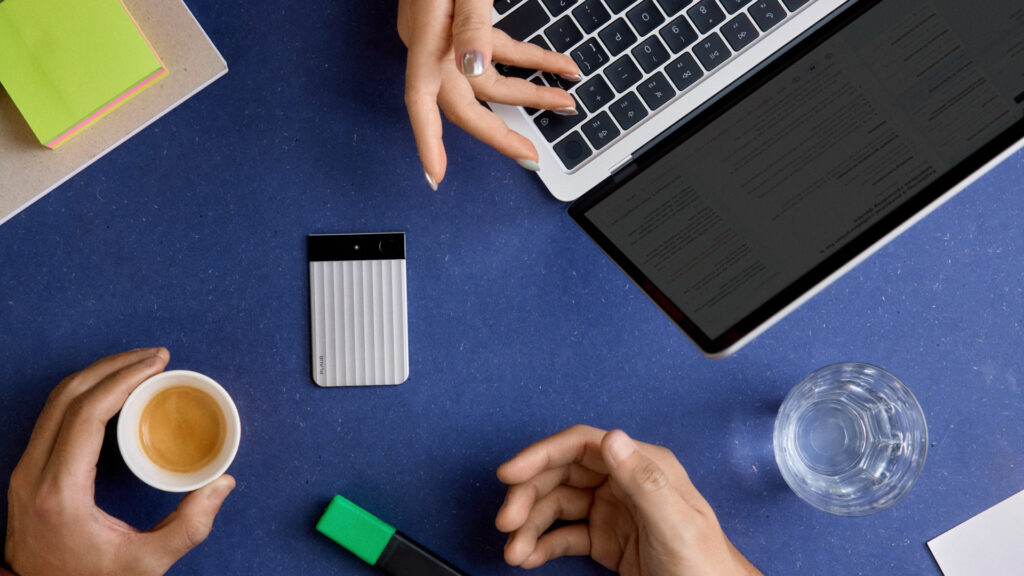
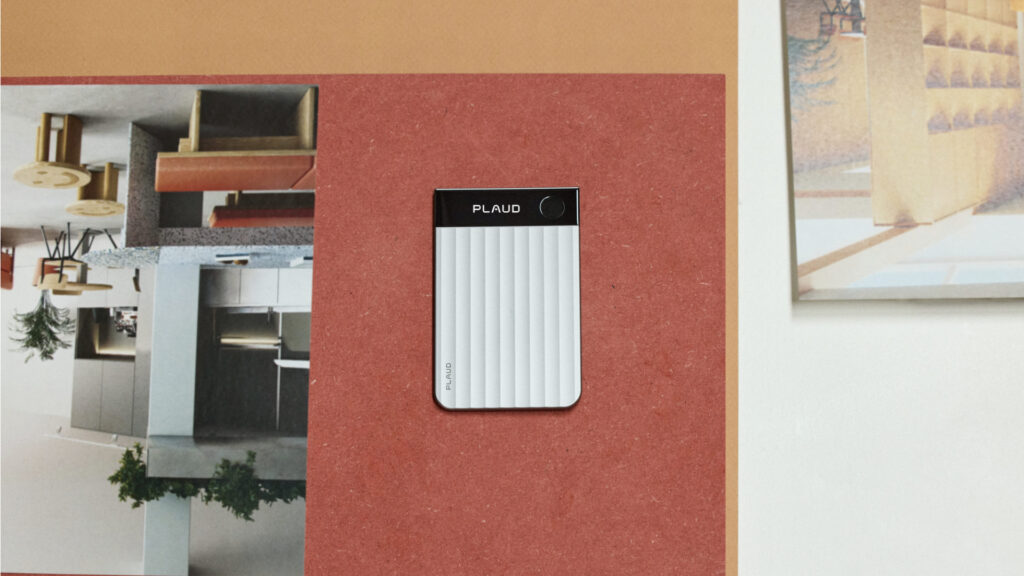
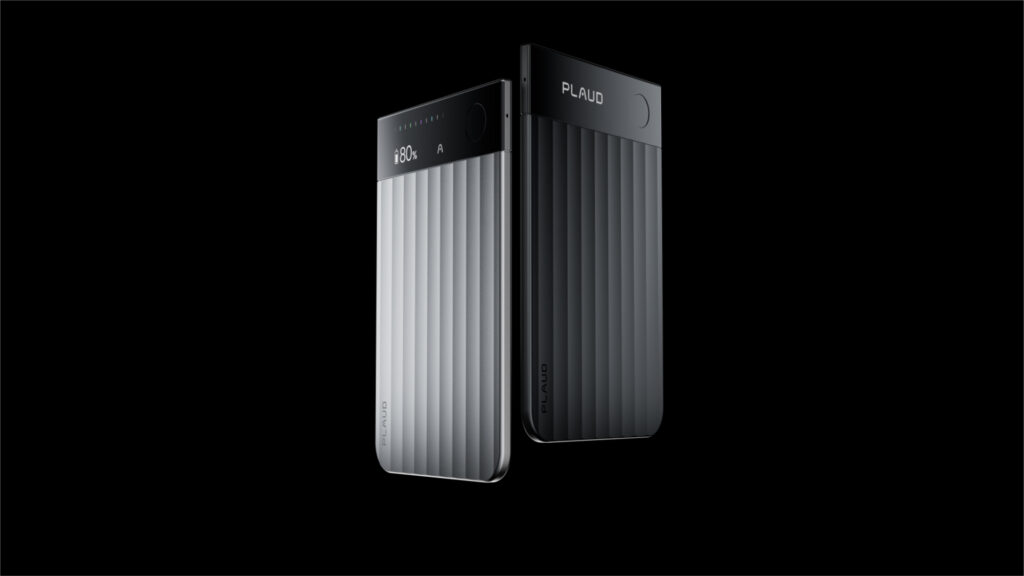
The first impression is one of the strongest aspects of this product. The Plaud Note Pro immediately gives the impression of a premium device. It is slim, robust, minimalist and meticulously crafted. It doesn’t look like just another gadget with‘AI’tacked on, but rather a device designed for everyday, professional use.
This is important because such a device is often left on the table during meetings with key clients, partners, investors or board members. It cannot look haphazard. It must be discreet, elegant and credible. The Plaud Note Pro meets this requirement. It doesn’t try to draw attention to itself, but it conveys a sense of quality.
Here we see the logic familiar from well-designed consumer products: the device should be simple, well-made and intuitive to use. No manual, no learning curve, no feeling that you have to go through yet another technical process before a meeting.
Compact size, sensible specifications
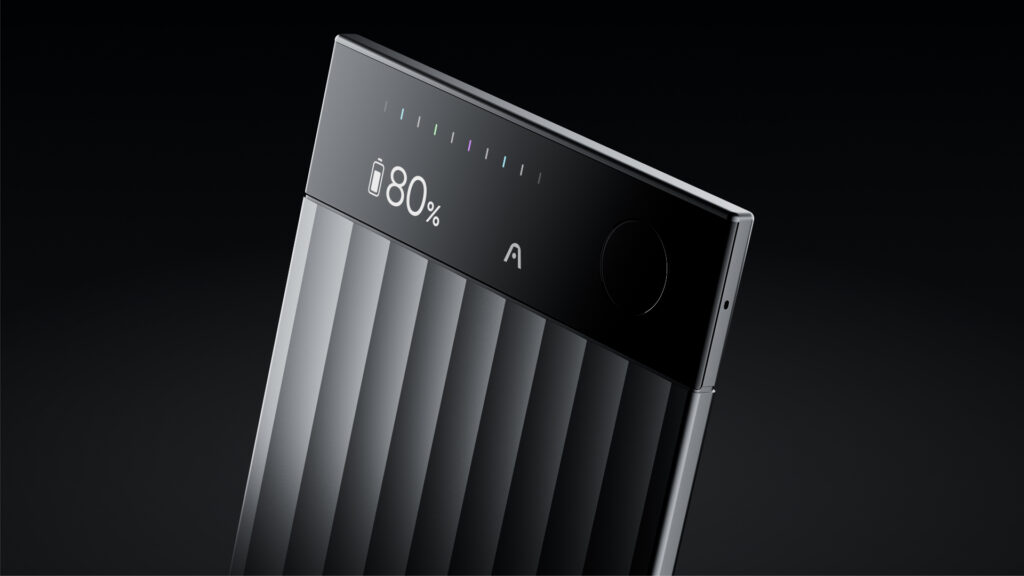
Behind the elegant casing lies a thoroughly practical set of specifications. The Plaud Note Pro is about the size of a credit card, with an AMOLED screen, four microphones and 64 GB of local storage. This is important because the device isn’t just a remote control for apps. It can record locally and only synchronise the footage with your phone or computer later.
The battery life is also well-suited to a mobile working style. The manufacturer claims up to 30 hours of standard recording and up to 50 hours in a more power-efficient mode, at the cost of a reduced sound pickup range. In practice, this means the device should easily last through a busy day of meetings, and with less frequent use, it can also last several days without needing to be charged.
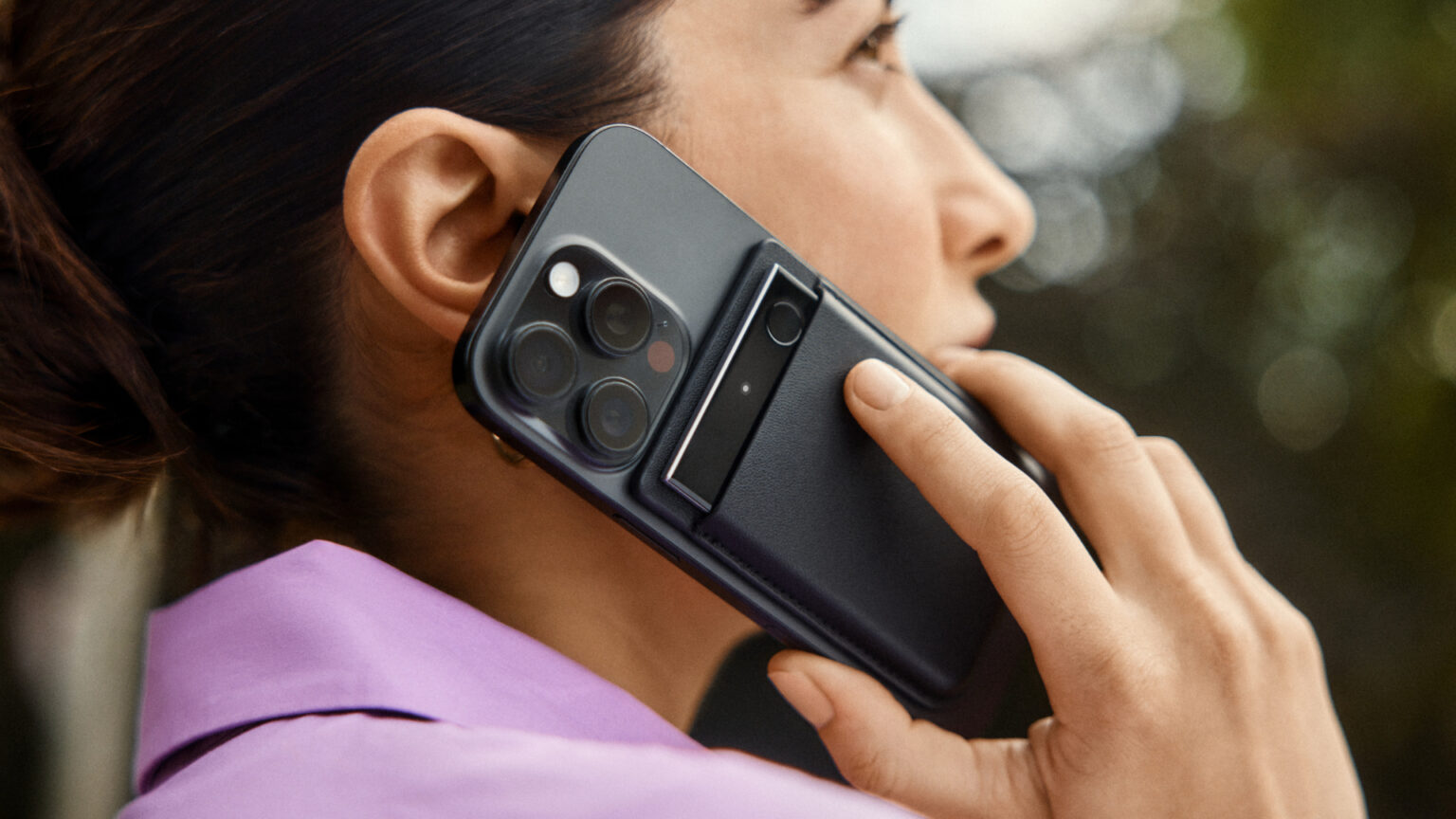
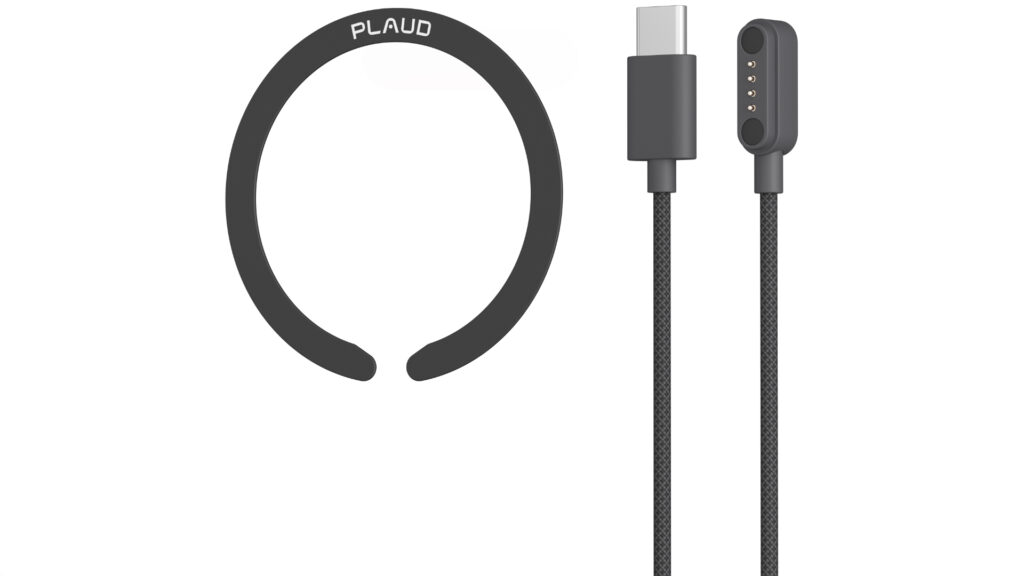
The mounting method is also important. The Plaud Note Pro uses a magnetic case and can be attached to a phone, including in a MagSafe-compatible configuration. The set also includes a magnetic ring for phones without such a mounting. It’s a small detail, but it illustrates the product’s philosophy well: it’s designed to be always to hand, not just another item in your bag, but an integral part of your everyday work kit.
Simplicity
In a tool designed for senior management and C-level executives, simplicity is a prerequisite for usability. If a product demands too much attention, it quickly falls out of the daily workflow.
Plaud Note Pro fits this logic perfectly. The usage scenario is simple: start recording, hold the conversation, then return later to the recording and summary in the app. No complex configuration, no need to check multiple settings, and no sense that the technology is taking over the meeting.
Good UX here means that the device fades into the background. It sits on the table, does its job and doesn’t require constant monitoring. When talking to an investor, an enterprise client, a legal adviser or a candidate for a director-level position, the focus should be on the person, not the equipment.
One of the most important features of Plaud Note Pro is its ability to record not only in-room conversations but also telephone calls. This is important because a large part of the work carried out by managers, the board and C-level executives takes place outside formal meetings: in the car, at the airport, between one call and another, or during a quick conversation with a client, lawyer, investor or partner.
In the basic scenario, the device records the surroundings, i.e. traditional face-to-face meetings. In the second mode, it records a telephone conversation by utilising physical contact with the phone and detecting vibrations. As a result, it is not solely dependent on the system limitations of iOS or Android, which have for years made traditional call recording difficult.
In the Pro version, this logic has been simplified. The device can automatically recognise whether the user is on a phone call or recording a live meeting. It’s one of those features that sounds technical but, in practice, has a very simple effect: less switching, less to remember, and less risk of an important call being recorded in the wrong mode.
Audio that stands up to the test outside the conference room
Why have a separate device when any phone can record? The answer only becomes clear in practice.
A mobile phone is versatile, but it doesn’t always work well as a tool for recording conversations. You have to position it correctly, remember to open the app, keep an eye on notifications and hope that the microphone can cope with the conditions in the room.
The Plaud Note Pro has been designed for a single task: to capture a conversation as clearly as possible and provide material that can be used later. This is most evident in less-than-ideal conditions: in a café, a conference lobby, amidst background noise, or during a conversation where several people are speaking one after the other.
The device captures the content of the conversation very well. It’s not about studio-quality recording, as in management work this is rarely an end in itself. What matters is clarity. If, after the meeting, you can go back over the decisions made, check the wording and reconstruct the context, then the recording has served its purpose.
Polish, English and business Ponglish
The manufacturer claims support for over a hundred languages, but in the Polish business environment, the list of languages alone isn’t enough. The real test is the everyday language of meetings: a mix of Polish, English and corporate jargon.
In practice, this means sentences that are obvious to a human but can be a trap for a transcription system: ‘let’s do a rollout in Q3’, ‘we need to sort this out with the client’, “the capex will be discussed at the board meeting”, “let’s put this in the pipeline”, “let’s appoint an owner on the delivery side”. This is how many management, sales and technology teams across the CEE region speak today.
That is why the quality of a transcription should be assessed not only by whether it recognises the Polish language, but also by whether it can handle switching between languages and industry-specific abbreviations. In such an environment, Plaud Note Pro is very helpful, but it does not replace the need to check the most important points. During strategic, tender or legal discussions, a transcript should be treated as excellent working material, not a document ready to be forwarded without further thought.
The real value begins after the recording
The recording itself has limited value. A raw audio file often ends up as an archive that nobody ever revisits. Plaud Note Pro makes sense because the recording is just the beginning.
In the app, the conversation is transformed into a transcript, a summary and a well-organised note. You can quickly check what was said, go back to a key part, draft an email after the meeting, share the agreed points with your team, or refresh your memory of the context before the next conversation.
This is particularly important in board work. One conversation might concern a strategic client, another financing, a third organisational changes, and a fourth legal risks. Each carries a different context and different consequences. A tool that allows you to quickly revisit the agreed points reduces the risk of memory lapses and speeds up the transition from discussion to decision.
What happens next with the note?
Convenience doesn’t end with a good transcript. In a corporate environment, what you can do with the finished note is just as important. If, after every meeting, you have to manually copy the text into a CRM, a document, Slack or a project management system, some of the promise of automation starts to fade.
Plaud is developing this area through export options and integrations, including connections via Zapier. This means that transcriptions and summaries can be sent to tools used within the company, such as Google Docs, Notion, Gmail or Slack, as well as being linked to CRM systems such as HubSpot or Salesforce. This is important for sales and consulting teams, as a note following a conversation with a client should not remain solely within the user’s private app.
However, it is worth distinguishing between two things: the possibility of integration and a mature, native workflow. Plaud Note Pro organises conversations well, but the organisation still needs to decide where the note ends up, who approves it, what is entered into the CRM, and what should remain in internal documentation. Automation helps, but it does not replace the process.
AI helps, but it does not replace human judgement
AI-generated summaries are useful, particularly for meetings with a clear structure: client meetings, operational updates, consultations or project meetings. They can quickly identify the key points and organise the material.
However, this does not mean that AI always understands the importance of nuance. It may summarise a statement correctly, but fail to pick up on the fact that a particular sentence was a risk signal, a change of position or an important declaration on the client’s part.
That is why summaries are best treated as a very good starting point. Their value lies in the fact that you do not have to start with a blank page or listen to the entire recording. Assessing what really matters is still a human task.
Subscription
The Plaud Note Pro experience doesn’t end with the purchase of the device. The full value of the product lies in the app, the transcription and the AI features, which means it operates on a subscription model. In this category, it’s hard to imagine any other pricing model.
Transcription, natural language processing, summarisation and conversation analysis do not come free of charge. Behind the user’s convenience lie the costs of infrastructure, AI models, data storage and app development. The user therefore pays not only for ‘access to features’, but for the service of processing many hours of conversations into structured text.
The free plan includes 300 minutes of transcription per month, which is sufficient for occasional use. The Pro plan offers 1,200 minutes per month, or 20 hours of transcription. The Unlimited plan is designed for those working with a large number of recordings. According to the official European price list, the Pro plan costs €19.99 per month or €110.99 per year, whilst the Unlimited plan costs €34.99 per month or €224.99 per year. When purchasing for a business, it is therefore worth considering not only the price of the device, but also the total cost of ownership: the hardware plus the subscription for those who will actually be using it regularly.

Price and availability in Poland and CEE
In the official European shop, the Plaud Note Pro costs 189 euros. In Poland, the device is available on Plaud’s official website for 829 zł, as well as from local retailers and on marketplaces. Prices usually range from around 700 zł in special offers to over 900 zł in larger retail chains.
In the CEE region, it is not only availability that matters, but also multilingual support. In companies operating regionally, meetings are often held in Polish, English and the languages of local markets. Plaud Note Pro has a practical advantage here, as a tool of this kind must cope with the everyday multilingual nature of business in Central and Eastern Europe.
Privacy in the EU: convenience does not exempt you from the rules
Privacy remains the most important issue for companies in the European Union. Plaud Note Pro is convenient precisely because it records conversations so easily. But this very feature requires caution.
In business dealings, the safest practice is to inform the other party that the conversation is being recorded. This applies particularly to conversations with customers, job applicants, employees, investors and partners. It is not just a matter of the law, but also of trust.
Companies should clearly define who is authorised to record conversations, for what purpose, where the recordings and transcripts are stored, how long they are retained, and who has access to them. This is particularly important for discussions concerning finances, strategy, customer data, remuneration, M&A projects, recruitment or disputes.
Plaud declares compliance with European privacy requirements and security certifications, but the provider’s responsibility does not cease. In the EU, any tool processing call data should be incorporated into the organisation’s internal policies.
A recording does not replace a contract
A recording of a conversation can help to reconstruct what was said, what terms were agreed upon and where discrepancies arose. It can serve as a memory aid and supporting evidence.
However, it should not replace a contract, a purchase order or an email confirmation of key decisions. In many situations, verbal agreements may be relevant, but good business practice remains straightforward: important terms must be confirmed in a permanent, agreed-upon form. Plaud Note Pro helps to capture the conversation. It does not replace the contractual process.
Pro or standard Note?
The closest alternative is the basic Plaud Note. It is still a very good AI recorder, but the Pro version has several advantages that are important in management work: a better set of microphones, a wider sound pickup range, an AMOLED screen, longer battery life in endurance mode, and automatic detection of phone calls or live meetings.
So the difference isn’t just down to the ‘Pro’ label. The basic model will be sufficient for those who record less frequently and work in more predictable conditions. The Note Pro makes more sense where calls are frequent, take place in various locations, and include both face-to-face meetings and phone calls.
Mobile apps are also an alternative, such as AI note-taking tools or built-in transcription features in iOS, Android, Teams, Zoom or Google Meet. Their advantage is a lower barrier to entry. Plaud Note Pro’s advantage lies elsewhere: it is a separate, physical device designed for conversations, regardless of whether the meeting takes place at a table, in a car, at a conference or outside a video-conferencing app.
Plaud Note Pro is one of those products that makes sense not because it showcases new technology in a flashy way, but because it solves a specific problem. It helps to capture what is easily lost in conversations: context, agreements, caveats and next steps.
It is not a tool for every organisation. If most meetings take place online and the company already uses transcription in Teams, Zoom or Google Meet, the purchase may be harder to justify. If nobody revisits the recordings or makes use of the summaries, the device’s potential will remain untapped.
But where discussions are a real source of decision-making, the Plaud Note Pro has strong selling points. It is well-made, easy to use, captures sound well and efficiently converts the recording into material for further work. It doesn’t shorten meetings or make decisions. Instead, it helps ensure that what has already been agreed isn’t lost.