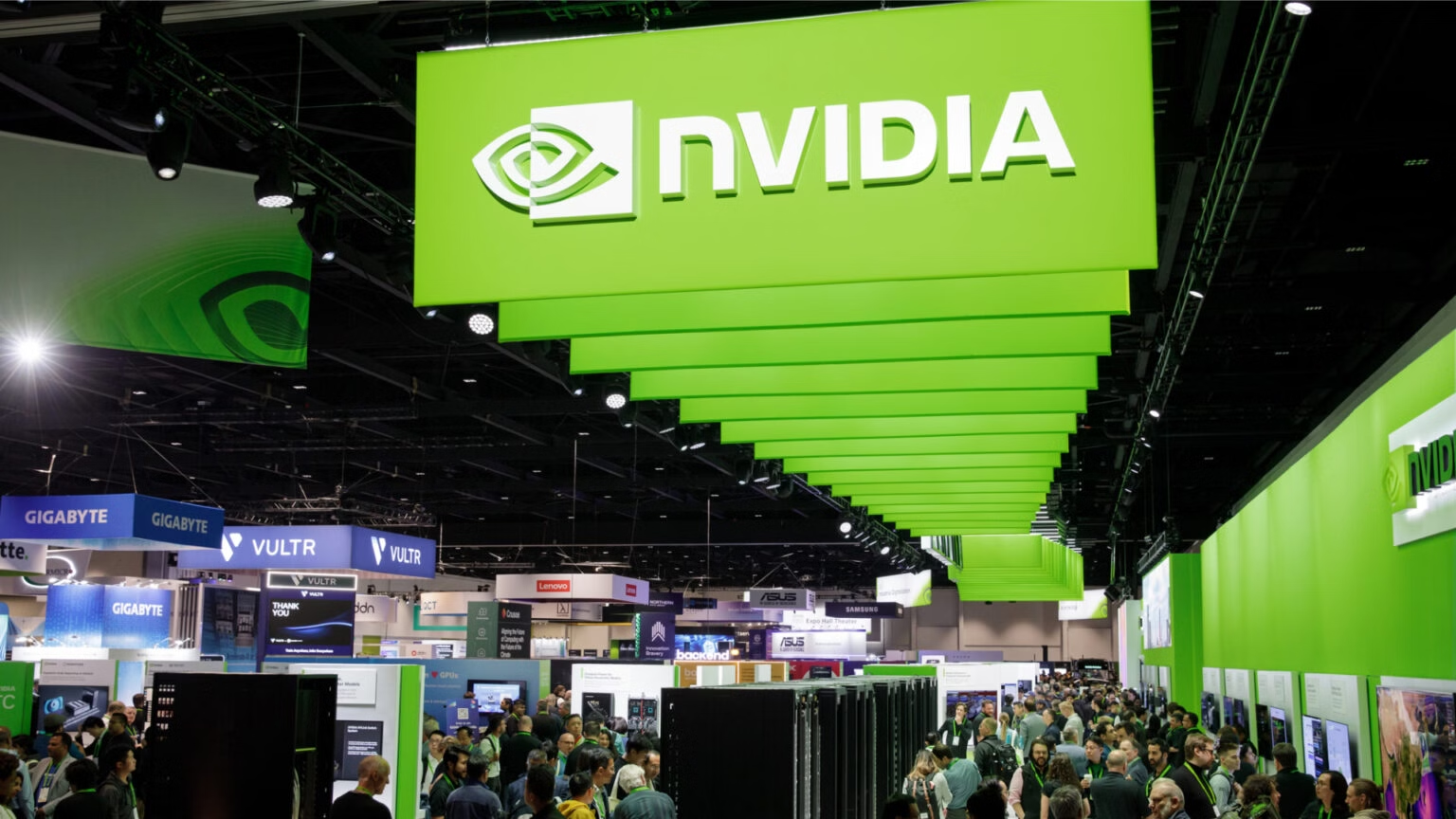
Nvidia aims to accelerate the global expansion of artificial intelligence infrastructure by combining its technologies with capital from major financial institutions. The company has signed agreements with Apollo, BlackRock, Blackstone, Brookfield, Goldman Sachs and KKR. Together, they aim to create platforms that will, over time, mobilise over $500 billion in external funding for data centres and AI infrastructure. For the time being, however, these are preliminary agreements, and the final terms have not been disclosed.
The scale of the project shows that the development of AI is increasingly less like a standard cycle of investment in technology and more like the construction of new industrial infrastructure. According to Goldman Sachs Asset Management, expenditure by the largest cloud providers could reach around $737 billion in 2026, compared with around $160 billion in 2023.
For Nvidia, this means the opportunity to boost sales not only through demand for processors, but also by making it easier for customers to access the capital needed to purchase them and build entire data centres. At the same time, a new financial model is emerging, in which computing power is becoming an asset that can secure long-term investments.
The consequence could be even faster development of AI infrastructure, but also a closer link between the technology sector and the credit market and private equity. If the utilisation of new data centres proves to be lower than expected, the investors financing them will also bear the risk. Energy also remains a significant constraint. The IEA forecasts that global electricity consumption by data centres will rise from around 485 TWh in 2025 to around 950 TWh in 2030.
Nvidia’s initiative thus demonstrates that the next bottleneck in the AI revolution may no longer be the chip itself, but rather access to capital, energy and infrastructure.