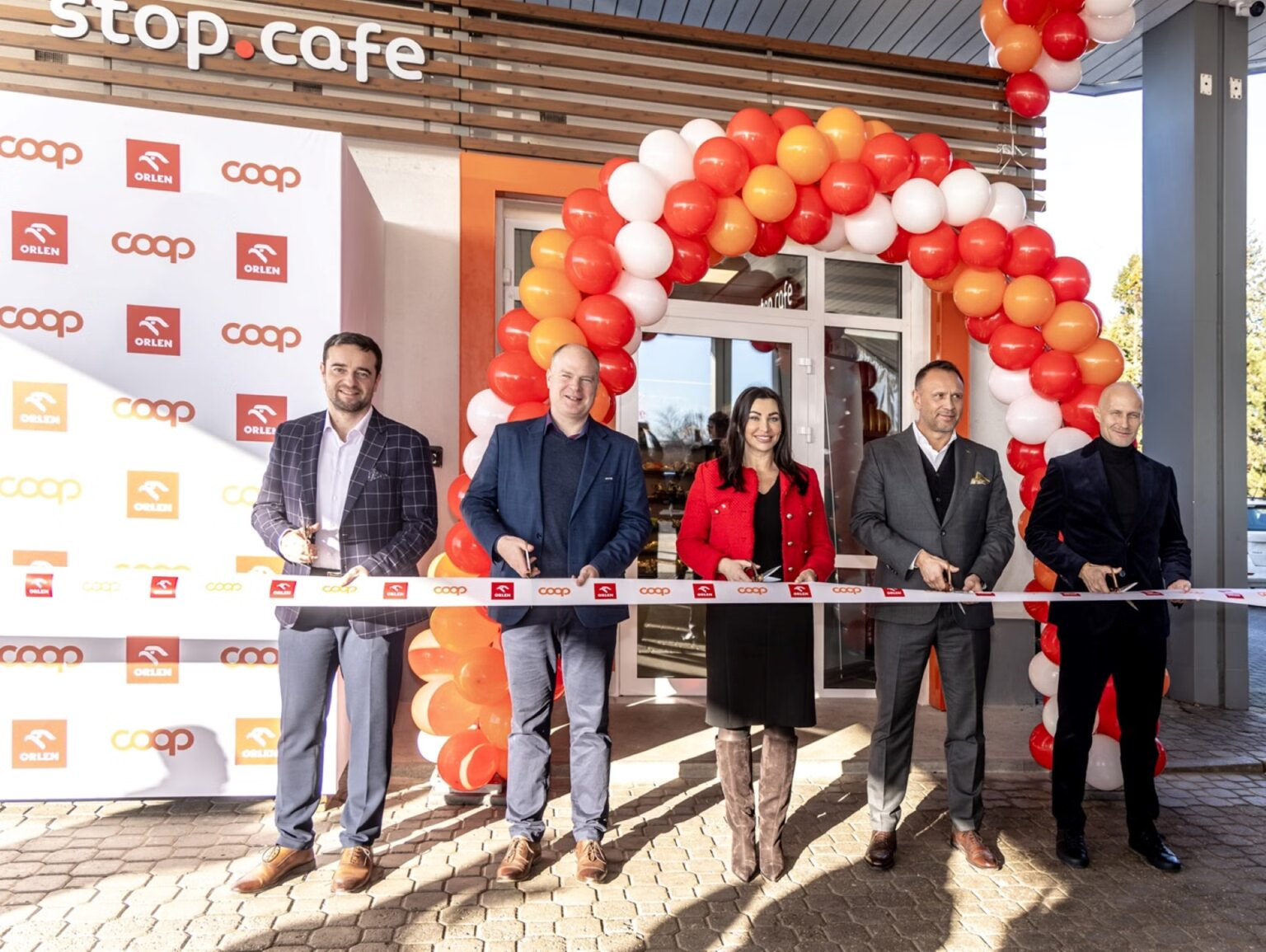
The Czech retail market has just become a testing ground for new technologies in the ORLEN Group portfolio. The group has launched its first fully self-service petrol station shop, located on the D7 motorway in Panenský Týnec, less than an hour’s drive from Prague. The move is part of a wider trend of retail automation seen across Europe to respond to rising labour costs and the changing habits of consumers expecting 24/7 availability of services.
The project is in partnership with COOP, the largest retail chain in the Czech Republic, allowing the Polish fuel giant to synergise its partner’s grocery know-how. The outlet operates in hybrid or fully autonomous mode, allowing customers to refuel and shop – from Stop Cafe’s own brand to groceries – without the physical presence of staff. From a technological perspective, a key element of the implementation is an advanced video monitoring system and payment integration, which eliminates traditional barriers to the shopping process.

The most interesting piece of innovation to catch the attention of the IT industry is the implementation of a digital avatar named Míša. This solution, provided by Czech software house Next mind, goes beyond standard self-service kiosks. The avatar acts as a virtual assistant, with whom customers can communicate by voice or through a touchscreen interface, receiving assistance in navigating the shop or searching for promotions. This is one of the first instances in the CEE region where the AI interface has been so prominently displayed in a physical convenience retail space.
Marek Balawejder, ORLEN board member for Consumers and Products, points out that the development of the non-fuel segment is not just an add-on, but a key driver of margin growth. The number of transactions in this sector is growing at a double-digit rate, which justifies investments in unmanned formats. They allow the expansion of retail services into smaller towns and cities, where maintaining full staffing levels is sometimes uneconomic.
For ORLEN, which operates a network of more than 3,500 stations in Central Europe (including 443 in the Czech Republic, where it is the market leader), the success of this pilot could mean a green light for the wider digitisation of points of sale. The tested format at Panenský Týnec shows that the future of petrol stations is not only an energy transformation, but also a deep redefinition of the customer service model based on retailtech.