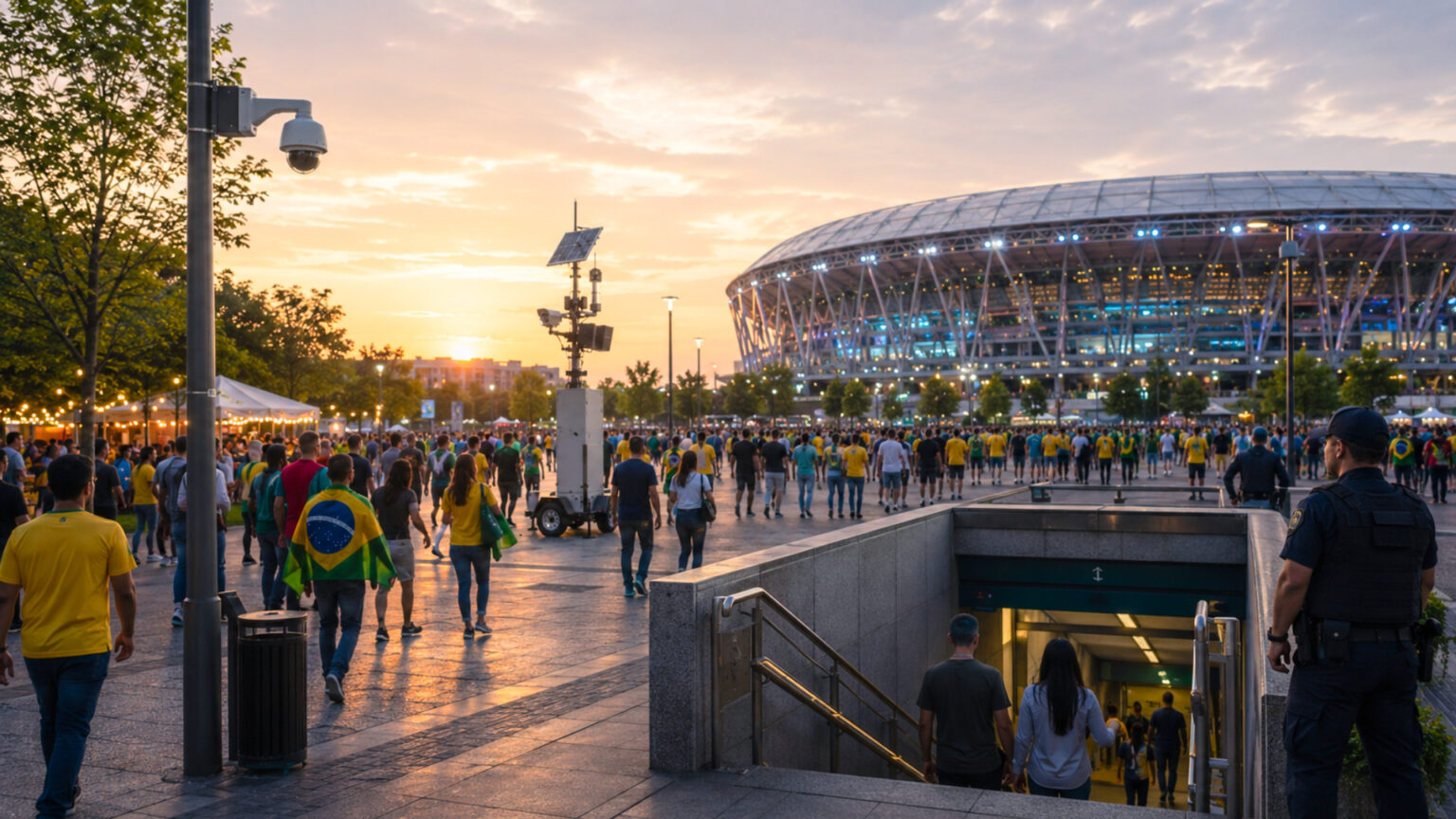
The 2026 World Cup, which ended on 19 July, was the biggest tournament in the history of football. 48 national teams played 104 matches across 16 cities in Canada, Mexico and the United States. Such a widely dispersed event meant that security did not end at the stadium gates. It also covered fan zones, railway stations, the underground and city centres.
One of the most important tools used during major events is video analytics. Unlike traditional CCTV, the system not only displays the footage to an operator but can automatically detect overcrowding, a blocked escape route, unusual movement or a suspicious sound. The UK’s Health and Safety Executive (HSE) points out that constant monitoring of people flow allows the risk of overcrowding to be identified at an early stage and the effectiveness of security measures to be assessed.
– Securing such a massive and sprawling event requires a complete shift in thinking about surveillance – says Jakub Kozak, Sales Area Director ECE at Genetec. “We cannot rely solely on the visual feed. We need to view cameras as advanced sensors that analyse the surroundings in real time. They detect anomalies, pick up suspicious sounds and enable emergency services to act proactively.” The key is integration: of video, audio and automated data analysis. This gives us control over every situation, whether it’s a stadium evacuation or the Norwegians’ ‘rowing’.
The fixed infrastructure is complemented by mobile monitoring towers, equipped with, amongst other things, cameras, radar, loudspeakers and their own power supply. They can be quickly set up in places where there was previously no surveillance. Body-worn cameras, meanwhile, transmit footage from the officer’s perspective and help to document interventions.
– Organisers of major events today expect, above all, flexibility. Mobile monitoring towers allow areas where there was previously no monitoring infrastructure to be covered instantly, whilst body-worn cameras provide operators and emergency services with an additional perspective during interventions. These solutions complement one another – they enhance situational awareness, speed up response times and help to better document the course of events. In practice, it is precisely these mobile technologies that are increasingly determining the effectiveness of security at mass events,’ says Mariusz Sprawnik, Territory Sales Manager at Axis Communications.
However, technology is no substitute for procedures and people. The use of body-worn cameras and analytics systems requires clear rules governing the management of recordings and the protection of privacy. The best results are achieved with a system that is barely noticeable to spectators, but which enables the emergency services to respond more quickly to threats.