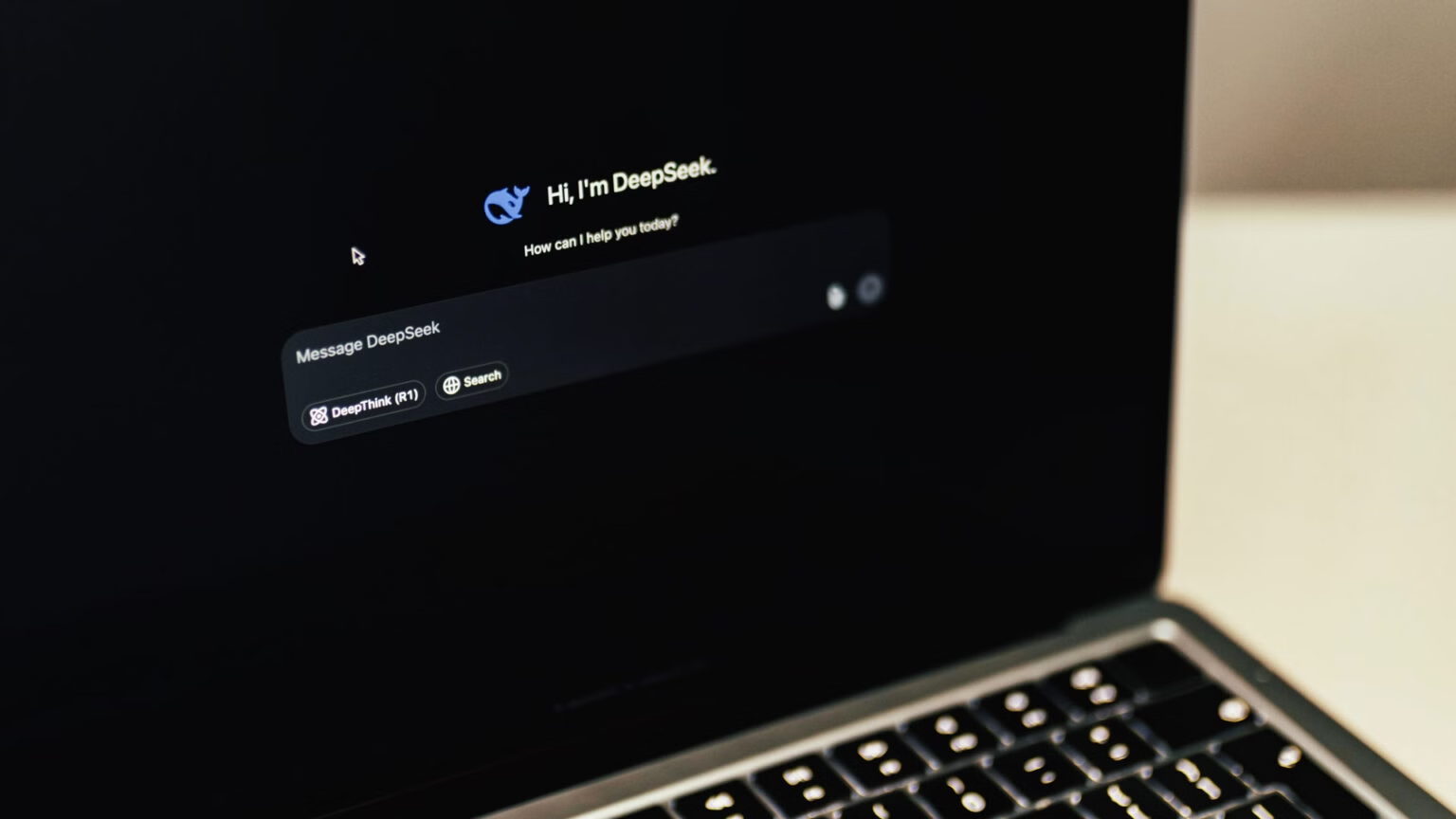
A mysterious, powerful artificial intelligence model that recently debuted on developer platform OpenRouter has caused a stir in the technology industry. The system, labelled Hunter Alpha, appeared without any indication of its creator, which immediately sparked speculation that Chinese startup DeepSeek was quietly testing its next-generation technology ahead of an announced official launch.
From a business and operational cost perspective, Hunter Alpha is a market anomaly. The system offers an impressive architecture of one trillion parameters and a contextual window of as many as one million tokens, allowing gigantic blocks of information to be analysed in a single interaction.
In the case of market-leading frontier models, maintaining such performance involves huge expenditure on computing power. Meanwhile, the new system makes these capabilities available for free, clearly indicating the backing of a powerful entity. The chatbot itself maintains secrecy, admitting only that it is a Chinese system with a knowledge base ending in May 2025.
The coincidence of this data with the anticipated April release of the DeepSeek V4 model is striking. AI engineers studying the new system point out that the model’s inference pattern and chain of thought bear a striking resemblance to DeepSeek‘s methodology, which is extremely difficult to mask or copy. The development community, however, remains balanced in its assessments.
Independent researchers point to different architectural patterns and token processing behaviour, which may suggest that a very different player from the growing Asian AI market is behind the model. DeepSeek, which has a strong and rather unusual financial backing in the form of a quant hedge fund, has consistently declined to comment.
Such anonymous launches are part of a proven market strategy. Publishing ‘stealth’ models allows companies to collect unbiased telemetry and query data from millions of users, which is key to calibrating a product before commercial launch. Recently, a similar manoeuvre was employed by Chinese company Zhipu AI prior to the release of the GLM-5.
Regardless of whose logo will ultimately be on the Hunter Alpha model, the market has received it with great enthusiasm. The system processed more than 160 billion tokens in just a few days.
The rapid adoption, especially by developers building autonomous AI agents, proves that free and advanced access to such a large contextual window addresses a real and unmet industry need. This is further confirmation that the Asian arms race in the generative AI segment is just now entering a new and extremely capital-intensive phase.