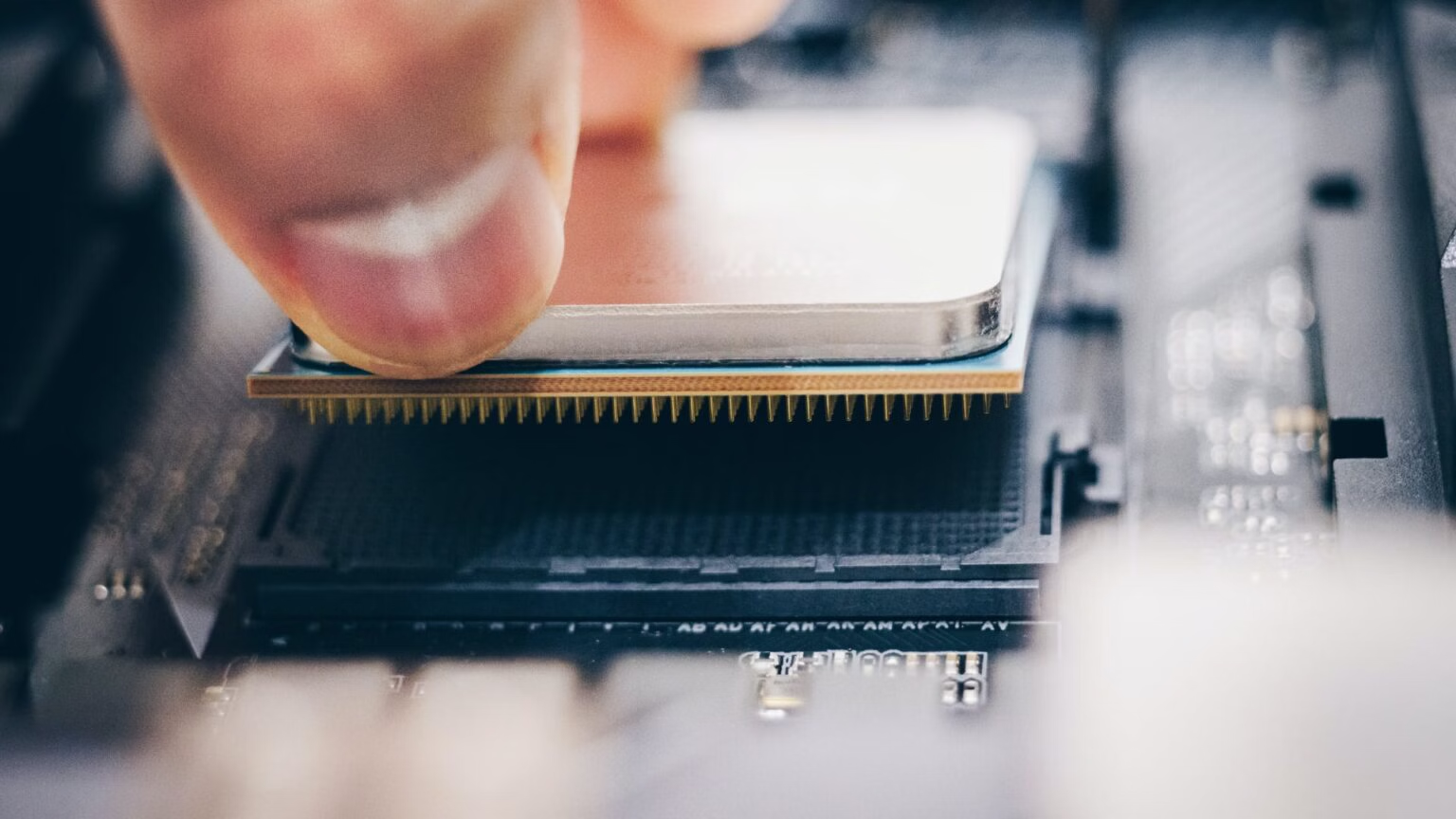
This year’s CES in Las Vegas brought a turnaround in the semiconductor industry that has been rare in recent years. After a period of catching up, Intel seems to have regained the technological pre-eminence, with direct implications for B2B purchasing strategies. “Blue” dominates the narrative with Panther Lake chips (Intel Core Ultra Series 3), manufactured using the Intel 18A technology process. This is the equivalent of 2nm technology, which its main competitor AMD has yet to bring to the mass market, offering instead a refreshed architecture in the form of the Ryzen AI 400.
The response from OEMs was immediate and unequivocal. Lenovo stepped up its partnership with Intel, promoting the ‘Aura Edition’ line as exclusive to this architecture, particularly in the premium ThinkPad and ThinkBook segments. HP, on the other hand, has taken an agnostic stance, offering a choice between Intel, AMD and ARM architecture from Qualcom within the same SKU on the EliteBook X G2. This is a pragmatic approach that shifts the burden of architecture choice directly to the enterprise customer.
An interesting development is the apparent cooling of enthusiasm for ARM architecture in the Windows ecosystem. Despite the launch of cheaper Snapdragon X2 variants, Qualcomm has failed to dominate the conversation behind the scenes this year. The attention of the business sector, after a brief flirtation with alternatives, seems to be returning to the proven x86 architecture. ARM is instead enjoying spectacular success in the server and HPC segments, where Nvidia unveiled the Vera and Ruby processors, cementing its position in AI infrastructure.
The event that may define B2B marketing for the coming quarters, however, is a change in Dell’s rhetoric. Kevin Terwilliger, head of product at Dell, has openly admitted that business customers do not make purchasing decisions based on the presence of ‘AI’ in a product name. The company has drastically reduced the use of this acronym in its new portfolio, including the reactivated XPS line. This is a sobering counterpoint to competitors such as MSI, which continues to experiment with complex naming like ‘Pro Max AI+’.
Despite technological optimism, the spectre of cost hangs over the market. Specific prices in euros for entry-level configurations were missing in Las Vegas. Given the shortage of DDR5 memory and the rising cost of silicon wafers in the lowest lithographic processes, IT purchasing departments should prepare for the return of innovation to come at a high price.