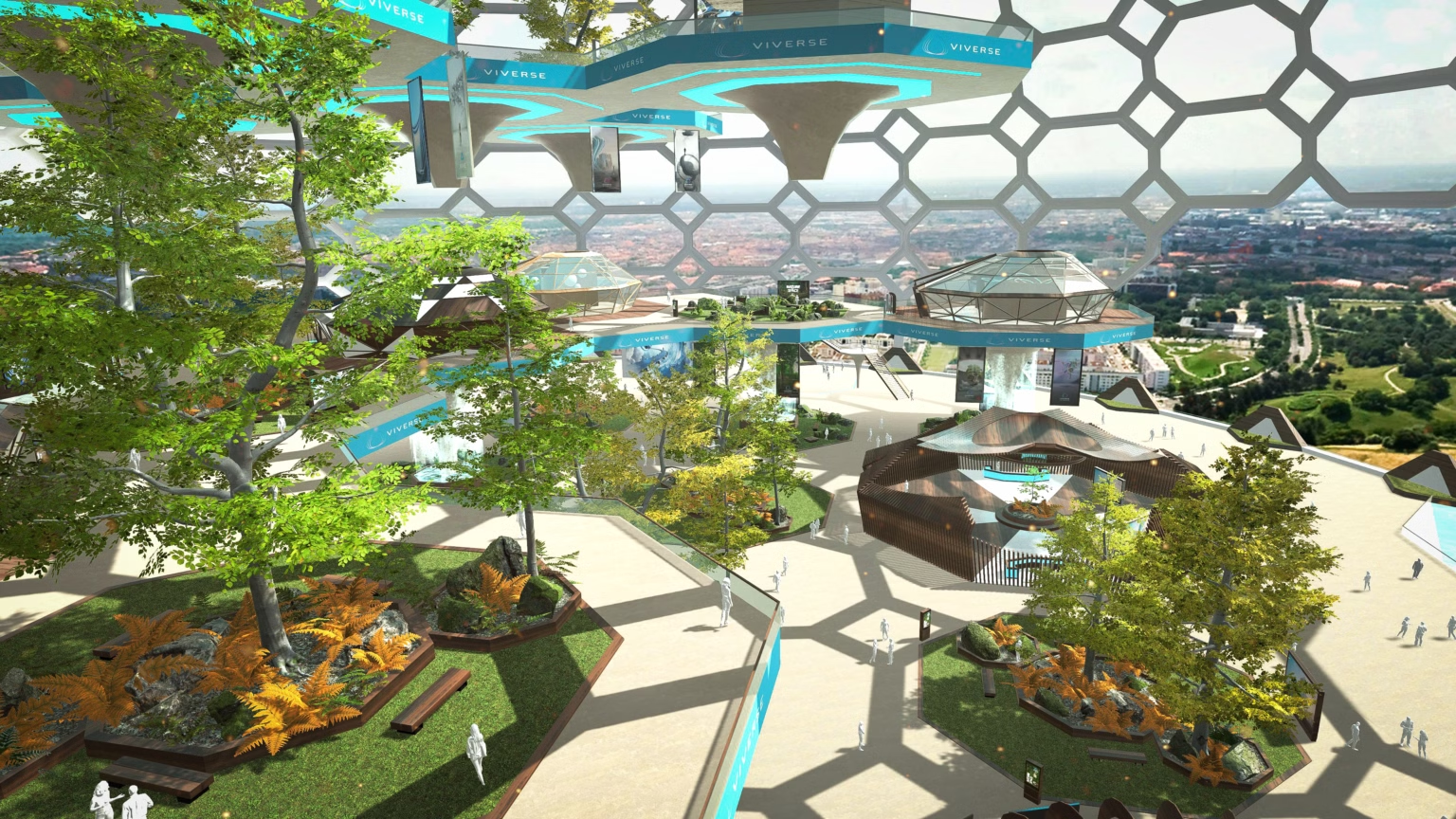
HTC‘s VIVERSE platform has passed the threshold of one million monthly active users. This milestone coincides with the final of the Spark initiative, a global hackathon that reveals the company’s long-term strategy: to fight for the metaverse market not through closed gardens, but through the availability of WebXR and the grassroots building of a developer base.
In the shadow of the debate about the future of virtual worlds, HTC has been steadily building its position in the immersive content sector – a market expected to reach a valuation of $125 billion by 2034. Surpassing the one million user barrier signals that the Taiwanese manufacturer, mainly associated with premium hardware, is effectively diversifying its portfolio into software and services. The key to this growth appears to be WebXR technology, which makes users independent of the need for dedicated hardware or installing heavy clients, a barrier to entry in competitors such as Roblox and Fortnite.
Confirmation of this direction is provided by the just-concluded VIVERSE Spark Hackathon 2025. The event brought together students from more than 40 universities from North America, Europe and Asia. For HTC, this is not just an image exercise, but a pragmatic step towards solving the main problem of VR/AR platforms – the shortage of quality content. By engaging academic talent, the company is stimulating the creation of games and narrative experiences that run directly in the browser, on any device from smartphone to VR goggles.
The winning projects in the Immersive Storytelling, Games and Social Networking categories demonstrate the potential of this approach. The University of Houston triumphed with its project ‘The Knight Watcher’, while Academy of Art University won recognition for its game ‘Office Crashout’. As Tony Liao from the University of Houston noted, the students had to integrate 3D modelling, game engines and physics mechanics, which in practice meant working in a professional development environment.
For Vicente Bookman, a student from San Francisco, VIVERSE’s advantage over the industry giants is precisely the lack of need to download dedicated applications, which democratises the creative process. From a business perspective, HTC is positioning VIVERSE as a ‘start-up hub’ for future IT staff. Andranik Aslanyan, head of development at HTC VIVERSE, emphasises that the aim is to enable developers to build profitable careers based on their platform. In the face of increasing competition, HTC’s ability to retain and monetise this community of creators will be key to maintaining the current growth momentum.