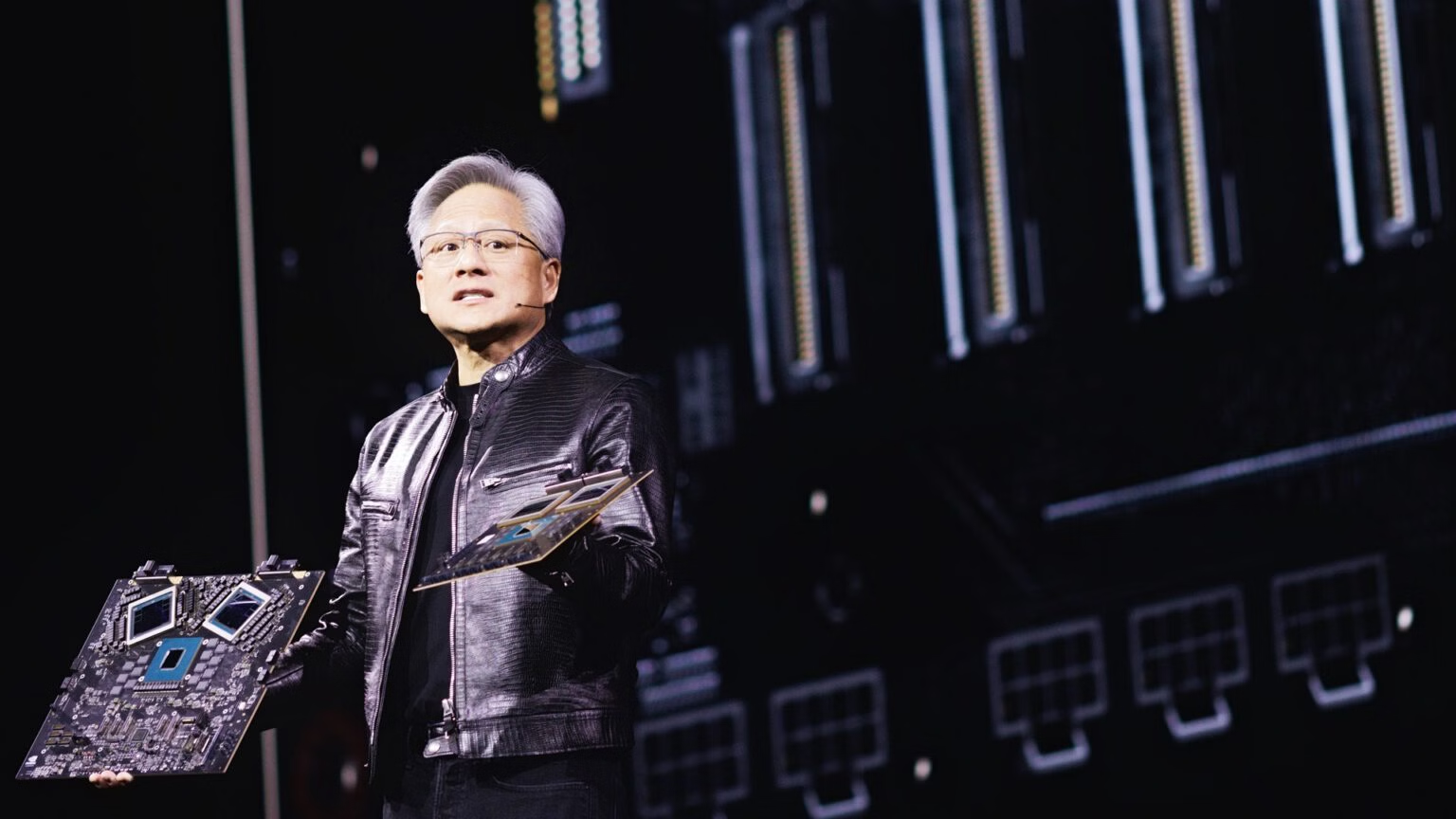
Nvidia CEO Jensen Huang’s visit to South Korea had all the hallmarks of a business triumph – from informal meetings with leaders of conglomerates there to the announcement of a series of key agreements. For the market, this sends a clear message: the US giant has no intention of surrendering its position as the leader of the AI revolution, and the key to maintaining this dominance is tight control of the Asian technology base.
The cornerstone of Nvidia’s Korean strategy has been the formalisation of a multi-year partnership with SK Hynix. The contract, worth billions of dollars a year, guarantees Nvidia continued access to the most advanced memory chips needed to power data centres and supercomputers. This collaboration illustrates a deeper market trend: memory dice are no longer simply bulk commodities and are becoming highly customised components, designed for a customer’s specific architecture.
Huang’s ambitions, however, extend far beyond just semiconductors. Alliances have been formed in Seoul that are de facto building a complete infrastructure ecosystem. SK Telecom has pledged to build a next-generation gigawatt cloud by 2027, while internet giant Naver and Doosan will use Nvidia’s solutions in their own facilities. The collaboration with Doosan also has a key engineering dimension – the company will provide advanced power systems for Blackwell’s flagship platforms.
In parallel, Nvidia is penetrating heavily into the robotics and automotive sectors. New partnerships with LG Group and Hyundai Motor Group are expected to implement physical artificial intelligence in industrial robots, humanoid models and autonomous driving systems. A symbol of these far-reaching plans is to be Hyundai’s data centre in Saemangeum, hailed by Huang as Asia’s new ‘AI Valley’.
The commercial expansion is accompanied by strong moves by the government administration. South Korea’s technology ministry has announced the purchase of nearly ten thousand Nvidia GPUs for state projects, while openly pushing for priority delivery of the latest Vera Rubin units, whose market debut could face delays.
Although the announcement of the contracts coincided with a sharp plunge in Asian stock markets, where shares of technology leaders – including Samsung and SK Hynix – lost several per cent each, Huang cooled emotions. For the Nvidia boss, short-term market fluctuations are merely an opportunity to buy at a lower price. The long-term outlook remains the same: the future of artificial intelligence depends on physical infrastructure, and Nvidia has just concretised its relationships with its key manufacturers.