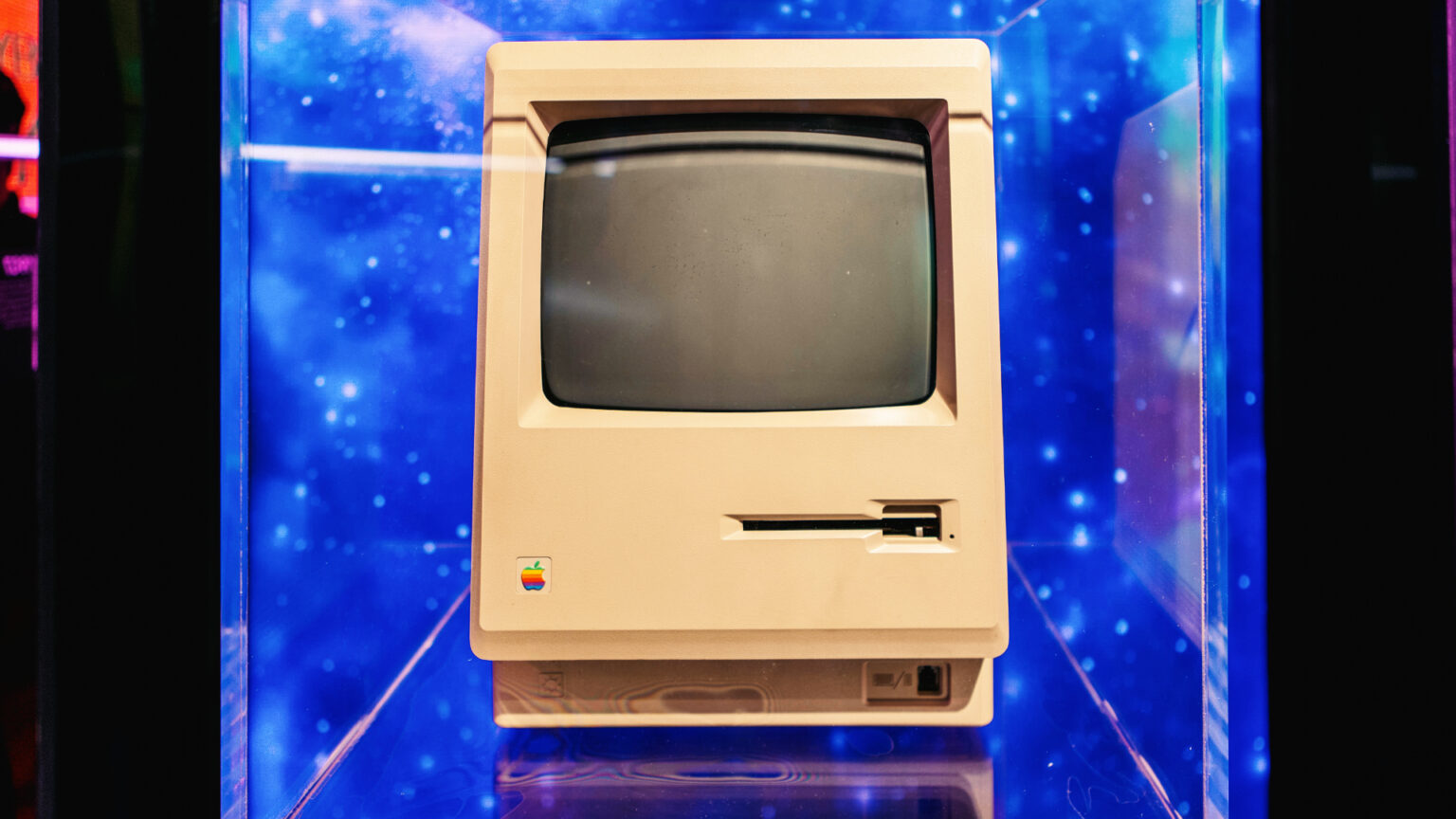
Modern market analysts often operate in categories that seem dry and mathematically quantifiable: processor performance, network bandwidth or supply chain optimisation. Meanwhile, the story of Apple, the Cupertino giant, which injects a million dollars into its resources every ninety seconds, suggests the existence of a very different, almost metaphysical foundation for success.
For it turns out that in the world of high technology, the subjective – i.e. aesthetics, intuitiveness and design – can become the hardest and most measurable business parameter.
The origins of this philosophy go back to a time when computer technology was still the domain of hermetic laboratories and electronics enthusiasts. In the mid-1970s, computing systems resembled household appliances in size and required specialist knowledge to operate.
The breakthrough that Steve Wozniak and Steve Jobs made was not just the miniaturisation of integrated circuits, but a fundamental paradigm shift in how we view the work tool. The Apple II was not just another hobbyist motherboard; it was the first ‘off-the-shelf’ product to have an integrated keyboard and an aesthetically pleasing case.
This decision to move beyond the engineering environment towards the end user was the first lesson in the democratisation of technology. It showed that lowering the entry threshold through refined design is the most effective strategy for capturing the mass market.
Apple’ s history, however, is not only an unbroken string of successes, but above all a study of recovery from a deep crisis by returning to the roots of design. The nineties, marked by product chaos and a near-total loss of liquidity, exposed the weakness of a corporation lacking a clear visual identity. Only the return of Steve Jobs and the ennoblement of Jony Ive, a brilliant British designer, allowed the company to regain its steerage.
The key moment here was a shift in the status of the designer in the corporate hierarchy. The designer ceased to be the executor of imposed technical specifications and became the architect of experience. Models such as the iMac G3 and later the iPod proved that a product can evoke emotions that are worth much more to the consumer than the sum of the costs of the individual components. Aesthetics thus became a high-margin building tool, protecting the company from the devastating price war typical of generic hardware manufacturers.
The clearest proof of the superiority of intuitive design over raw performance came with the launch of the iPhone in two thousand seven. Giving up the physical keyboard in favour of a touch interface was a risky, even heretical move from the point of view of the mobile market leaders of the time.
Apple, however, placed a premium on the psychology of use. The introduction of gestures, such as the famous swipe to unlock the screen, was not just an embellishment. It was an element that built a deep, almost subconscious bond between the user and the device. In this way, the iPhone evolved from being a phone to becoming a personal command centre, becoming the foundation of an entire ecosystem of services that today generates record profits.
It is worth noting, however, that design visioning would not survive without the operational perfection that Tim Cook has brought to the organisation. This is a rare example in the business world, where ruthless logistical optimisation serves to protect an artistic vision. As a master of supply chain management, Cook has done the almost impossible: he has reduced stock holding time from two months to just two days.
This efficiency has allowed Apple to maintain enormous liquidity, which in turn funds the riskiest R&D projects. In this model, design defines the direction and logistics provide the fuel to make it happen. The contemporary success of products such as the Apple Watch and AirPods demonstrate the company’s ability to not only create new categories of devices, but to dominate them in no time, relying on the consistency of the entire system environment.
Today, the market is once again asking the question about the limits of usability of aesthetics. Will mixed reality glasses repeat the success of the smartphone, or will they remain merely a technological curiosity? The answer probably lies in the same principle that guided the founders in their garage in Palo Alto.
Design is not the colour of a case or the shape of an icon. It is the way a product solves real user problems, often before the user can name them.
Humanising technology is becoming the most important market differentiator. Apple has proven that the highest form of technological sophistication is simplicity, and that aesthetics, when supported by engineering soundness and logistical precision, is the most sustainable competitive advantage.
Building business value based on user experience is not idealism, but a tough, calculating and highly effective business strategy that has been redefining the boundaries of what is possible in the global IT industry for half a century.