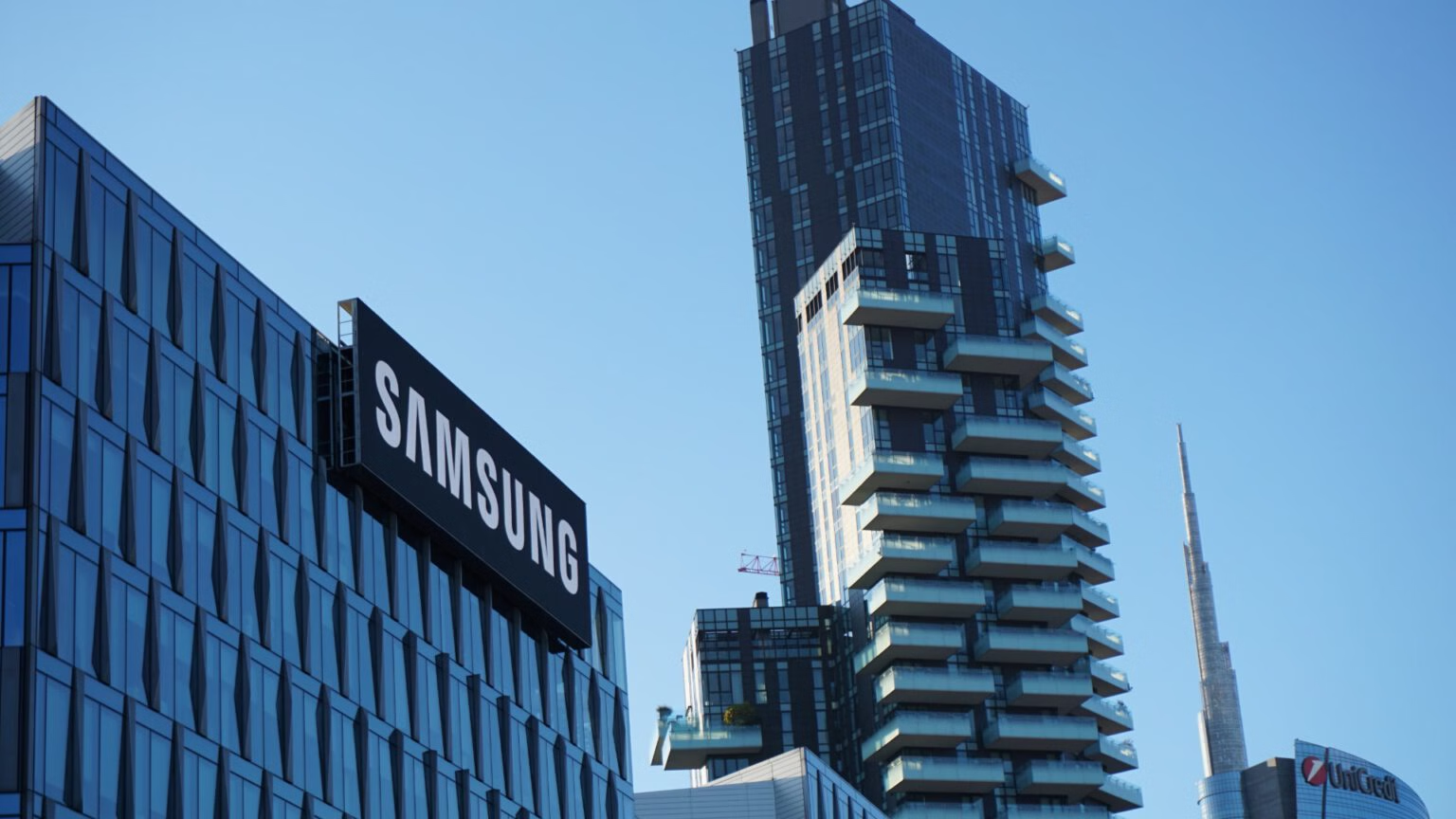
For the past quarters, Samsung Electronics has been in a rare technological position for itself – in the role of a contender chasing a runaway lead. While SK Hynix and Micron have successfully monetised surging demand for high-bandwidth memory (HBM), the Suwon-based giant has struggled with certification barriers and operational inertia. Thursday’s announcement that it has begun shipping HBM4 samples to key partners, however, marks a clear caesura: Samsung is officially ending its period of defensiveness and entering the battle for supremacy in Nvidia’s accelerator ecosystem.
Technological response to the data bottleneck
The key argument in Samsung’s new offensive is raw performance, which hits directly at the most critical point in today’s data centres – the communication bandwidth between the processor and memory. The new generation of HBM4 chips boasts a sustained data transfer rate of 11.7 Gbps, a 22 per cent improvement over the HBM3E standard. In peak load scenarios, these units are capable of reaching 13 Gbps. From a business perspective, these parameters are not just a technological show-off; they are a viable tool for reducing large-scale language model (LLM) training times and optimising the operational costs of the computing infrastructure.
A game of trust and market redefinition
The declaration by Song Jai-hyuk, chief technology officer of the semiconductor division, of ‘very satisfactory’ customer feedback is a signal of profound strategic significance. It suggests that Samsung has done its homework from previous generations and regained the confidence of AI market leaders, who have so far diversified their risk by relying mainly on supply from SK Hynix. The stock market’s reaction – a 6.4 per cent increase in share price – confirms that investors see the potential for this action to break the status quo.
However, the competitive landscape remains extremely challenging. SK Hynix, promising to maintain its “overwhelming” market dominance, and Micron, reporting mass production, are not about to give up the field without a fight. Samsung, aware of the pace of this evolution, is already announcing samples of HBM4E chips for the second half of the year in an attempt to impose its own innovation dynamics on the market.
For the broader technology sector, Samsung’s return to full operation means a stabilisation of supply chains and a welcome pluralisation of the market. The shift from a duopolistic model to fierce competition among the three powers could catalyse further declines in the unit price of computing power, ultimately accelerating the democratisation of advanced AI solutions in global business.