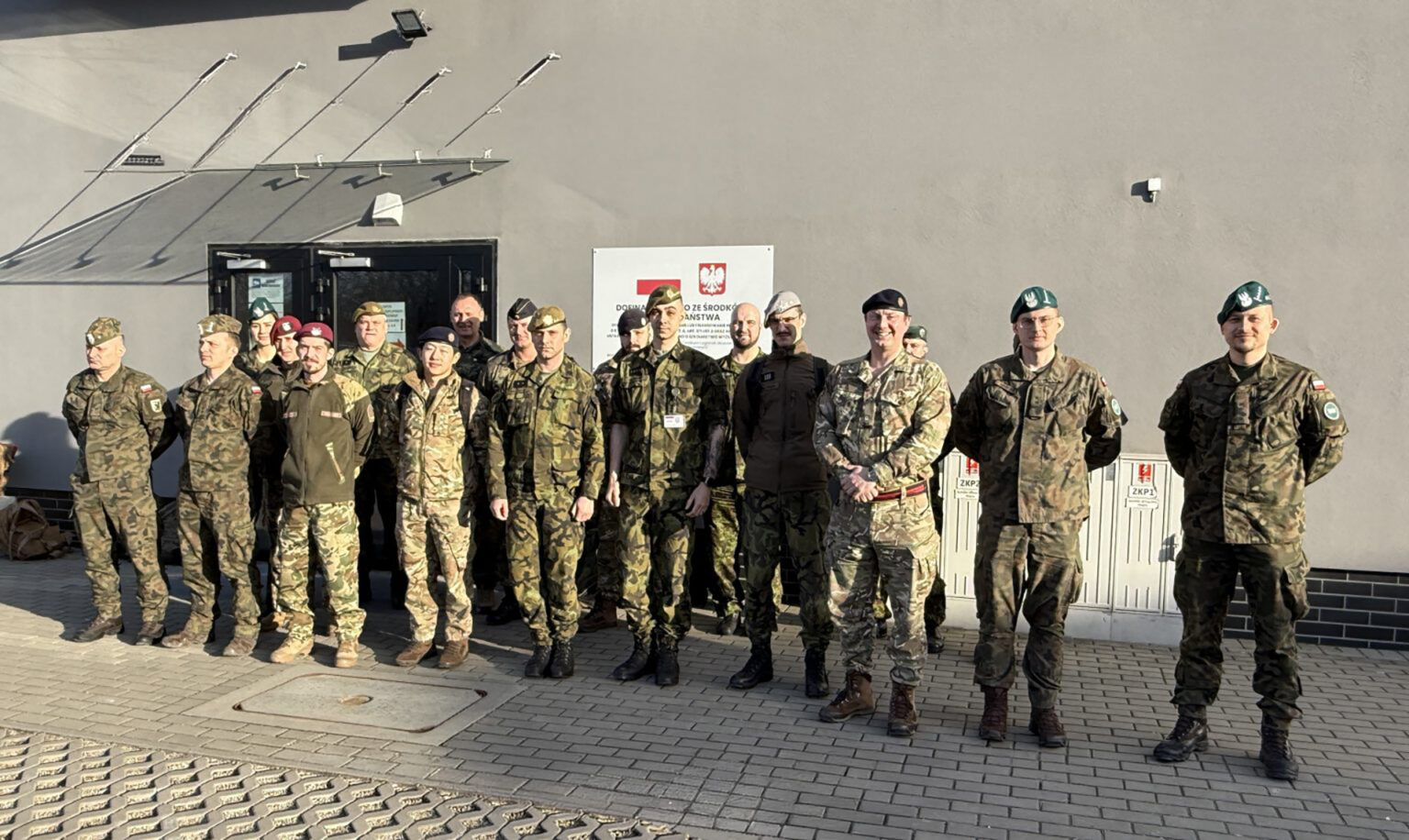
In March 2026, the NATO global training map gained a new focus. The Military University of Technology (WAT) in Warsaw has officially closed the certification process of its education portfolio, achieving ‘NATO Approved’ status for all its logistics courses. While the news sounds like a purely military announcement, its significance for the regional security ecosystem and the defence industry is much deeper.
The Polish university has joined the exclusive group of only seven institutions in the world with such high Allied Command Transformation (ACT) accreditation. For the business and technology sector, this sends a clear signal: Warsaw is becoming a key competence hub in the area of supply chain management under crisis conditions.
Interoperability Architecture
At the heart of WAT’s success is its integration with LOGFAS, an advanced software environment for planning and coordinating troop movements. In an era of escalating geopolitical tensions, logistical agility ceases to be a mere back-office issue and becomes fundamental to operational effectiveness. WAT is currently one of only four centres in the world authorised to certify specialists in the use of this tool.
Col. Bartosz Kozicki, Ph.D., dean of the Faculty of Security, Logistics and Management, emphasises that full accreditation is not only prestigious but, above all, proof of the university’s real impact on building the Alliance’s operational capabilities. The data confirms this dynamic: since the first accreditation in 2024, the number of students has increased dramatically and WAT experts have so far trained nearly 900 specialists from 39 countries.
Why is this important to the market?
For companies operating at the intersection of technology and defence, the presence of such a strong centre in Poland means easier access to personnel who speak the common language of NATO procedures. Standardisation, which is key to the success of courses at WAT, also underpins civilian supply chains that increasingly need to adapt military resilience and mobility solutions.
The co-organisation of exercises such as ‘Connected Logisticians 2026’ positions the Warsaw academy not just as a theoretical training centre, but as a living laboratory of logistics of the future. In a world where technological superiority depends on the speed at which resources are moved, the Polish contribution to the NATO training system is becoming one of our most important know-how export assets.