Five years after the announcement of Windows 11, Microsoft can finally say that its latest operating system has beaten Windows 10. Statistically speaking, it is now the dominant version of Windows on personal computers. The problem is that this is not an unconditional victory. Windows 11 has captured the market, but for a long time it has been unable to win the full trust of users.
This is a significant difference. For Microsoft, Windows remains one of its most important platforms for engaging with customers. It is through Windows that the company promotes its services, develops the Microsoft 365 ecosystem, supports the sale of new computers and lays the foundations for the AI PC era. For users, however, Windows is something much simpler: a tool that is meant to run quickly, stably and without getting in the way of their work.

Windows 11 was launched at a very opportune moment. Microsoft announced it on 24 June 2021, and the operating system hit the market on 5 October of the same year. The pandemic had heightened the importance of personal computers, remote working had become the norm, and millions of users and businesses were upgrading their hardware. Microsoft therefore had a large Windows 10 user base, a strong distribution channel and the argument that the new system better met the needs of hybrid working.
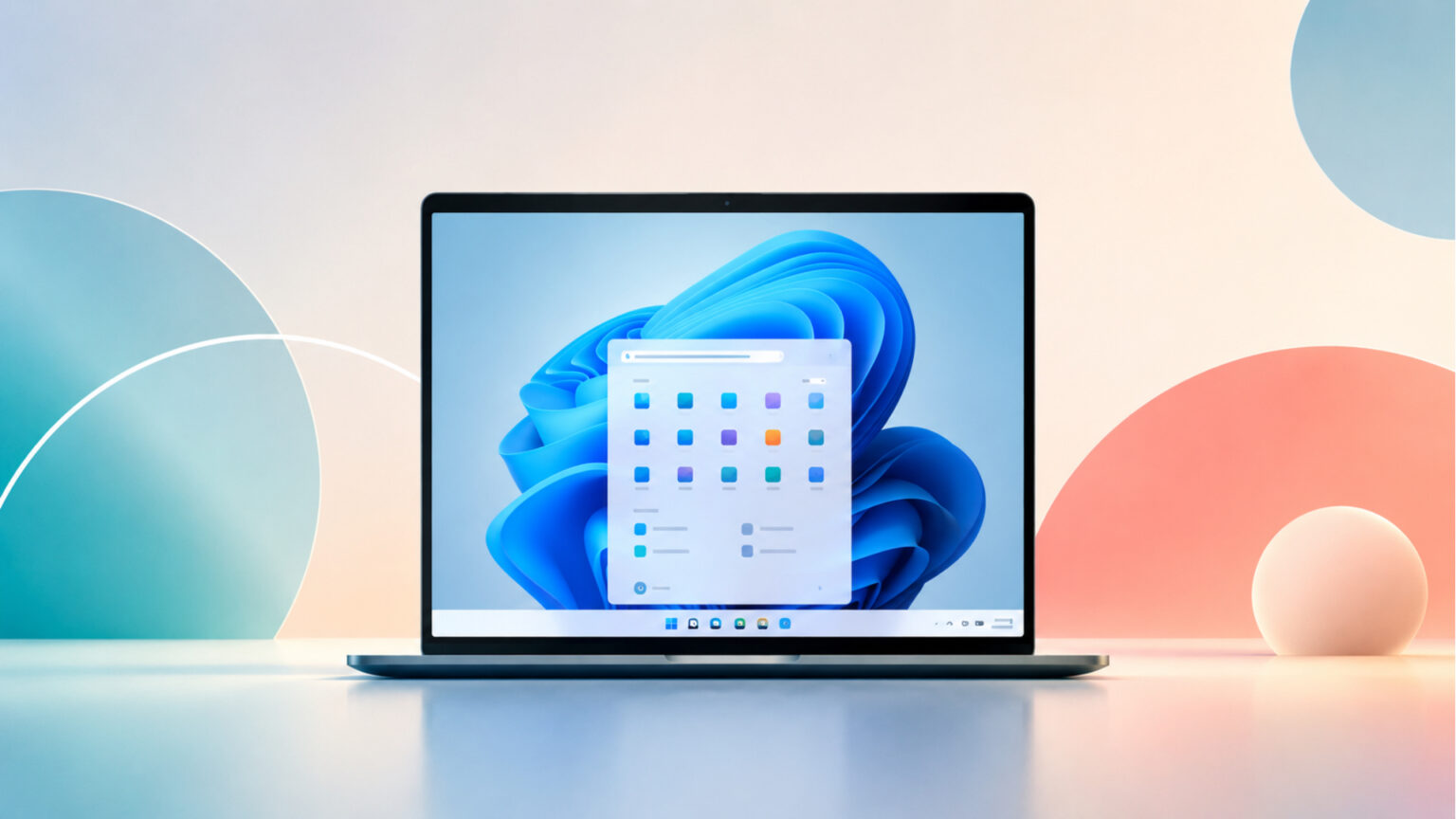
On the surface, everything looked logical. Windows 11 was supposed to be fresher, simpler and more modern. It featured a redesigned Start menu, a revamped taskbar, new widgets, improved multi-window support, a revamped Microsoft Store and the promise of enhanced security. Microsoft also promised that for businesses, this would be an evolution rather than a revolution, as the system builds on the foundation familiar from Windows 10.
It soon became apparent, however, that a modern visual design was not enough. Some of the changes were perceived not as improvements, but as limitations. The Start menu became simpler, but for many users it was less useful. For a long time, the taskbar offered less flexibility than in Windows 10. Some features were only reinstated following criticism from users. Microsoft tried to streamline Windows, but did so in a way that some people perceived as a loss of control over the system.
The hardware requirements became an even greater symbol of this change. Microsoft opted for TPM 2.0, Secure Boot and newer processors, citing security as the reason. From a corporate perspective, the argument was understandable. Companies increasingly expect hardware-based identity protection, encryption and better resilience to attacks. The problem was that, in practice, some fully functional computers were cut off from the official update path.
For individual users, this meant frustration. For businesses, it meant an additional factor to consider in hardware lifecycle planning. Windows 11 was promoted as a free update, but for many organisations it effectively meant having to replace some of their computers. This undermined the narrative of a simple and natural transition to the new version of the operating system.
For years, Windows 11’s biggest rival was not macOS, Linux or ChromeOS. It was Windows 10. The previous system was mature, familiar, widely supported and good enough for most users. So Microsoft did not just have to convince the market of the merits of a new product. It had to convince it to abandon a product that worked.
This is particularly evident in businesses. Organisations do not usually migrate simply because the system has new icons or sleeker animations. They migrate when security, compliance with IT policy, the hardware lifecycle or the end of support make it necessary. That is why Windows 11 grew more slowly for a long time than Microsoft could have expected. Its adoption only accelerated once Windows 10 began to approach the end of its support period.
This does not mean that Windows 11 is a failure. On the contrary, it is now the dominant operating system. But the way in which it reached this position says a lot about Microsoft’s relationship with its users. This was not a migration driven solely by enthusiasm. To a large extent, it was a migration driven by the support schedule, security policies and the natural replacement of computers.
Against this backdrop, stability becomes particularly important. An operating system is a product whose quality users assess on a daily basis, often without realising it. If the computer boots up quickly, updates do not disrupt work, drivers function properly, and the interface is not irritating, the system fades into the background. And that is precisely when it fulfils its role. However, if every major update causes concern, Windows ceases to be a neutral tool and becomes a source of risk.
Microsoft operates in an exceptionally challenging ecosystem. Windows must support a vast number of hardware configurations, peripherals, business applications and drivers. This task is far more complex than developing a system for a limited number of devices. Despite this, the end user does not appreciate the scale of the challenge. They judge the outcome. And the outcome must be predictable.
Added to this is a problem that is increasingly affecting the perception of Windows: the growing number of recommendations, notifications and prompts to use Microsoft’s services. Windows is now not just an operating system, but also a distribution channel for Edge, OneDrive, Microsoft 365, Game Pass and Copilot. From Microsoft’s point of view, this is logical. The company is using its most important platform to strengthen its ecosystem.
From the user’s perspective, however, things look quite different. A system that is supposed to be a core work tool is increasingly behaving like an advertising space. App recommendations, service suggestions, widgets and integrations with Microsoft products may be useful, but only if the user feels in control of them. When they start to become intrusive, they reinforce the belief that Windows belongs less and less to the user, and more and more to Microsoft’s business strategy.
This issue becomes even more significant in the context of artificial intelligence. Microsoft wants Windows to be at the heart of the AI PC era. Copilot, local AI features, new processors with NPUs and the Copilot+ PC category are intended to demonstrate that the personal computer can enter a new cycle of innovation. This represents a huge opportunity for the company. After years of stagnation, the PC market would have a new reason to upgrade its hardware, and Microsoft would have a new justification for Windows’ role.
But AI could also exacerbate existing tensions. If users see Windows as too heavy, too intrusive and too unpredictable, further AI features will not solve the problem. They may even make it worse. Artificial intelligence in the operating system will only be accepted if it is genuinely useful, secure and optional. If it is perceived as yet another layer of promotion for Microsoft’s services, it will become the next source of resistance.
That is why Microsoft’s most important task today is not to pack Windows 11 with more features. It is to make it more reliable. Users expect stable updates, better performance, fewer unnecessary extras, greater control over AI features and a more consistent interface. Businesses expect predictability, clear communication and a system that does not complicate the day-to-day management of their computer fleets.
Windows 11 has won over the market because, ultimately, it had to. Windows 10 could not remain the main version of the operating system indefinitely. The end of support, hardware replacement and security pressures have all played their part. But winning in the statistics is only the first stage.
The second stage is more difficult. Microsoft must convince users that Windows 11 is not just a mandatory upgrade, but a better working environment. It must demonstrate that Windows can be the foundation of the AI era, but not at the expense of simplicity and control. And it must remember that, when it comes to an operating system, the greatest compliment is not admiration for a new feature. It is the absence of frustration.
Five years on, Windows 11 is a commercial success, but it remains a project that requires the repair of its relationship with users. Microsoft has guided them to the new version of the system. Now it must do something far more difficult: make them realise it was worth it.