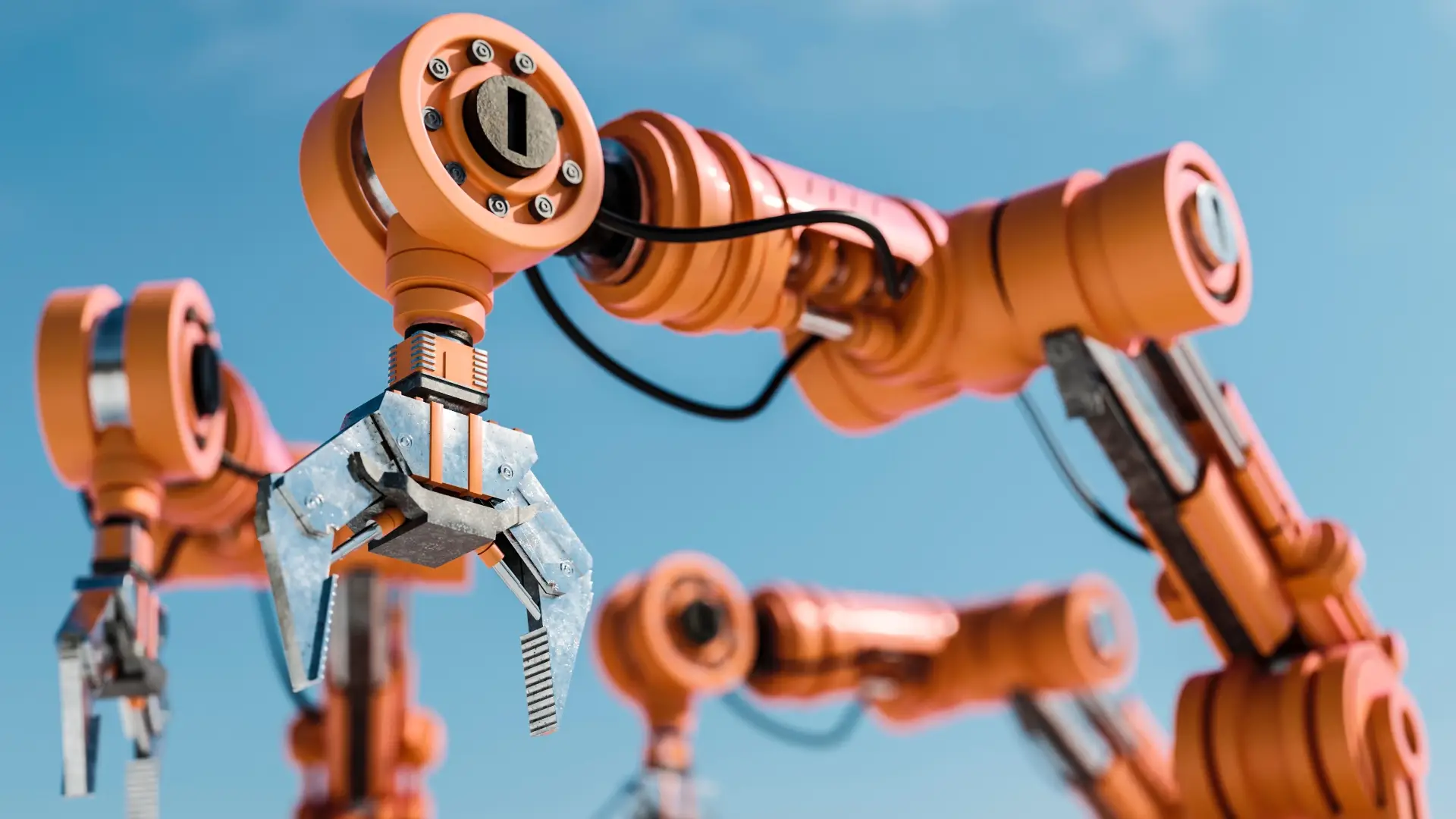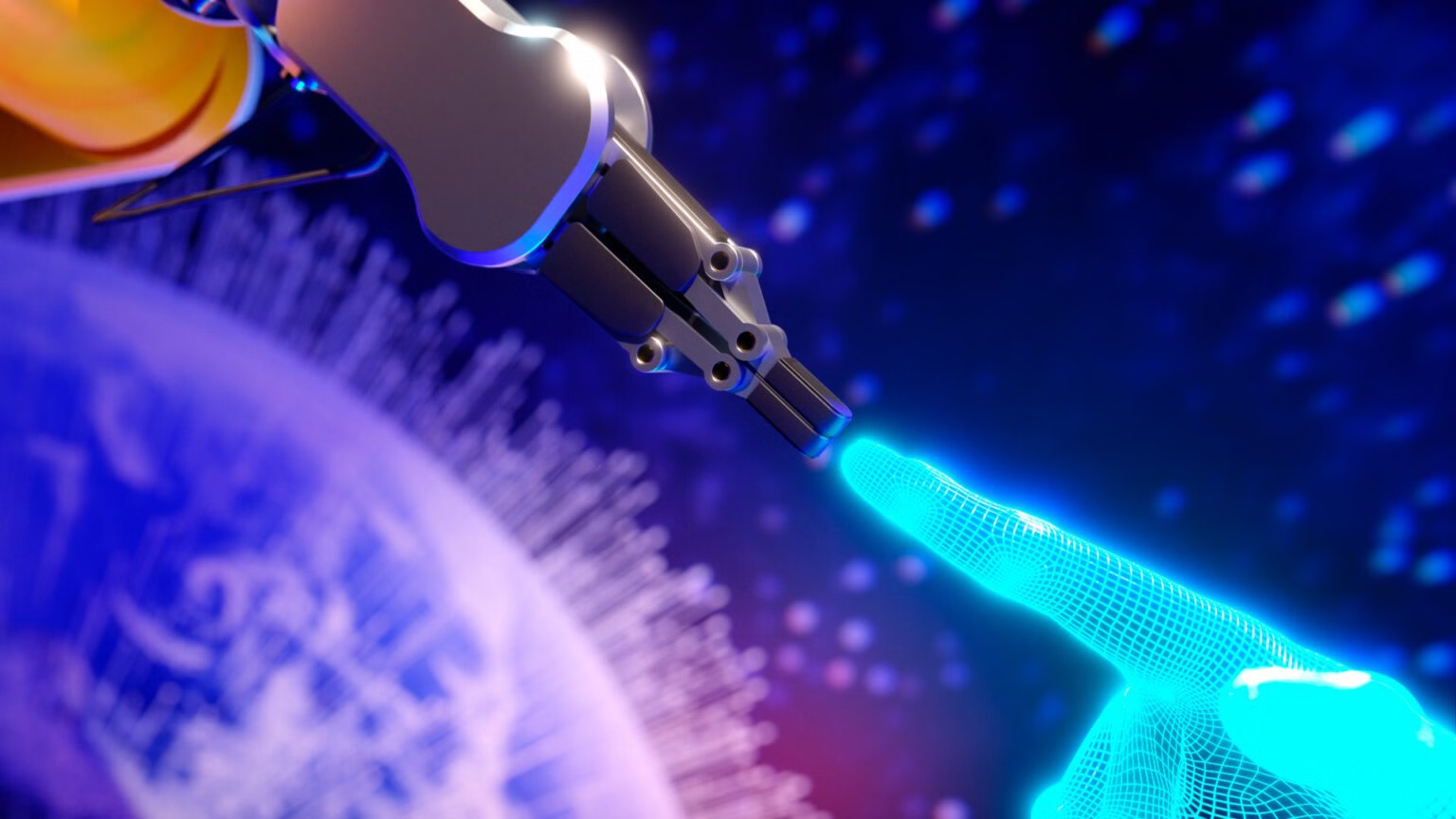
Recent years in the world of technology have been marked by a fascination with the ‘digital intellect’. Language models, capable of generating sophisticated content, analysing data and engaging in dialogue, have dominated the discourse about the future of business. However, as the Strategy& (PwC) report on Physical AI rightly points out, we stand at the threshold of an evolution that shifts the centre of gravity from monitor screens directly to the world of matter. Indeed, the real revolution will not take place in the comfort of text-processing server rooms, but in production halls, logistics centres and medical laboratories, where artificial intelligence will gain a kind of ‘body’. This shift from thinking of AI as an analytical tool (Thinking AI) to a causal intelligence (Doing AI), however, requires more than just new algorithms. It requires a fundamental shift in enterprise architecture and an end to the long-standing isolation of two key worlds: Information Technology (IT) and Operational Technology (OT).
The foundation of this change is the concept of Large Behavior Models (LBM), which is the natural successor to language models. While the former operate on syntax and semantics, Physical AI must operate on the laws of dynamics, gravity and kinetics. In the digital world, an algorithm error manifests itself as unfortunate wording in an email or an error in a report, which rarely has consequences beyond the realm of reputation. In the physical world, the margin for error decreases dramatically. The wrong movement of a robotic arm, the wrong decision of an autonomous forklift or a delay in the response of a control system can lead to costly downtime, damage to property and, in extreme cases, health risks for workers. This new reality imposes stringent requirements on an infrastructure that can no longer be seen in terms of the traditional division between office software and factory hardware.
A key challenge here becomes the barrier of latency, i.e. delays in data transmission and processing. Physical intelligence cannot rely solely on remote computing centres located in the cloud to remain smooth and secure. Physics does not forgive delay; milliseconds determine the stability of real-time processes. The solution that is coming to the fore is Edge Computing – moving computing power to the very ‘edge’ of the network, directly to the actuators. This is where the first major culture clash between IT and OT occurs. The IT world is used to the flexibility, frequent updates and scalability of the cloud. The OT world, on the other hand, values determinism, predictability and isolation above all else to guarantee machine continuity. Physical AI, however, forces a symbiosis between these two approaches: the agility of software must meet the reliability of steel.
This convergence faces historical barriers that have defined the structure of industrial companies for decades. IT and OT departments have so far operated in different paradigms, used different communication protocols and, most importantly, have been driven by different priorities. For the IT systems administrator, data security and network integrity are key. For the process engineer, cycle time and production line uptime are paramount. The introduction of Physical AI makes these two areas an interconnected vessel. Data flowing from industrial sensors becomes fuel for AI models, which in turn send instructions to control systems. In such an arrangement, any gap in communication between the teams becomes a bottleneck, limiting the return on investment in modern technology.
The role of connectivity in this ecosystem cannot be underestimated. Standards such as 5G, and in the near future 6G, are ceasing to be mere telecommunications novelties and are becoming the nervous system of the modern enterprise. High bandwidth and minimal latency are essential for Physical AI systems to learn and adapt in a dynamically changing environment. However, this is not a process that can be implemented with a one-off licence purchase. It requires a robust audit of the infrastructure and an understanding that a modernist in-house network is the foundation without which even the most advanced ‘Large Behavior’ models will remain a mere theoretical concept.
From a business perspective, the implementation of Physical AI should be seen as a strategic reorientation and not just a technical project. It seems reasonable to move away from a siloed management model to the establishment of interdisciplinary hybrid teams. Combining the competences of data scientists, who can train models, with the knowledge of mechatronic engineers who understand the specifics of machine operation, makes it possible to build solutions that are both innovative and practical. Advanced digital twins (Digital Twins 2.0) are becoming a very valuable tool in this process. They allow algorithms to be safely tested in a virtual environment that faithfully reproduces the laws of physics before they are allowed to operate in real space. This approach minimises risk and allows processes to be optimised even before they are physically run.
It is also worth noting that Physical AI is changing the definition of operational efficiency. Traditional automation was based on rigidly programming a sequence of movements. Physical AI introduces an element of adaptation – the robot not only performs the task, but ‘understands’ the context, is able to react to an unforeseen obstacle and self-correct its actions. This signifies a real emancipation of technology, which goes from being a passive performer to becoming an active partner in the value creation process. For business decision-makers, this signals that IT investments are no longer regarded as cost centres and are becoming direct operators of the physical performance of the company.
Physical AI is the next stage of the great digitalisation that is finally blurring the lines between bit and atom. Success in this new era will not depend on who has more data, but on who can turn that data into physical action more quickly and efficiently. The key to this victory is understanding that technology does not end at the computer screen. It requires an efficient edge infrastructure, modern connectivity and, above all, the breaking down of the mental and organisational silos that have separated the world of code from the world of machines for years. The companies that are the first to integrate these two spheres will gain not only a technological advantage, but above all operational flexibility, which in today’s unpredictable world is the most valuable currency.