The modern global economy resembles an intricate network of interconnected vessels, in which a tremor caused at one point on the globe resonates with unexpected force at the opposite end. While it might seem that the sterile, air-conditioned halls of Europe’s data centres are separated by an infinite distance from the dust and chaos of the Middle East, reality brutally verifies this belief.
Today’s technology, despite its apparent ethereality, remains deeply rooted in the physicality of raw materials and the stability of trade routes. What is happening in the bottleneck of the Strait of Hormuz is not just a local armed incident, but a direct impetus adjusting the IT sector’s operating margins globally.
This phenomenon can be described as a geopolitical risk premium. The market for digital services has ceased to respond solely to classic supply and demand mechanisms and has begun to price uncertainty. When the world’s key energy arteries are compromised, the price of technology rises not because the power socket has run out, but because the cost of maintaining the stability of this flow becomes dramatically higher.
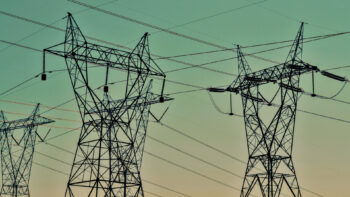
The foundation of any cloud infrastructure is energy. In Europe’s energy mix, natural gas still acts as the marginal price-setting fuel. Any disruption in the Middle East, which is the planet’s energy granary, immediately translates into higher electricity bills, which the operators of large server farms have to pay to keep their computing processes running.
Often seen as an immaterial entity, the cloud actually ‘breathes’ electricity, and its breath becomes more expensive the more turbulent the regions of fossil fuel extraction.
The situation is complicated by the fact that modern data centres are facilities designed for absolute reliability. Guaranteeing service availability of more than ninety-nine per cent relies on extensive emergency power systems. These generators, which are the last line of defence against a blackout, run on diesel.
Rising oil prices therefore directly increase the cost of maintaining operational readiness. These accumulating energy costs cease to be just a spreadsheet item and become a barrier to entry for innovative projects, especially when AI, with its exponentially growing appetite for computing power, is developing rapidly.
When analysing the supply chain, it is important to recognise that the impact of conflict goes far beyond energy alone. The logistics of IT equipment, including the transport of servers, disk arrays and advanced components, is extremely sensitive to fluctuations in transport fuel prices. However, even more acute, although less visible, is the increase in the cost of associated services.
Geopolitical instability is forcing logistics and insurance companies to renegotiate rates. Risk premiums in maritime and air transport act as a hidden tax that ultimately burdens the end customer’s wallet.
A particularly worrying aspect is the fate of critical raw materials such as helium supplied from Qatar. This gas is indispensable in the production of state-of-the-art semiconductors. A transport blockade in the region could paralyse factories in Taiwan, with a consequent return to the days of drastic component shortages.
From a bizneus perspective, this means having to abandon the ‘just in time’ delivery strategy in favour of building up costly strategic reserves.
The current balance of power on the world map is forcing a redefinition of digital asset placement strategies. Technological security today is also a geographical analysis. Cloud regions located in countries with high political risk are losing their attractiveness, while countries offering a stable energy mix, based on nuclear or renewables, are becoming new bastions of operational sovereignty.
A key task for executives therefore becomes optimising cloud costs through advanced FinOps practices. IT financial management is now part of a company’s defence strategy.
Understanding that every inefficiency in application code or unused server instance is a waste of resources that are becoming scarcer and more expensive is fundamental to modern technology leadership.
In conclusion, the conflict in the Strait of Hormuz region represents a test of sorts for the resilience of the global technology sector. It demonstrates emphatically that the digital world is not isolated from tectonic shocks in geopolitics.
Business must accept the new reality that energy inflation and supply uncertainty are constants in the equation. Adapting to these conditions requires, first and foremost, a deep awareness that cloud stability begins where dependence on uncertain energy sources and threatened trade routes ends.