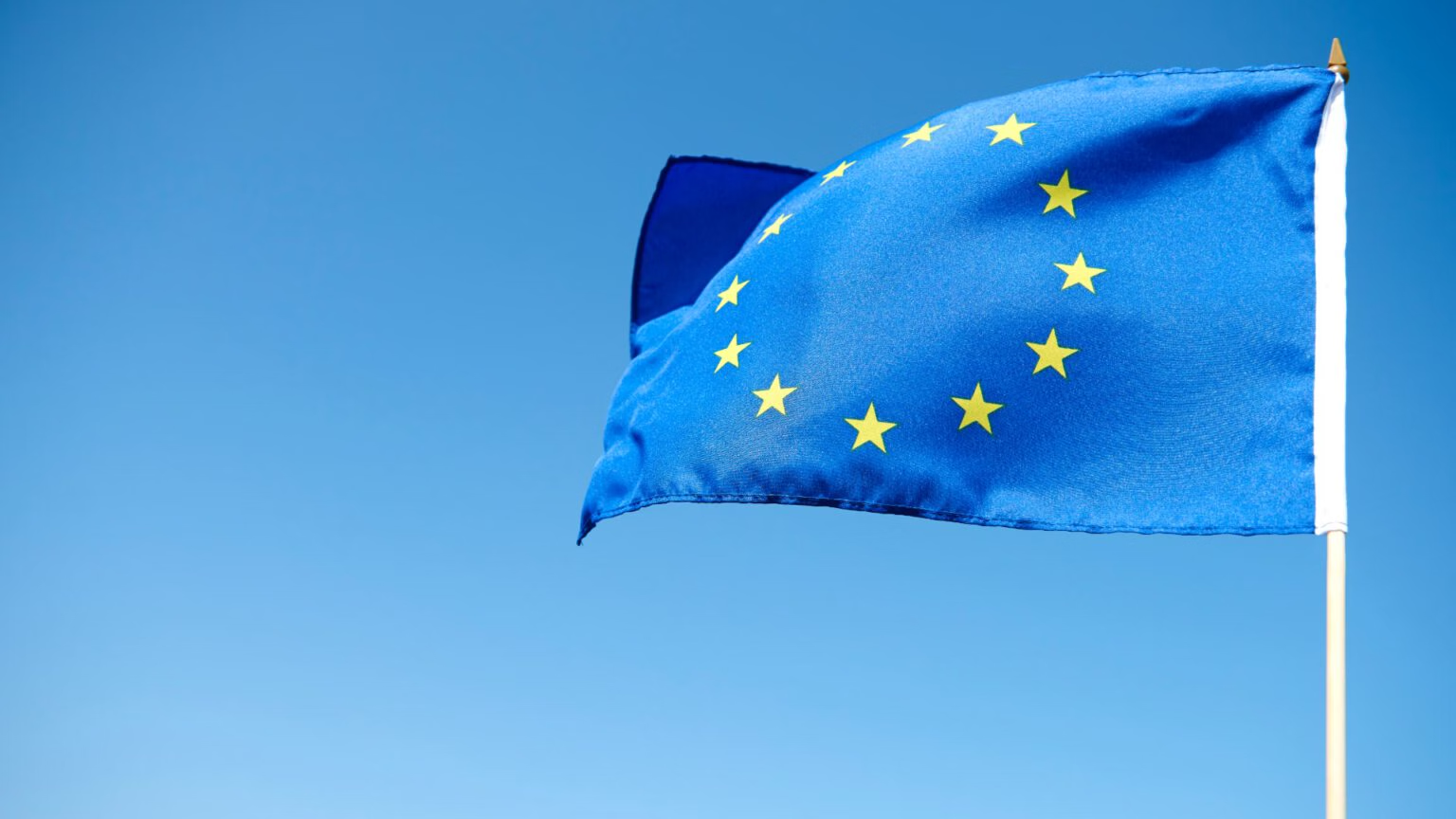
The European Commission has stopped merely theorising about ‘digital sovereignty’ and has started paying for it. By awarding a €180 million tender for cloud services, Brussels is sending out a clear signal: reliance on Silicon Valley technology has its limits, especially when it comes to data critical to the functioning of EU institutions. The selection of four European players is not only an administrative move, but above all a strategic test of the maturity of the continental tech ecosystem.
The beneficiaries of the six-year contract include an interesting business mosaic. On the one hand, we have strictly technological players such as the French Scaleway (part of the Iliad Group) or the consortium around OVHcloud led by Post Telecom. On the other, retail powerhouses like Germany’s STACKIT, owned by the Schwarz Group (owner of Lidl), which shows that cloud infrastructure is becoming a key asset even for retail giants. The stakes are rounded off by Belgium’s Proximus, which is working with Google Cloud as part of the S3NS partnership, proving that European sovereignty does not have to mean total isolation, but rather skilful management of ‘bridges’ with US technology
Key to understanding this contract is the new SEAL certification system. It has moved away from vague declarations to eight measurable criteria, assessing, among other things, resistance to foreign jurisdictions and supply chain control. Most of the selected suppliers have reached SEAL-3 level, which in practice means that their services are designed to prevent interference from non-EU actors. This is an attempt to create a standard that could become a benchmark for the banking or energy sector across Europe.
From a business perspective, the €180 million spread over six years is modest compared to the R&D budgets of giants such as AWS or Azure. However, the importance of this contract goes beyond pure profit. For selected companies, it is the ultimate ‘stamp’ of credibility that will make it easier for them to fight for corporate customers who fear so-called vendor lock-in, i.e. dependence on a single supplier.