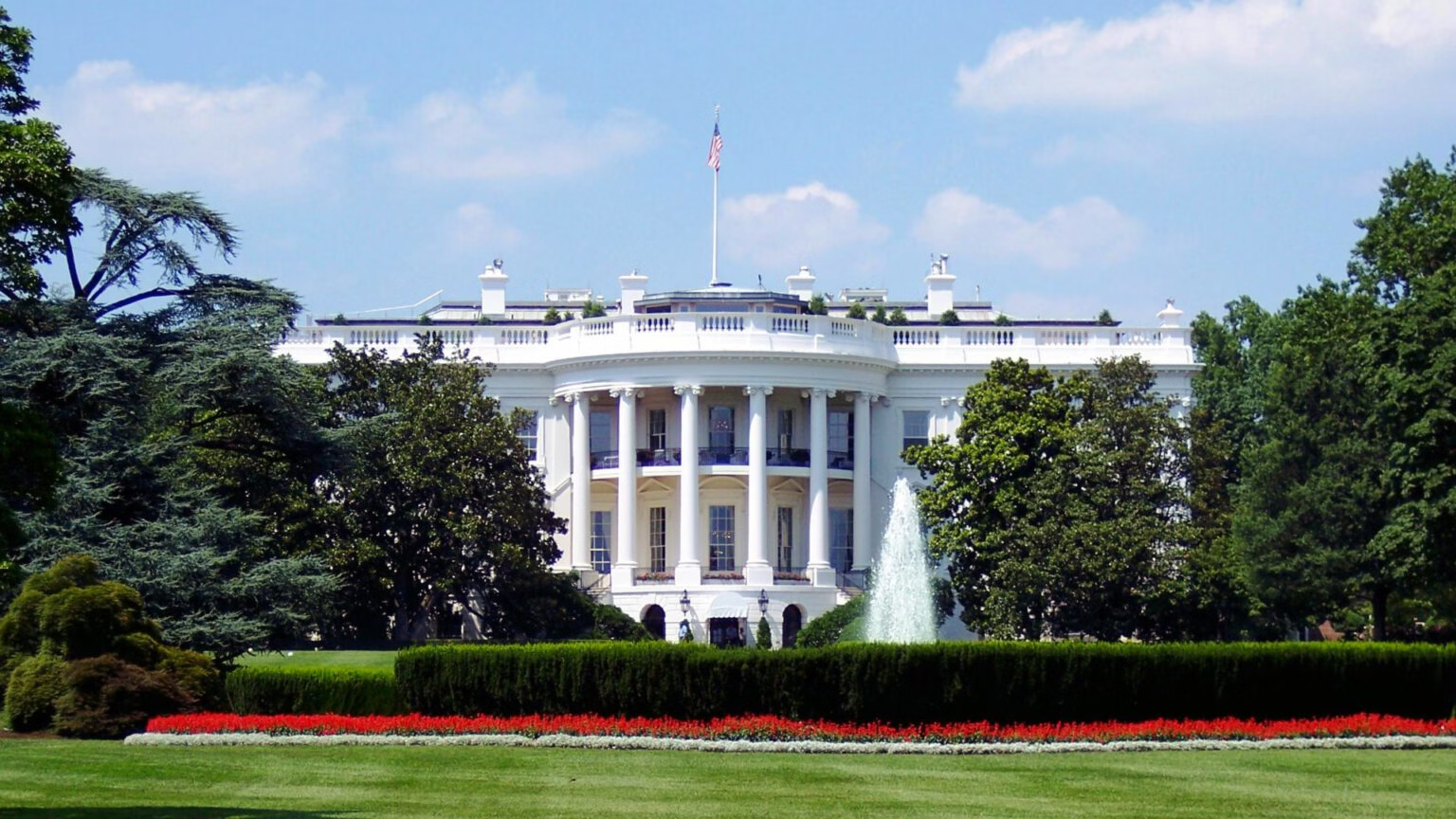
The White House has officially announced a strategic shift in its approach to artificial intelligence in the defence sector. A new memorandum signed by President Donald Trump aims to dramatically accelerate the deployment of AI models in the areas of intelligence and warfare. The US administration wants to maintain its global technological edge, but the document imposes clear red lines, categorically prohibiting the use of technology to censor free speech and conduct illegal surveillance.
A key element of the new strategy is a 90-day ultimatum to Defence Secretary Pete Hegseth. During this time, the Pentagon is to update guidance on weapon system autonomy, ensuring that AI systems ruthlessly respect the military chain of command. As Michael Kratsios, director of the White House Office of Science and Technology Policy, noted, Washington relies on working with multiple suppliers simultaneously. Such a model is intended to prevent the risk of a single point of failure and to ensure that no private entity can unilaterally disable or limit the operation of an AI system on which the safety of soldiers on the front lines depends.
Hidden in the background of these decisions is growing regulatory pressure on Silicon Valley. The government administration has already asked leading AI labs to voluntarily make the most powerful models available for government cyber security testing even before their official public release.
This sudden offensive by the White House did not occur in a vacuum – it is a direct consequence of the March clash between the Pentagon and Anthropic. The conflict erupted when the makers of the Claude model refused to change their internal regulations prohibiting the use of their technology for mass surveillance and powering autonomous weapons for the US. In response, the defence department imposed a formal supply chain risk designation on the startup, arguing that the military must have the right to use commercial tools as long as it remains in compliance with federal law.
The new White House guidance sends a clear message to the technology market. Washington does not intend to conform to the internal, ethical policies of private corporations. Instead, it is building an architecture that will force the commercial sector to explicitly subordinate innovation to national security priorities.