The Chinese authorities are considering restricting foreign access to the country’s most advanced artificial intelligence models. If the plans go ahead, they could change the way companies around the world use Chinese AI technologies and, at the same time, intensify global rivalry between Beijing and Washington.
According to Reuters, in recent weeks the Chinese Ministry of Commerce has been holding talks with representatives from Alibaba, ByteDance and Z.ai regarding new rules on access to the most advanced models, including those not yet made publicly available.
The discussions cover both proprietary models and those made available under an open-source licence. Stricter penalties for the leakage or theft of AI technology are also being considered, which could be deemed a crime against national security. The proposals also include restrictions on the funding of Chinese AI start-ups by selected foreign entities. No final decisions have been made as yet, and any regulations may apply only to future models.
This is yet another sign that Beijing is increasingly treating artificial intelligence as a strategic national asset. In recent months, China has tightened its control over the AI sector, including by stepping up scrutiny of foreign investment, investigating the activities of start-ups relocating abroad, and restricting the mobility of some key AI specialists.
This change would be particularly significant, as Chinese models have gained considerable popularity outside China over the past year. The success of DeepSeek R1 has demonstrated that it is possible to offer high-performance models at significantly lower costs. A similar strategy is being pursued by Alibaba with its Qwen family of models, and by Z.ai, whose GLM-5.2 has attracted the industry’s attention thanks to its price-performance ratio.
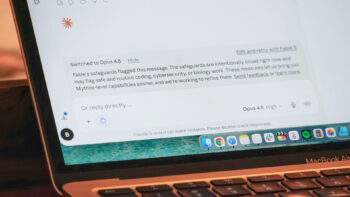
The proposed restrictions are part of an increasingly symmetrical approach by both global superpowers. The United States is also introducing restrictions on the most advanced AI models. The Donald Trump administration restricted foreign users’ access to selected Anthropic models, citing national security concerns. Some of the restrictions were later eased following the implementation of additional safeguards, though the most advanced systems remain available exclusively to selected US organisations.
Access to state-of-the-art AI models may increasingly depend not on technological capabilities, but on geopolitics. If China restricts the export of its most advanced models, companies relying on low-cost Chinese solutions may face higher costs and a narrower choice of suppliers.