The World Economic Forum in Davos has acted as a barometer of global sentiment for years, but this year’s edition will be remembered as a moment of great technological overkill. If previous years were marked by an almost childlike fascination with the potential of generative artificial intelligence, January 2026 brought a hard landing on the reality of physical limitations. Silicon Valley leaders, financial sector giants and policymakers abandoned utopian visions in favour of cool engineering and pragmatic profit-and-loss calculus. Behind the scenes at Alpine, the question was no longer what AI could write, but how to build a planetary infrastructure capable of harnessing these ambitions.
Five-layer foundation and primacy of application
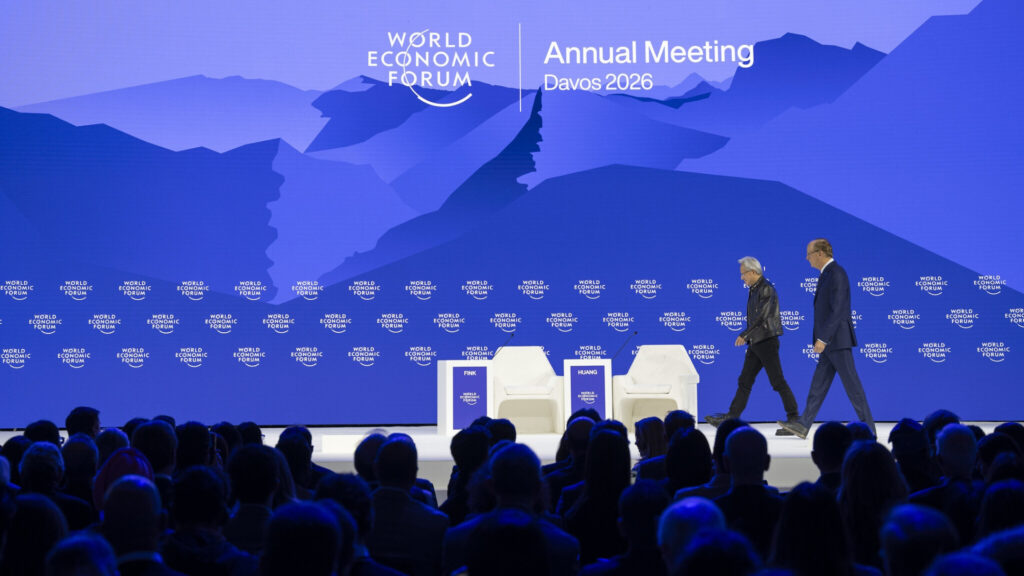
The foundation for this new perspective was the concept presented by Nvidia’s Jensen Huang during his high-profile debate with Larry Fink. Huang redefined the concept of artificial intelligence, moving away from seeing it as just another economic sector. Instead, he portrayed it as “the greatest infrastructure construction in human history”. The key to understanding this vision is the five-layer cake model, which starts with fundamental energy resources, moves through silicon processors, cloud data centres to the underlying models and final applications themselves.
In this architecture, Huang sees a new hierarchy of values. While media attention is focused on layer four – i.e. the models themselves, such as GPT and Claude – the Nvidia CEO has made it clear that it is unprofitable for most global players to compete in this field. Real economic value and return on investment (ROI) will be generated in layer five. It is in the application of intelligence to specific, deep problems such as drug discovery, hyper-optimisation of global logistics or materials engineering that the real growth engine lies. The message to business is clear: stop chasing model parameters, start building solutions that monetise those models.
Data sovereignty as a new insurance policy
As artificial intelligence becomes the ‘corporate brain’, a new, almost existential question of sovereignty for business resounded at Davos. Huang called for nations, and business leaders picked up on this call for organisations, to build ‘National Intelligence’ and sovereign AI ecosystems. In 2026, it is becoming clear that organisations cannot afford to fully outsource their knowledge and decision-making processes to external providers.
Artificial intelligence infrastructure must be treated with the same criticality as national roads or power grids. For corporations, this means that they need to have intellectual property not only to the data, but also to the fine-tuning processes and contextual data. Without their own autonomous intelligence, companies risk becoming mere rentiers of other people’s minds, which in the long term threatens their competitiveness and uniqueness in the market.
Energy ‘to be or not to be’ of global growth
The physicality of the technology resonated most strongly in the context of the energy crisis, which was the focus of Satya Nadella‘s speech. The Microsoft CEO made a brutally honest diagnosis: GDP growth anywhere in the world will from now on be directly correlated to the cost of energy required to power AI processes. Nadella warned of a loss of ‘public consent’ for the technology if the gigantic energy consumption does not translate into measurable successes in education, health and public sector productivity.
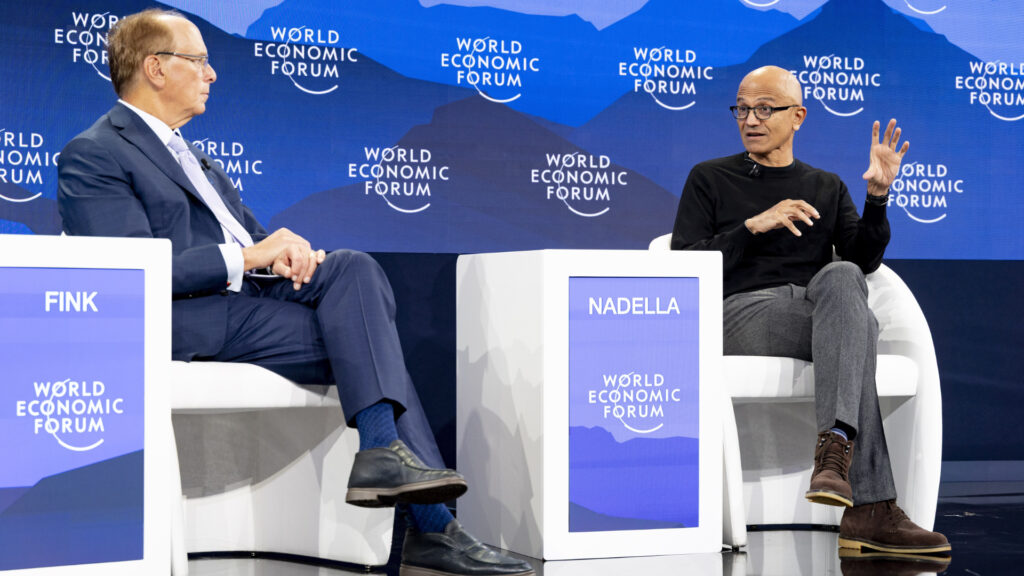
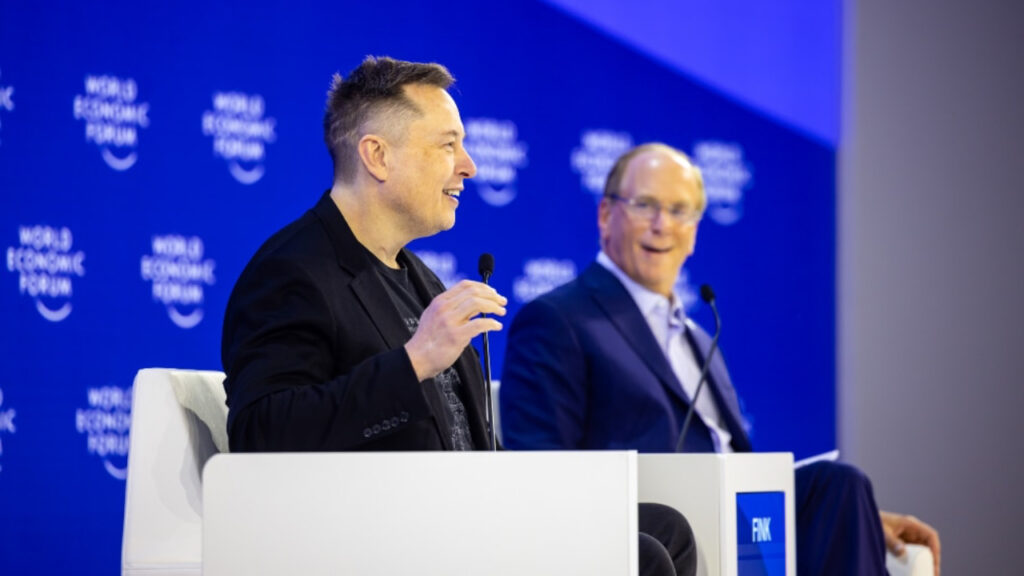
The ‘tokens per dollar per watt’ concept he introduced is becoming the new hard currency of the modern economy. This warning coincides with market data showing drastic increases in energy prices, presenting infrastructure executives with a challenge that no algorithm can solve. Elon Musk has joined this discussion and – in his style of combining engineering with visionaryism – has pointed out that the bottleneck is no longer chip manufacturing, but voltage in transmission networks. His proposal to move data centres into orbit to be powered directly by solar energy ceased to be treated at Davos as a curiosity and became a signal of how desperately we will be looking for new power sources in the next decade.
Emerging from pilotage purgatory and the junior crisis
Despite the mammoth investment, Alphabet’s Ruth Porat hit on a sensitive point for global business: most companies are stuck in ‘pilot purgatory’. Deloitte data confirms this diagnosis – only 25% of organisations have managed to scale their AI projects. The problem turns out to be not a lack of technology, but a growing technical debt and a lack of a coherent data architecture. Davos 2026 sent a clear message: the time of fascination with chatbots is over; what matters now is the complete redefinition of operational processes.
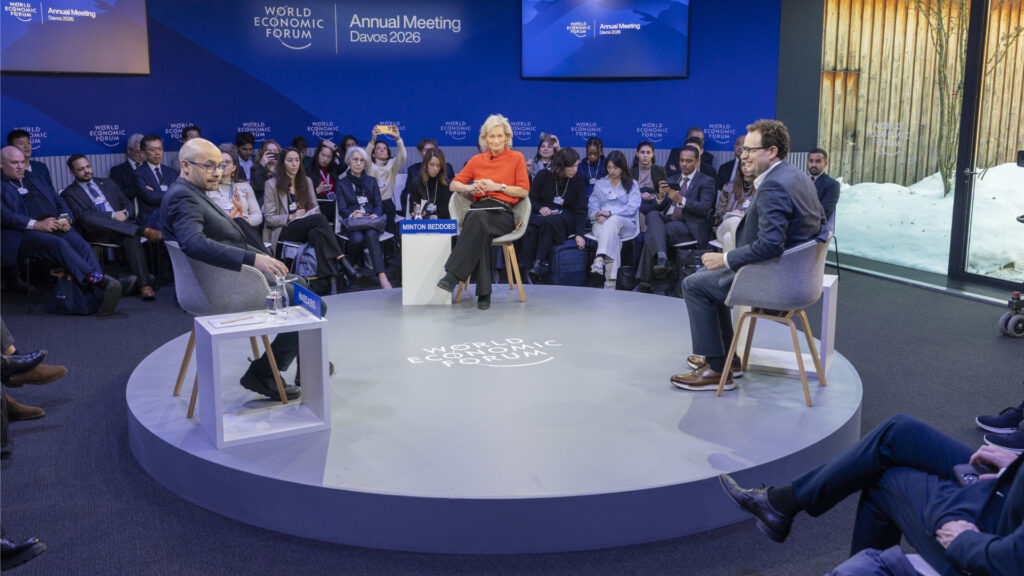
The biggest concern, however, is the transformation of the labour market. Dario Amodei (Anthropic) and Demis Hassabis (Google DeepMind) unanimously predict the emergence of AI agents capable of replacing junior engineers. This raises a fundamental training crisis: if artificial intelligence eliminates the entry stage, the industry will lose a natural testing ground for future experts. Jensen Huang offered an optimistic takeaway here, however. In his view, AI is “the easiest software to use ever”, and the core competency of the future will not be writing code, but “driving goals”. The IT worker is evolving from the role of craftsman to that of teacher and systems supervisor, forcing companies to transform their technical departments into centres of continuing education.
AI’s new world order
Davos 2026 marked the end of an era of digital innocence. Altman himself, despite his discreet profile, confirmed the commercial maturity of OpenAI, revealing billions of dollars in API revenue, proving that AI has permanently grown into the fabric of business. However, the overall tone of the forum was one of caution: success in the coming years will not depend on how powerful models we buy, but how intelligently we manage the energy, data sovereignty and transformation of our teams.
The year 2026 is a time of ‘big clean-up’ and building the foundations for an architecture that must be as resilient as it is efficient. The race for the palm of supremacy is on, but its finish line has shifted from computer screens to power plants and training rooms, where a new definition of human labour is being born.