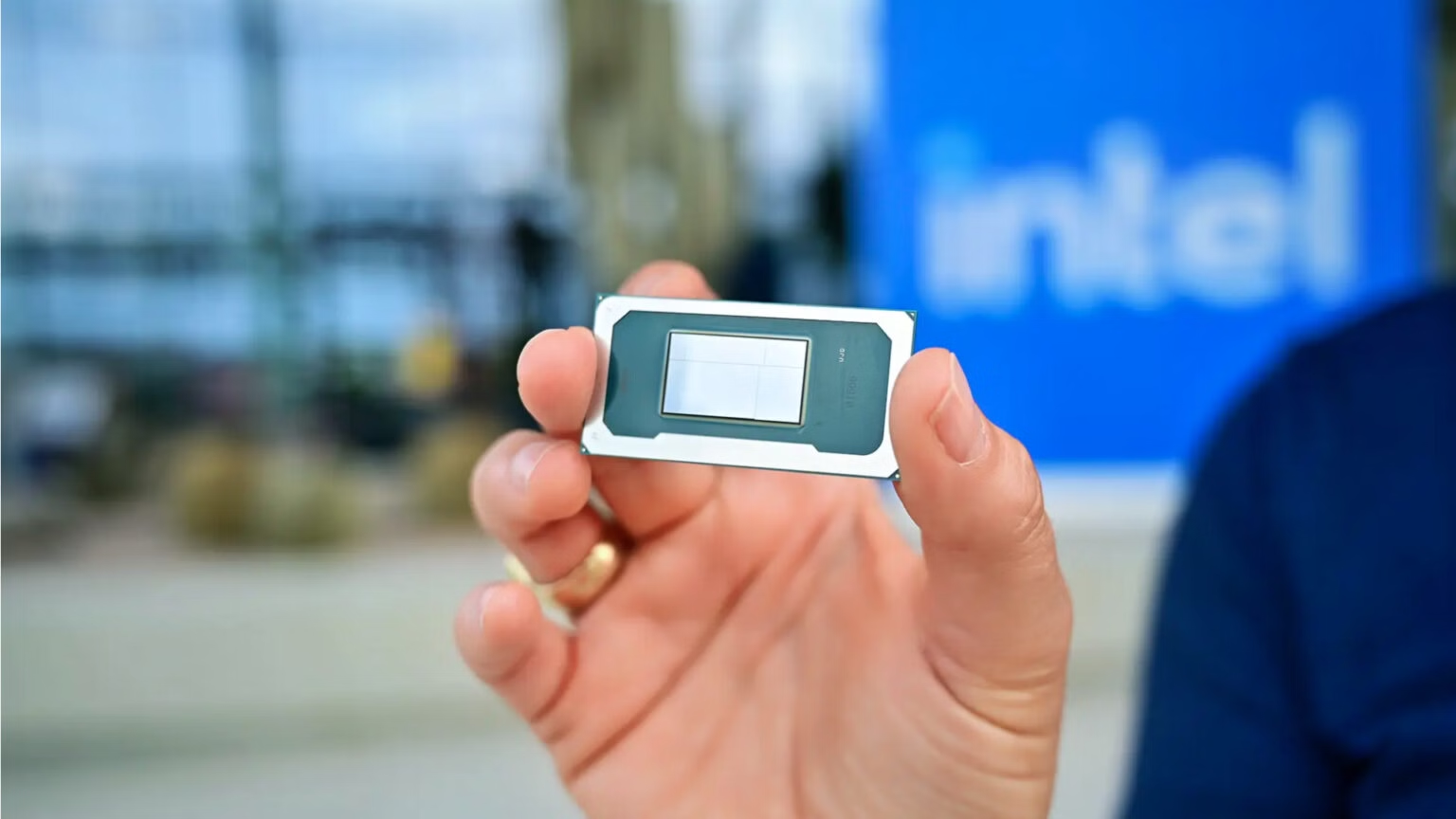
This year’s CES in Las Vegas set the stage for one of the most important tests in Intel‘s recent history. The presentation of the Core Ultra Series 3 chips, known by the codename Panther Lake, is not only a refresh of the product portfolio, but above all a demonstration of the operational maturity of the 18A technology process.
Manufactured in Intel’s own facilities, the chips, based on 18 angstrom lithography (equivalent to 2 nm at TSMC), are intended to be a technological answer to the dominance of Asian foundries, offering transistors with higher density and energy efficiency.
The new architecture brings significant changes to the silicon design. Intel has decided to abandon multi-threading (Hyper-Threading) technology altogether. Instead, the fourteen new laptop models are based on a physical combination of performance (P), efficiency (E) and low-power (LPE) cores, where each core supports exactly one thread.
The minimum TDP is set at 25 watts, but the flexibility of the power configuration means that the final performance of the laptop will largely depend on the engineering decisions of the OEMs.
The model range itself is becoming increasingly labyrinthine for the sales channel. A distinction has been made between standard chips and those with an ‘X’ suffix, which signals the presence of the more powerful Intel Arc Pro B390 graphics chip.
Importantly for integrators, individual models vary drastically in the number of PCIe lines available, which can complicate the design of motherboards for specific configurations with discrete graphics cards.
In the background of the technology launch, the political and marketing context resonates clearly. Intel is heavily emphasising the US pedigree of the new processors – from design to manufacturing – a clear nod to the new US administration. From a usage perspective, despite the presence of NPUs in all models, the leap in performance for AI tasks seems evolutionary rather than revolutionary.
While the ‘AI PC’ slogan continues to dominate the marketing message, the real value of Panther Lake will be verified by the market at the end of the month, when the first devices hit shop shelves. The key for the IT industry, however, will be not so much the AI slogan itself, but to confirm whether the 18A process actually allows Intel to return to the performance throne.
The Intel Core Ultra Series 3 family consists of the following components at launch:
| Processor | Cores (P+E+LPE) | GHz (max.) | GPU cores | TOPY NPU | PCIe | TDP max. (W) |
| Ultra X9 388H | 16 (4+8+4) | 5,1 | 12 | 50 | 12 | 65,8 |
| Ultra 9 368H | 16 (4+8+4) | 4,9 | 4 | 50 | 20 | 65,8 |
| Ultra X7 368H | 16 (4+8+4) | 5,0 | 12 | 50 | 12 | 65,8 |
| Ultra 7 366H | 16 (4+8+4) | 4,8 | 4 | 50 | 20 | 65,8 |
| Ultra 7 365 | 4,8 | 4 | 49 | 12 | 55 | |
| Ultra X7 358H | 16 (4+8+4) | 4,8 | 12 | 50 | 12 | 65,8 |
| Ultra 7 365H | 16 (4+8+4) | 4,7 | 4 | 50 | 20 | 65,8 |
| Ultra 7 365 | 8 (4+0+4) | 4,7 | 4 | 49 | 12 | 55 |
| Ultra 5 338H | 12 (4+4+4) | 4,7 | 10 | 47 | 12 | 65,8 |
| Ultra 5 336H | 12 (4+4+4) | 4,6 | 4 | 47 | 20 | 65,8 |
| Ultra 5 355 | 8 (4+0+4) | 4,6 | 4 | 47 | 12 | 55 |
| Ultra 5 325 | 8 (4+0+4) | 4.5 | 4 | 47 | 12 | 55 |
| Ultra 5 332 | 6 (2+0+4) | 4.4 | 2 | 46 | 12 | 55 |