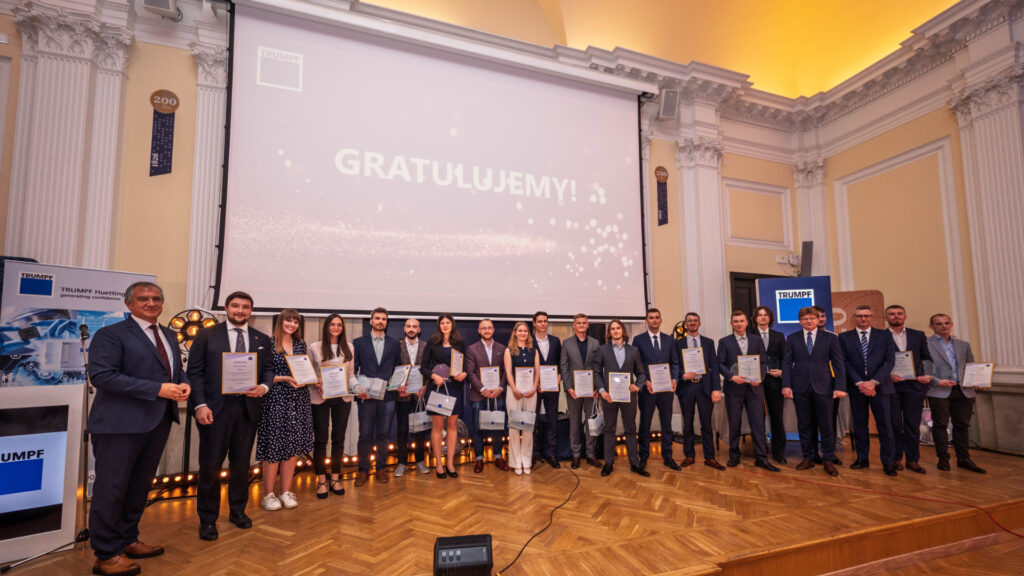
Artificial intelligence, space technologies, power electronics and solutions supporting people with disabilities – these are just some of the topics featured amongst the winners of this year’s TRUMPF National Competition for the Best Engineering, Master’s and PhD Theses. In the competition final, 17 theses were recognised, and the total prize fund exceeded 100,000 zł.
Organised by TRUMPF’s Electronics Sector, the event has for years aimed to support young scientists and foster relationships between technical universities and industry. This year’s gala took place in the Main Building of the Warsaw University of Technology and brought together representatives from the academic community, the business sector, as well as students and PhD candidates from across Poland.
Among the winners was Maja Zielińska from the Częstochowa University of Technology, whose work focused on intelligent obstacle detection to assist blind people. The award for the best Master’s thesis went to Jacek Duszenko from the Wrocław University of Technology for his research into the interpretation of models used in generative artificial intelligence. In the doctoral thesis category, the winner was Przemysław Trochimiuk from the Warsaw University of Technology, whose work focused on the use of silicon carbide transistors in medium-voltage systems.
This year’s results show that young Polish engineers are increasingly focusing on technologies with high implementation potential. The winning projects included solutions related to robotics, telecommunications, power electronics, artificial intelligence and the digitalisation of industry. These are areas that are now crucial both for industrial transformation and for the development of new sectors of the economy.
The competition is part of a wider trend towards closer cooperation between universities and technology companies. For businesses, it provides access to new ideas and expertise, whilst for young researchers it offers an opportunity to present their projects outside the academic environment.
The competition is organised by TRUMPF, a German technology group specialising, amongst other things, in industrial solutions, laser technology and industrial electronics. In the 2024/25 financial year, the company employed over 18,000 staff and achieved a turnover of 4.3 billion euros. One of the group’s largest research, development and production centres operates in Poland.
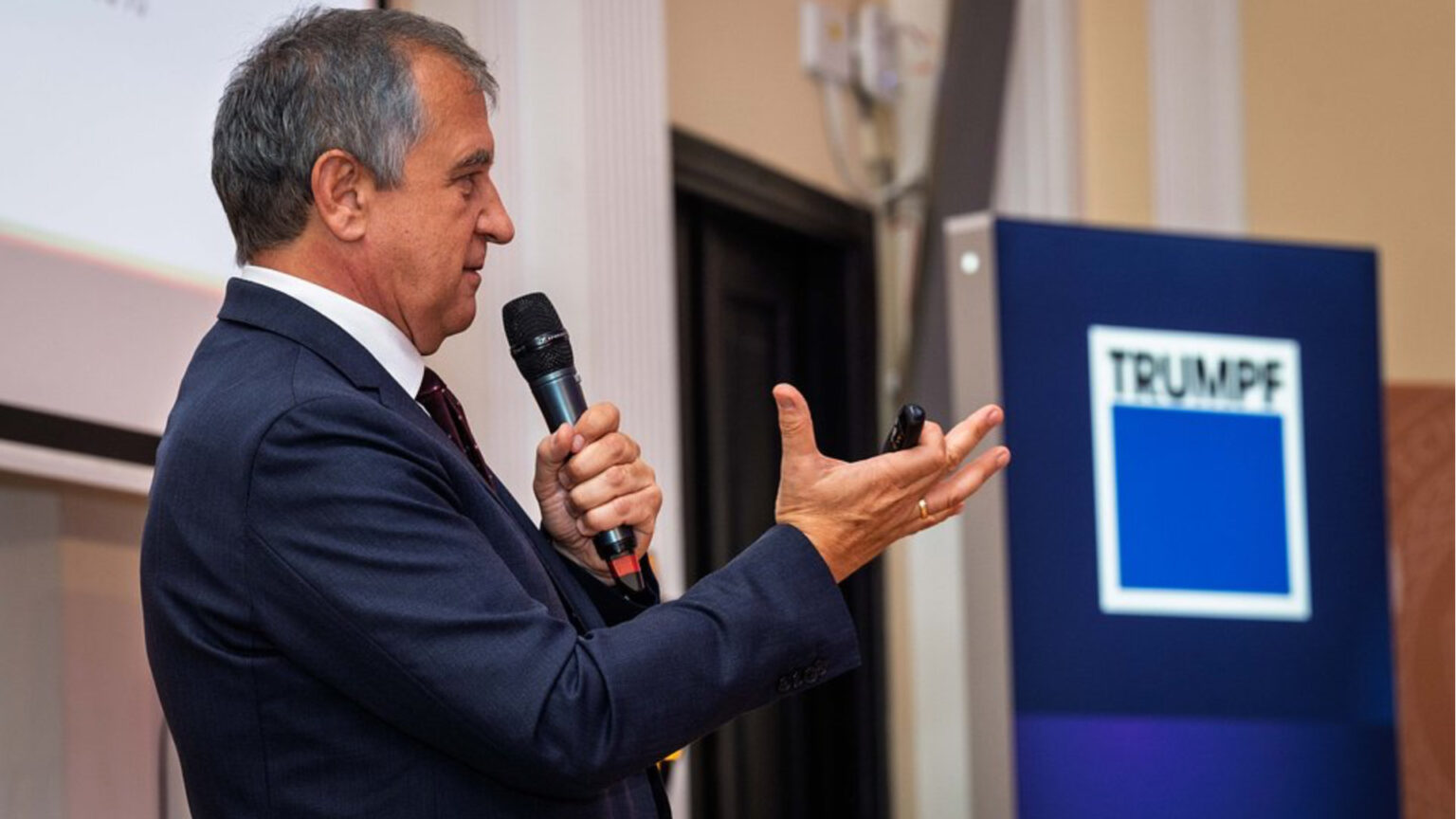
– Many of us owe our career paths to mentors, lecturers and people who have supported our development at various stages. The TRUMPF competition is a way of passing on this support and creating a space for young engineers to develop and showcase their achievements. We believe that it is precisely through such projects that technologies are born which will transform industry and the economy in the future. I would like to congratulate all participants in this year’s competition, regardless of their final ranking. We are hugely impressed by the standard of the entries and proud to be able to support the next generation of Polish engineers and scientists,” says Dr Rafał Bugyi, President of TRUMPF’s Electronics Sector.