The armed conflict involving Iran, the United States and Israel sheds new light on a fundamental paradox of modernity: the world’s most advanced technologies are being held hostage to resource extraction processes whose logistics rely on the stability of regions that have for decades been described as powder kegs.
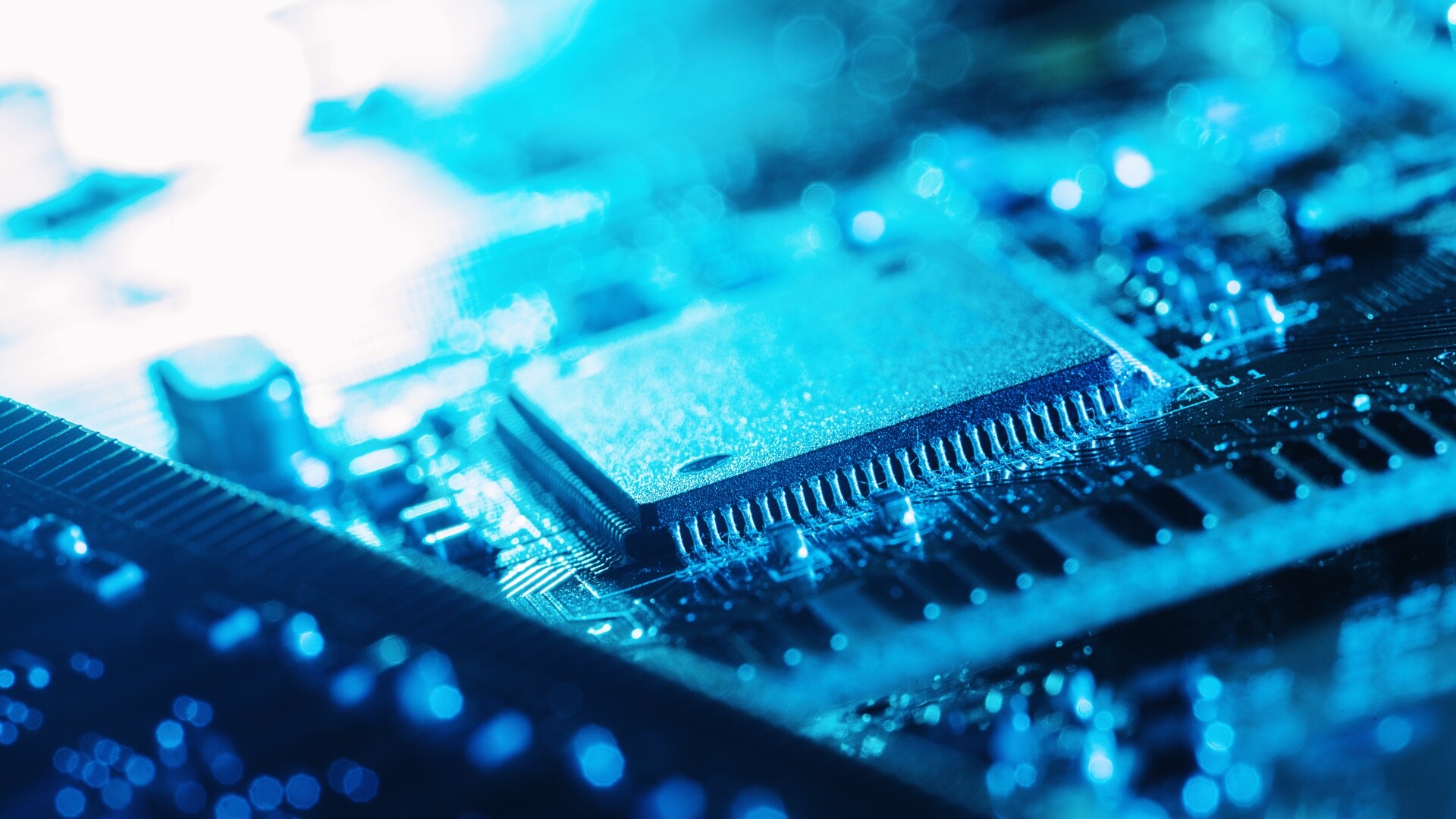
Fundamental to the current unrest in the high-tech industry has been the issue of the availability of helium, a noble gas whose role in the process of semiconductor lithography cannot be overestimated. While the public associates helium with entertainment applications or medical MRI equipment, for chipmakers it is an essential coolant and a medium for maintaining thermal stability in the most precise manufacturing equipment. The fact that nearly thirty-eight per cent of the world’s production of this raw material is concentrated in Qatar creates a dangerous tipping point in the global supply chain. QatarEnergy’s decision to declare a state of force majeure, prompted by attacks on refining infrastructure, is a wake-up call for the entire silicon ecosystem. Halting operations at natural gas processing plants means not only a shortage of fuel, but more importantly an interruption in the supply of petrochemical components, without which modern electronics cannot function.
However, the problem goes far beyond helium alone. Market analyses show the industry’s deep dependence on fourteen other critical materials from the Middle East, including bromine and specialised process gases. In the semiconductor sector, where purity standards are measured at the nanoscale, switching suppliers is not a simple logistical operation. It is a process of months of validation and rigorous quality testing, violations of which could destroy entire production runs worth hundreds of millions of dollars. In the face of protracted conflict, the flexibility of giants such as TSMC, Samsung and GlobalFoundry is being put to its toughest test since the global pandemic, with the current crisis being far more structural and unpredictable.
The geopolitical Gordian knot remains the Strait of Hormuz. A key artery for global energy trade, this narrow maritime isthmus also acts as a fuse for global digital transformation. The blockade or significant obstruction of shipping in this body of water is hitting the cost of the energy required to power giant server farms and the price of polymers used in the manufacture of computer components with a ricochet. The observed increase in energy prices is therefore not just a transport issue, but a direct operating cost for any company operating a SaaS model or cloud infrastructure provider. The disruption to supply in this region is forcing a shift away from the previous dogma of just-in-time logistics management to costly strategic stock-building strategies, which will inevitably impact the operating margins of the technology sector.
This situation is particularly acute in the context of the unprecedented demand for computing power generated by the development of artificial intelligence. The industry is in ticks: on the one hand, demand for advanced computing units is growing exponentially, while on the other hand, production capacity is encountering a raw material glass ceiling. The risk of technological involution is becoming real and may manifest itself not only in delays in the release of new generations of processors, but above all in the forced cannibalisation of resources. Sectors such as automotive or industrial automation may be forced to compete for the same limited chip resources with technology giants, leading to drastic price increases for end devices and stifling digitalisation in less profitable industries.
Undisrupted globalisation, in which access to technology was guaranteed by efficient market mechanisms, is a thing of the past. It is now giving way to an era of strategic resilience. The stability of the Middle East has become a key element of technological security for any business using digital working tools. The current crisis shows that the future of artificial intelligence and global connectivity depends on the permeability of sea lanes and the political stability of raw material exporting countries, which are often forgotten in the daily pursuit of innovation.
Managing an organisation in 2026 therefore requires not only proficiency in anticipating market trends, but also a deep understanding of the physical map of the world. The cost of technology ceases to be a function of the progress of miniaturisation and becomes a product of the security price of physical assets. In this new reality, the winners will be those who can integrate geopolitical risk analysis with technology planning, understanding that the blue gas in Qatar’s tanks has a direct impact on the fluidity of a mobile app in Europe or the agility of an ERP system in North America. The Middle East is now becoming the catalyst for a major shift in the way the world thinks about technology: no longer as an unlimited resource, but as a precious asset whose foundations are extremely vulnerable to shocks.
Further developments between Tehran and Washington will determine whether the current perturbations turn out to be merely a short-term shock or the beginning of a profound reconfiguration of the global technological order. The illusion of the autonomy of the digital world from the problems of the physical world has finally been dispelled. It is therefore worth keeping a close eye not only on the stock market quotations of technology companies, but also on the movements of ships in the Gulf, as this is where the source code for next year’s IT sector margins is currently being written.