The Trump administration has decided to take an aggressive step in the deep tech sector, acquiring equity stakes worth two billion dollars in nine US quantum companies. The move, funded by CHIPS Act funds, has a clear objective: to secure US geopolitical dominance and block China’s technological ambitions.
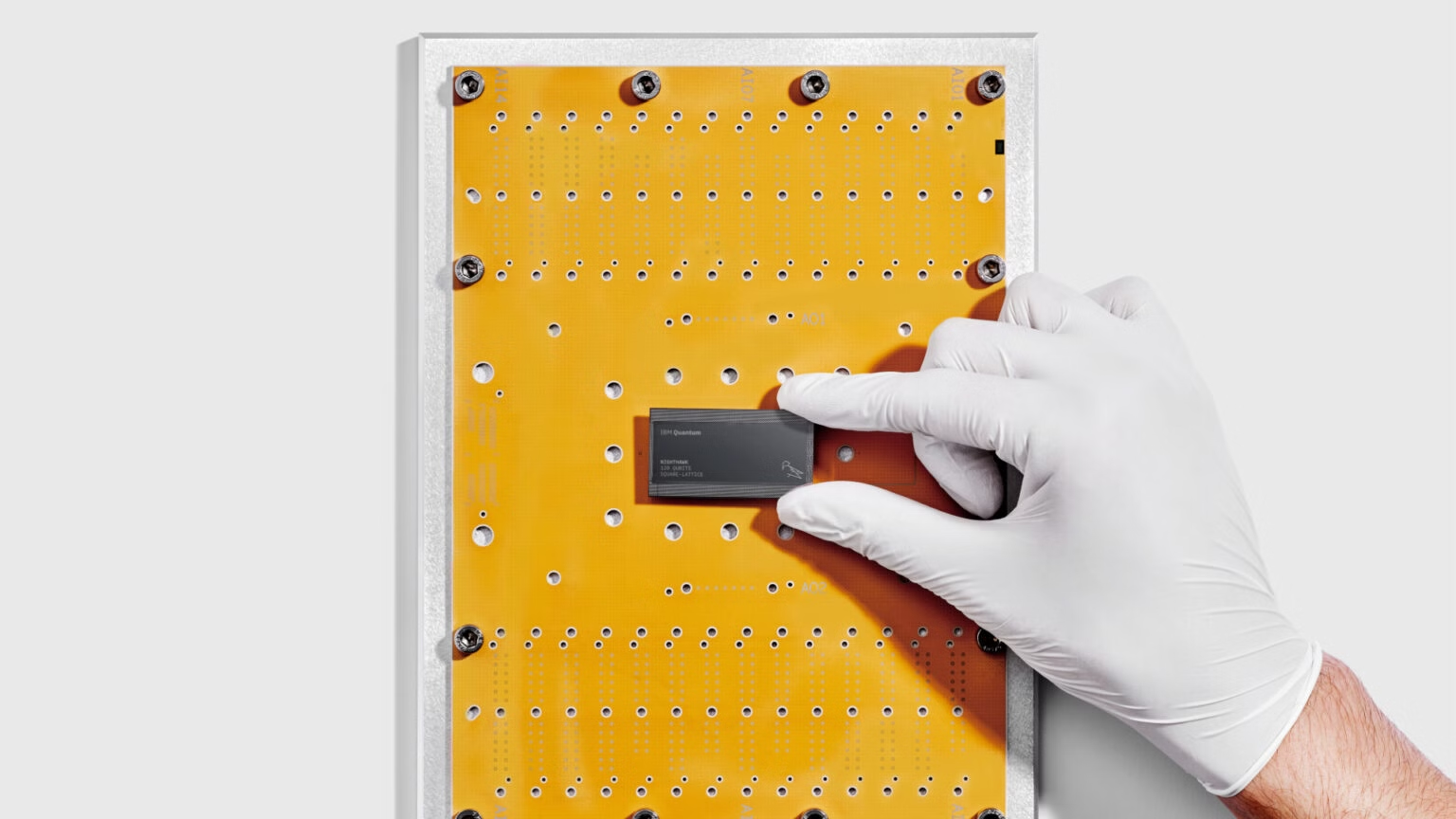
Wall Street’s reaction to this intervention was immediate. The shares of the companies involved rose by several to a dozen per cent, reflecting investor optimism about government support. The biggest beneficiary of the new programme was IBM, which will receive one billion dollars to spin off a new company called Anderon. Located in upstate New York, the entity will be America’s first commercial factory dedicated solely to the production of quantum chips. IBM‘s president, Arvind Krishna, has already announced that Anderon will open its production capacity to external customers, offering them an architecture identical to the technology giant’s internal systems.
Government capital will also flow broadly to other strategic players. GlobalFoundries will inject $375 million to build a quantum component factory, in return giving the state about one per cent of the shares. Smaller financial packages will go to players such as Infleqtion, D-Wave, Rigetti and Diraq. They will be tasked with solving the most serious engineering barriers, including reducing high error rates and stabilising circuit operation at extremely low temperatures.
These investments demonstrate the evolution of US industrial policy towards state venture capitalism. Washington, which had previously taken a ten per cent stake in troubled Intel and stakes in mining company MP Materials, is increasingly boldly entering the shareholdings of private companies. While there are questions in the background about the political connections of the beneficiaries – Donald Trump Jr.’s fund previously invested in the ecosystem-linked PsiQuantum – the industry sees this move as the ultimate confirmation of the maturity of the market. The public sector rarely funds purely speculative projects, suggesting that the practical application of quantum computers in medicine or cryptography is much closer than previously estimated.